


When I was cruising along the road straight from Bangkok to the coastal city during the mid-week, the narrative itself was romantic.
The ability to immediately book a resort, grab a leather weekender, and put on a good pair of suede leather sandals — with the imagery of sunlight, sea breeze, and the serene ambience of Thailand’s low season — is the kind of thing that should feel close to perfect.
But no matter how glamorous it seemed, no matter which song I tried to attune to the mood across the 300 kilometre ride, I felt nothing for the full three hours.
At first, nothing interrupted me.
I treated the drive the way one treats most modern transportation — the act of moving from point A to point B as conveniently as possible. But the longer I sat with the mid-week escapade itself, the more I began to notice the root of it.
The car I was driving was a Honda.
Honestly, there is nothing wrong with the Japanese manufacturer. They have produced plenty of admirable cars, from the economic to the exotic. But the problem lies in the economic — the Honda I had inherited from my family is that type.
Reliable.
Sensible.
Without any sensory life of its own.
With that realization, the impulse that had been lying quietly within me for some time surfaced clearly: the idea of acquiring a new automobile, one that actually gives soul, experience, and justifies the longing for elegance I seek in every other aspect of life.
That led me back to a very particular era — the 1990s.
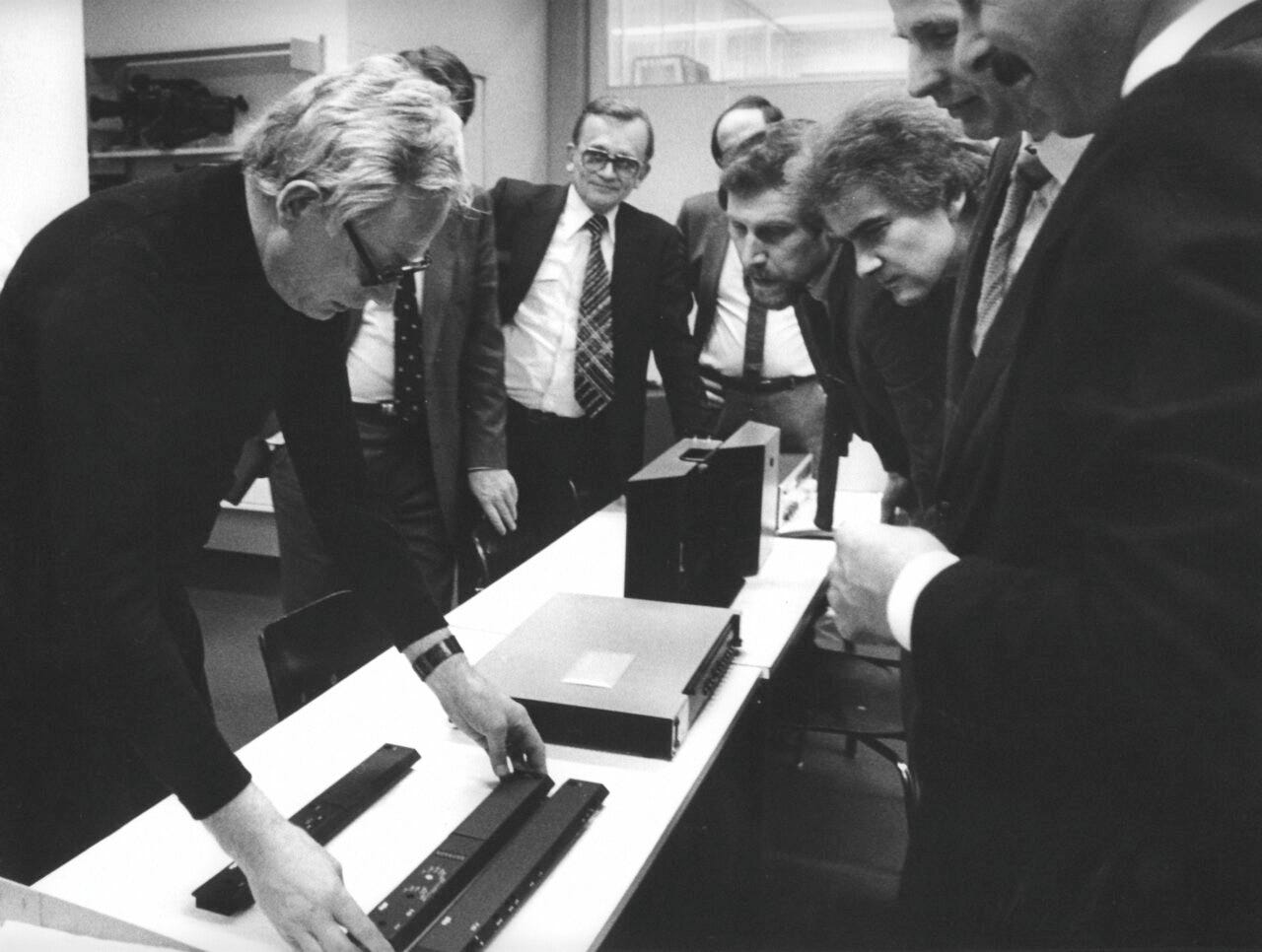
Elegance, in my humble opinion, still reigns supreme in the mid-century. The manifestation in automobiles from those days — from economy to icon — wrapped design, material, and the spirit of mechanics in the most graceful way possible. But as a man who grew up in the 90s and 2000s, the car culture of that decade stands as the Golden Age for me. Companies still built cars because engineers cared about the driving feel itself. Not beautiful but impractical, not astonishing but emotionally hollow — beautiful and engaged. Astonishing and alive.
The clearest example, to me, is the BMW 5 Series E39.
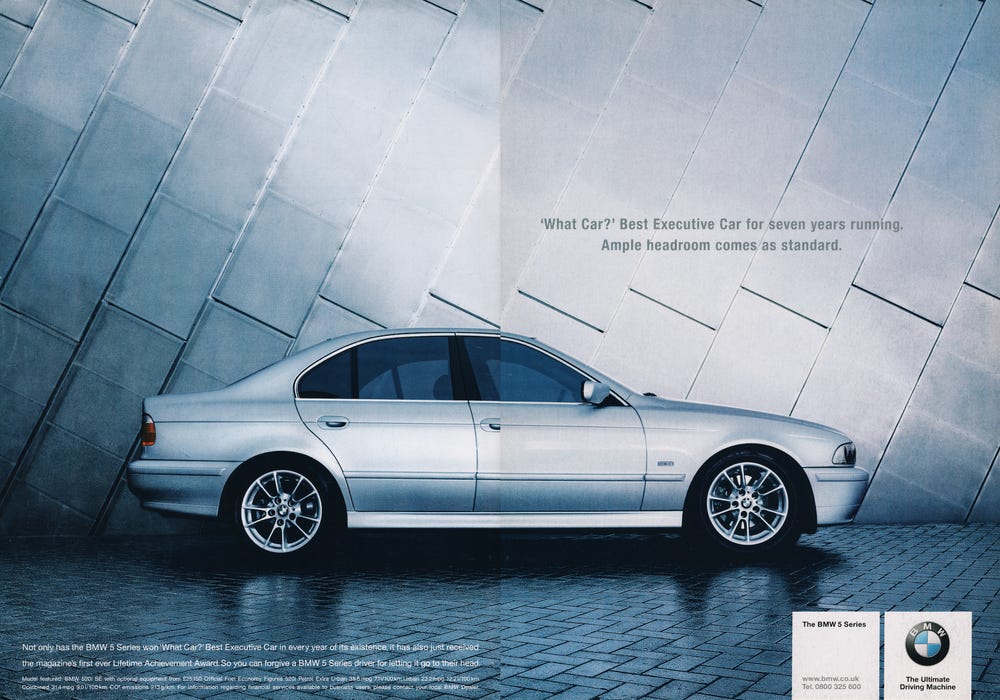
There is a reason why this sport executive saloon from the late 90s to early 2000s is widely considered the most complete 5 Series by many enthusiasts, whether they are Bimmer fans or not.
The E39 combined everything the brand historically stood for in one coherent object — restrained and timeless design, near-perfect chassis balance, hydraulic steering full of tactile feedback, naturally aspirated inline-6 or V8 engines with mechanical character, autobahn-level stability, executive refinement, and enough analog simplicity to still feel intimate and alive decades later.
It was not the fastest car BMW ever made, nor the most luxurious, nor the most technologically advanced. But it achieved a rare harmony between sportiness, elegance, comfort, engineering integrity, and emotional involvement.
A human sensory experience still sitting at the centre of the design philosophy — rather than software ecosystems and algorithmic convenience.
Or rather: the charm of the analog era, beginning to fade day by day.
What surprised me, sitting with all of this on the way back from the coast, was how an object — a mere car, a mere mid-week drive — could play such a quiet role in revealing what one actually values. Not what one says one values but ‘what one cannot help but feel the absence of.’
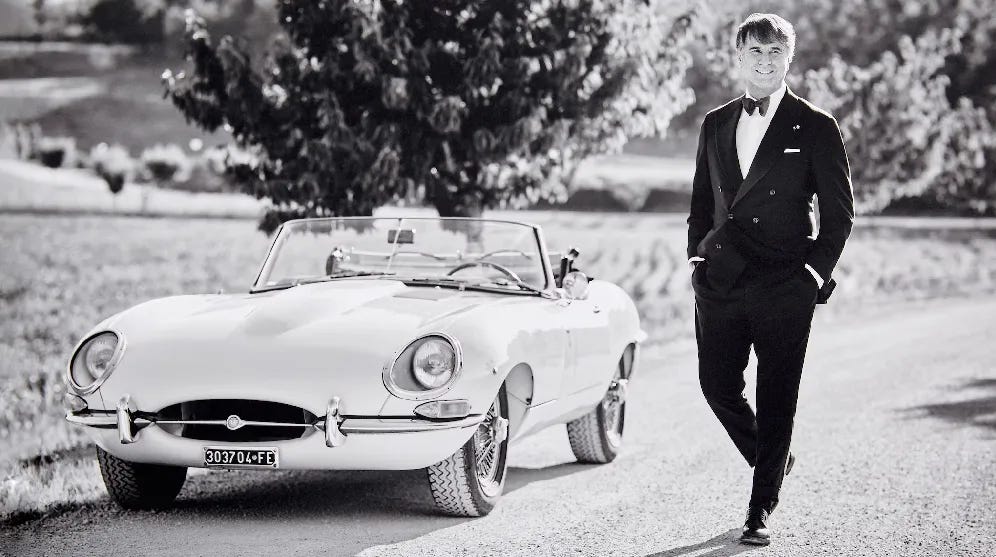
While the world has moved in a particular direction; there are those who stand still with themselves anyway, think carefully about life, put a discerning mind to the question of substance, and question the price of turning ordinary existence into hyper-utility, performance-for-vanity, and comfort-as-the-only-good.
Whichever side one is on, or whatever one concludes — at least one has taken some hold on the paradigm that otherwise contains the will of the individual.
And in many cases, it can start from an object.
A single one.
The one you always come back to, always feel a specific energy from, and eventually notice has begun to become part of who you are.