


There is a type of image that always sticks in my mind.
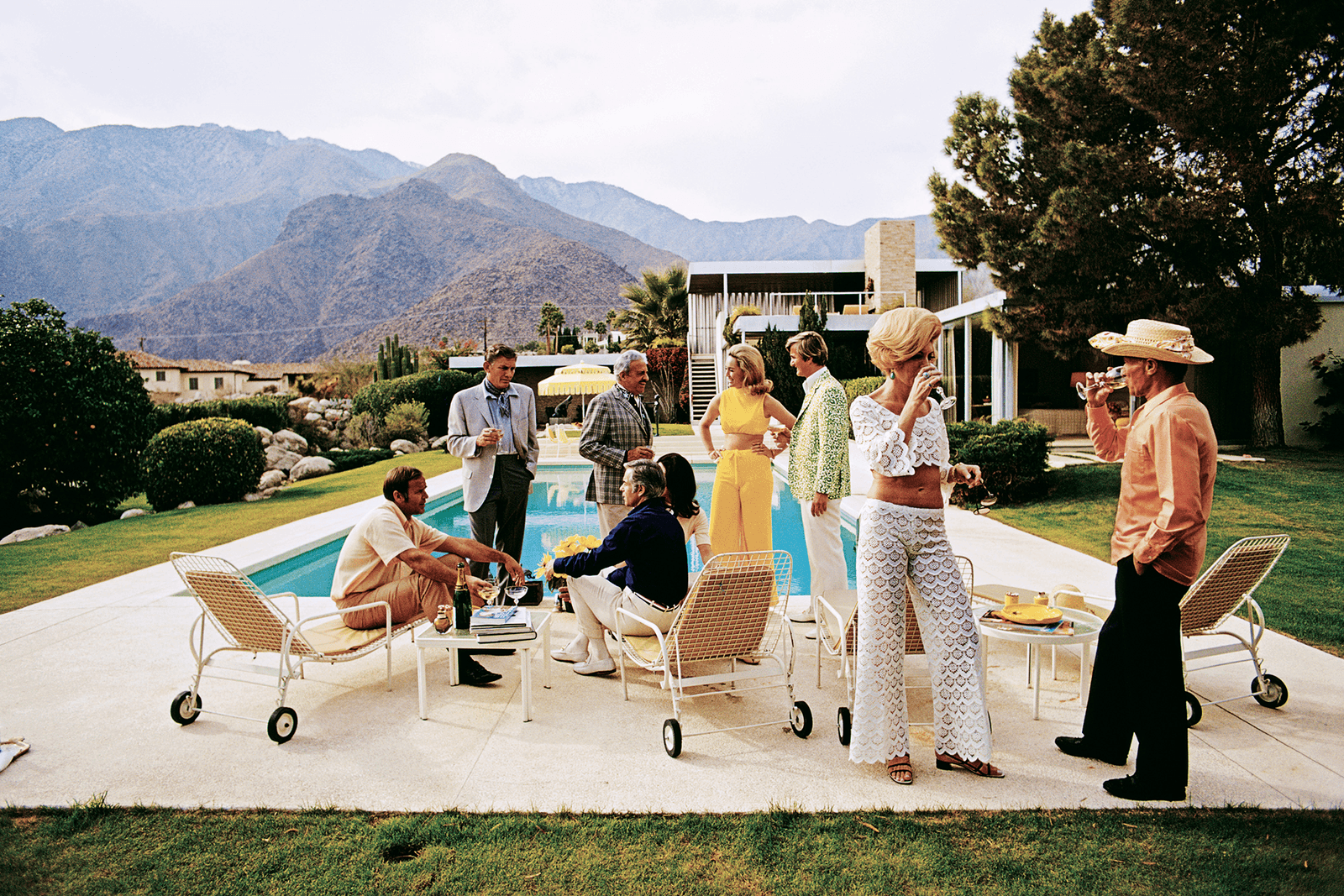
Imagine a group from the effortless mid-century jet set.
Having a simple lunch — one that is not so simple when you consider the wine, the food spread across the table. Seeing their style. Their gesture. Beyond the leisurely activities and the aesthetic — which you can absorb through the photographs of Slim Aarons, and which may seem a little extravagant, even hedonistic at points — here lies the undeniable virtue: Effortless charm.
As Aarons himself stated, his philosophy was to photograph:
“Attractive people, Doing Attractive Things, in Attractive Places.”
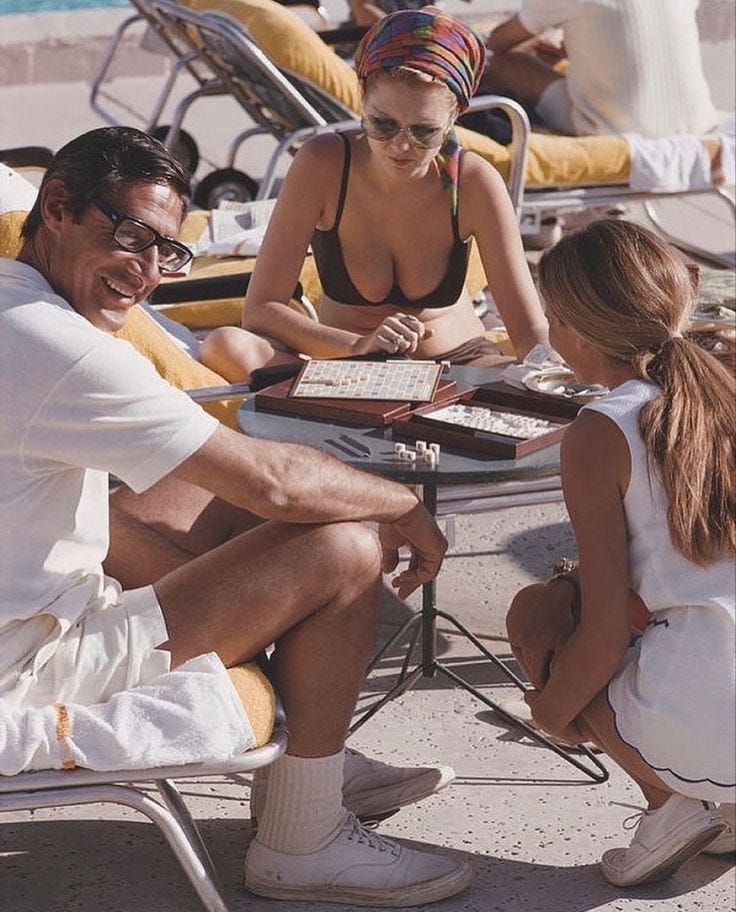
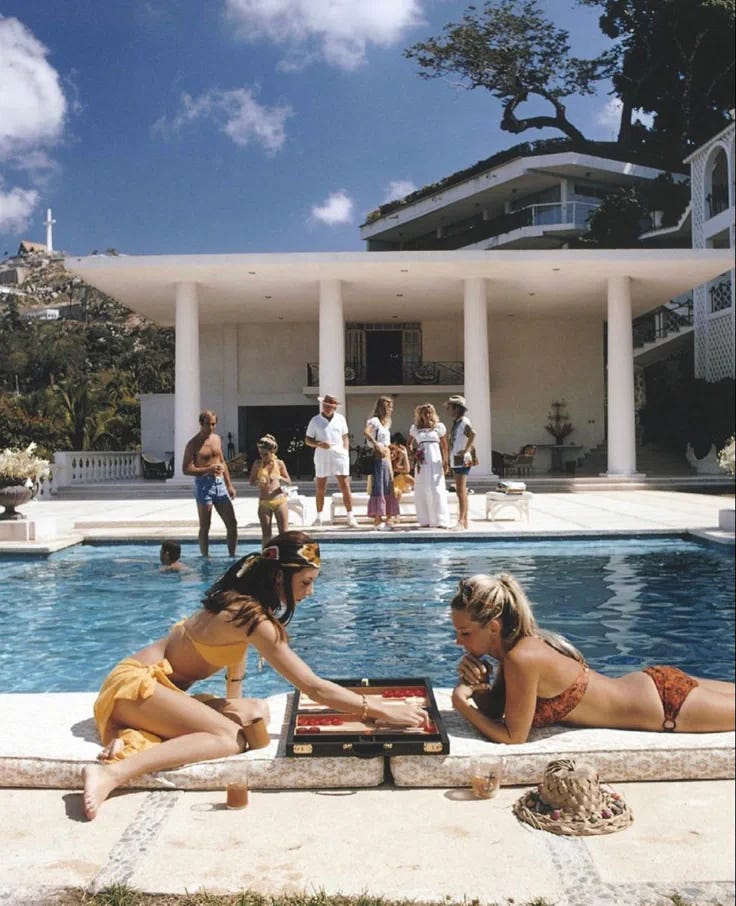
So — what makes the people in Aarons’s images seem so attractive with the least apparent effort possible?
When you consider the idea of attractiveness in the current day, most of what you can see revolves around money and physical attractiveness. Sure — they are concrete assets that certainly elevate one’s status within the social echelon.
But here is the issue.
There are plenty of well-fit, well-groomed men — wearing shirts from Zegna, trousers from Loewe, with an Audemars Piguet Royal Oak on their wrist and perhaps Loro Piana Summer Walks on their feet — but who lack the charm and the aura of attractiveness that the old-world leisure class of the twentieth century possessed.
And, ladies and gentlemen, my intention here is far from romanticising the elite and privileged lifestyle of the few who lived as if superior to others.
No — far from it.
What matters is the larger question:
What really makes someone so attractive in the effortless manner?
If money, luxury objects, and physical optimisation for the algorithmic era are not the answer — and if the answer somehow lies within the aristocrats and socialites Aarons captured — then there must be something beyond the superficial asset.
Something that perhaps lies in the older idea of character cultivation — and in the inner qualities that money alone cannot afford to acquire.
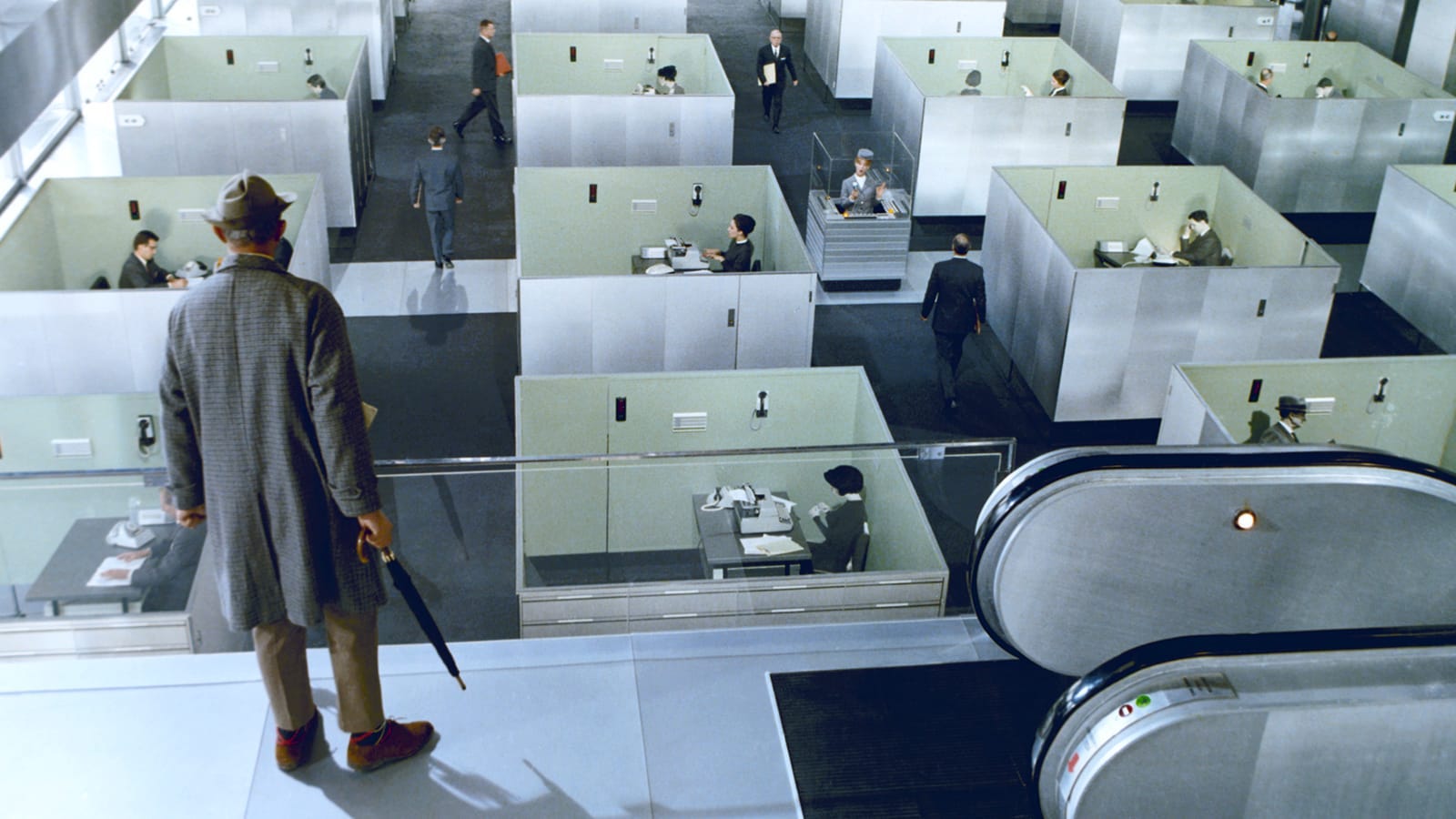
Something has shifted in what our culture rewards.
Everything must now be evaluated according to usefulness, efficiency, optimization, and measurable outcomes. The highest virtues of the current moment are productivity, scalability, innovation, disruption, and growth. Time is treated as a resource to be optimized.
Relationships become networks.
Knowledge becomes content.
Attention becomes currency.
Even the self becomes a project — to be improved through better habits, better data, better routines, better performance metrics.
Success is measured less by what one preserves than by what one builds, scales, or disrupts.
This is the utilitarian ethos. It shapes not only the tech billionaires beyond Silicon Valley — it now shapes every knowledge worker, every metropolitan professional, across the globe.
And here is the consequence:
The idea of literature, cinema, art, architecture, design as a whole, and the very ideology of elegance in life — all of these have turned into extras. Extras that no longer hold significance in the current economy.
But it was not always this way.
Consider Europe around the year 1700.
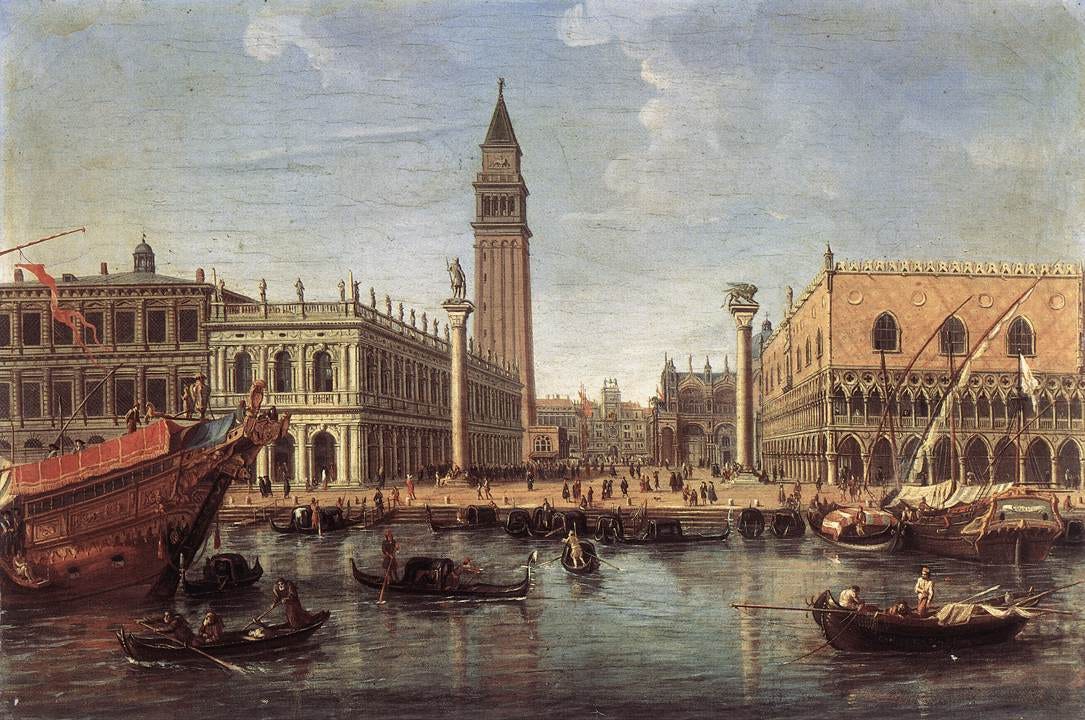
There were no multinational corporations. No stock exchanges. No modern infrastructure — no railways, no electricity, no industrial capitalism as we now understand it.
The urban class that emerged over the following two centuries — the merchants, bankers, industrialists, engineers, lawyers, and entrepreneurs — literally built the modern world. They built banks, railways, factories, ports, insurance companies. They built universities, newspapers, museums, and entire cities.
They were, in the most literal sense, the builders of civilization.
Now here is the part that matters for our discussion.
The first generation of these builders was often ruthless. A merchant, a factory owner, a banker, a railway investor, an industrial entrepreneur. That person built the fortune through what we would today call aggressive utilitarian behaviour.
Then the second generation received a better education. Moved into a more prestigious neighbourhood. Bought art. Purchased a country estate. Developed political connections.
The third generation grew up surrounded by servants, cultural refinement, private institutions, and influential family friends.
By the fourth or fifth generation, the original commercial struggle had disappeared from family memory. What began as raw ambition now felt ancient. The family no longer appeared entrepreneurial in any energetic sense.
It appeared…
Established.
Effortless.
Socially secure.
This is often what people today call old money. And here is the paradox worth noticing:
While the term now presents itself as the opposite of the utilitarian mentality — preferring understatement to display, leisure to visible ambition, inherited taste to commercial excitement, social confidence to self-promotion — much of what we call old money was originally created by exactly the kind of aggressive ambition it later learned to hide.
The ancestor made the fortune by being economically disruptive.
The descendants preserved the fortune by appearing socially timeless.
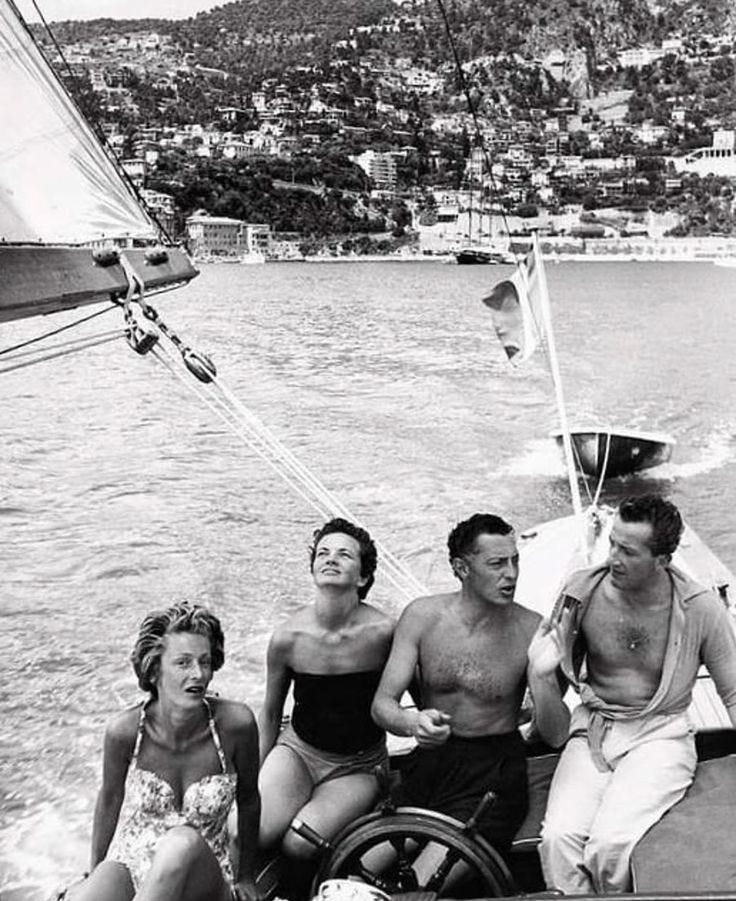
What matters here is the transformation itself.
Over time, these families transformed commercial success into cultural legitimacy. They bought country houses. Collected art. Funded libraries. Established universities. Entered politics. Sponsored orchestras. And gradually shifted from builders of wealth to guardians of culture.
They stopped behaving like ambitious entrepreneurs and started behaving like custodians of civilisation.
Their descendants inherited not only money, but confidence, cultural habits, and the assumption that they belonged in elite circles.
That is the quiet ease we recognise in the photographs of Slim Aarons.
Now — the reason this history matters is not because the current wealth-creating class should aspire to become the next old money.
That is not the argument.
The argument is this:
The virtues we admire in the mid-century figures Aarons captured — the effortless charm, the composure, the cultivated ease — were not intrinsic to their class. They were produced by generations of cultivation, of contact with art, of familiarity with music and literature, of the assumption that certain kinds of interior work mattered.
Today’s world is faster, more fluid, and centred on information rather than infrastructure. Success is measured through innovation, disruption, scaling, and rapid adaptation — instead of through permanence, continuity, or the slow work of becoming a certain kind of person.
Even after becoming immensely successful, many of today’s high achievers continue to define themselves through work, innovation, and the next breakthrough. Their identity remains tied to building, disrupting, solving problems, and constantly moving forward.
The company matters more than the estate. The product roadmap more than the family library. The next investment more than the inherited tradition.
This is not a moral failing on their part. It is the ethos of the age. But it does explain why cultivated character is now so rare — and why, when we encounter it, it feels almost anachronistic.
Yet the cultivation of those older virtues — literature, cinema, art, architecture, design, and the ideology of elegance in life — are, in my opinion, the very things that made the people in Slim Aarons’s images so attractive in the first place.
Not the generational money.
Not the objects or the places.
But the inner characters that had been accumulated and cultivated inside them — until it appeared as their nature.
And in this age — where everything has turned into optimisation for metrics, productivity for productivity’s sake, and speed above all else…
Those characters of an old-world individual have never been more needed.
And, perhaps, never more quietly rewarded.
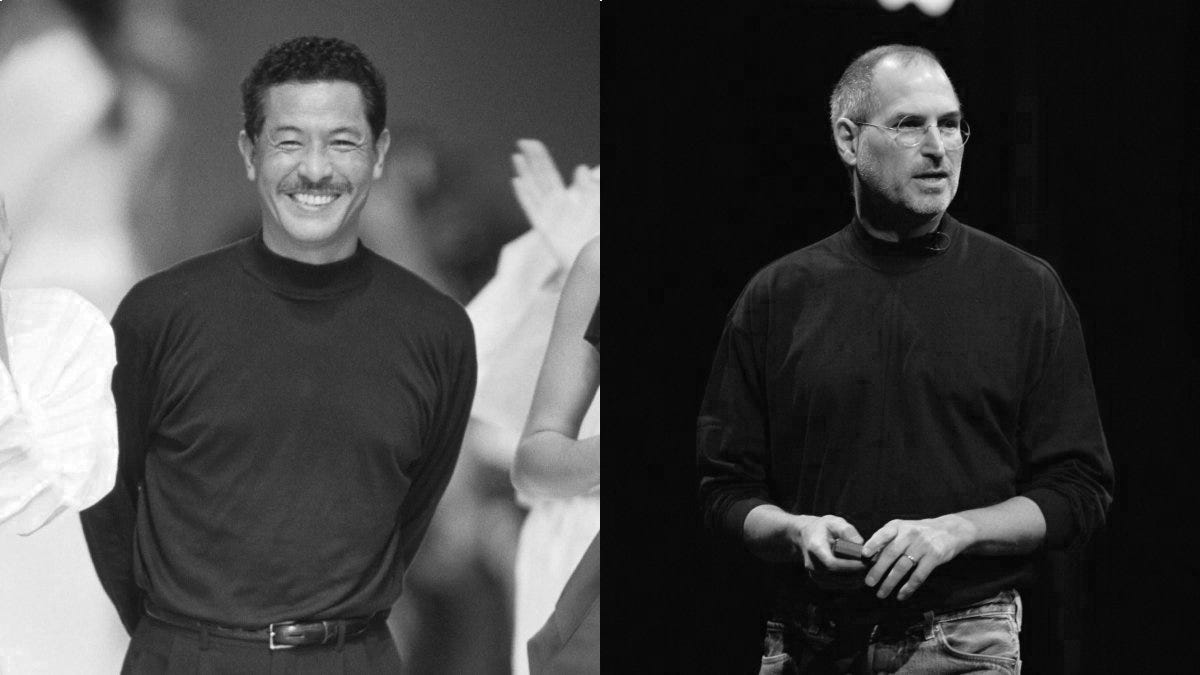
“Knowledge is capable of being its own end.” — John Henry Newman, The Idea of a University, Discourse V, 1852
In a world where almost everyone is chasing the same metrics, the people who stand out are often those who are not governed by them.
Someone with genuine taste filters out noise instead of following every trend.
Someone with a coherent worldview remains steady while public opinion constantly shifts.
Someone with inner character does not need to perform confidence — because confidence has become part of who they are.
Such people possess something increasingly rare: an internal centre of gravity. They are not constantly pulled by the demands of algorithms, markets, or social approval.
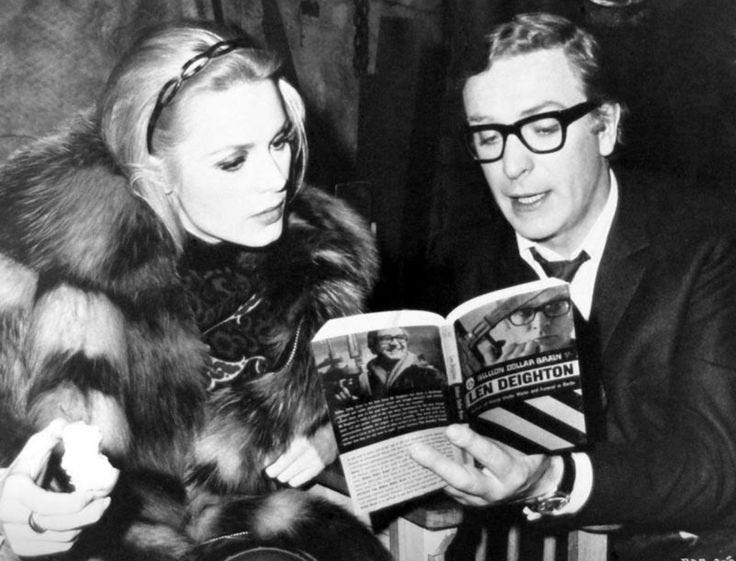
This is why the qualities we associate with the old-world individual — cultivation, restraint, elegance, curiosity, composure, intellectual breadth, quiet confidence — feel surprisingly modern despite their age.
They are no longer common. And scarcity creates value.
In an economy that rewards speed, the person capable of deep attention becomes exceptional.
In a culture that rewards visibility, the person who does not seek attention often commands it.
In a society that measures almost everything, the most important human qualities remain the ones that resist measurement.
The future may belong to technology. But distinction will increasingly belong to those who remember what technology cannot replace. Competence will always matter — but as competence becomes more widely available through software and artificial intelligence, character, taste, judgment, and wisdom become the stronger differentiators.
Given all of this — given what the contemporary world has forgotten about what makes a life interesting, beyond mere consumption and status accumulation, beyond digits on a financial portfolio or hours logged into Slack — I would like to offer a case study.
A case study of how a cultivated character can turn one individual into a figure of distinctive presence — with elegance, ease, and effortless charm.
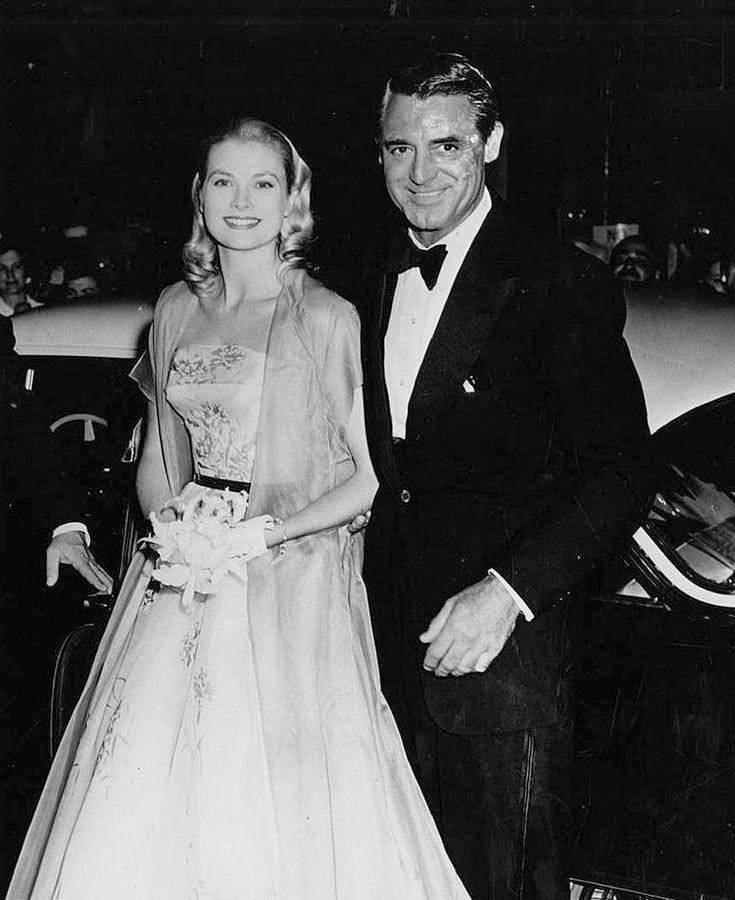
This might be an extreme case — but it is worth revisiting this gentleman of Hollywood: Cary Grant. (I have dedicated a full piece to this man’s remarkable life — here.)
Imagine being born as an insecure, poor child with abandonment issues in early-1900s Britain — then, two decades later, landing in New York City. The Land of Opportunity, at least at that time.
That is the beginning of Archibald Leach.
With his unique ability — not in acting, but in becoming, through sheer relentless aspiration for a better identity — he studied the people of high society he met along the way.
From Douglas Fairbanks Sr., whom he first met during a transatlantic cruise to the United States, to observing the gentlemen of Fifth Avenue in Manhattan — how they talked, how they walked, how they spoke, how they dressed.
Throughout the 1920s, Archibald Leach learned everything. He read the great books. He filled himself with the character of the cultivated class — a character that was usually passed along through generations of families he had not been born into.
So when Hollywood discovered him — and as the studios loved to do in that period, by changing his name into something more sophisticated — Cary Grant was born.
And from that moment on, the world had one of its greatest icons. Of the gentleman. Of the actor. Of the individual figure who proved how much greatness one can achieve.
What amazes me, when I look back at his early type-casting, is that he was usually cast as an Anglo-upper-class character on film.
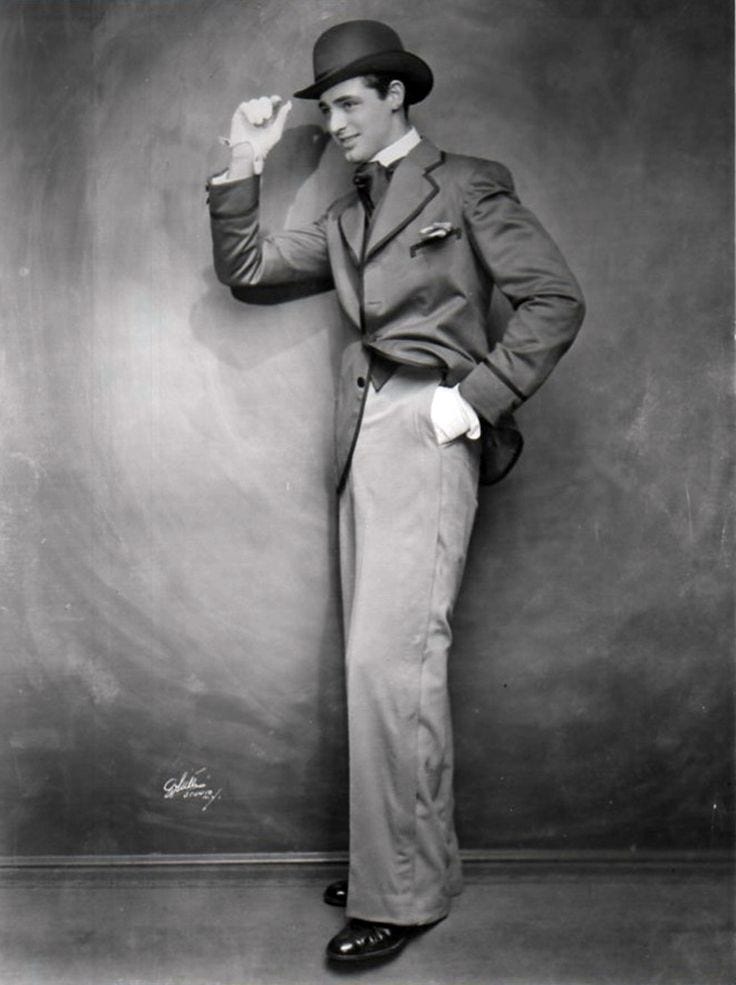
Which is no wonder, considering he was able to navigate Hollywood parties, date socialites, and perform — both on screen and off — so effortlessly.
The man had just spent a whole decade cultivating the inner qualities he had not inherited.
He was not supposed to know that much about clothing — though his father, apparently, had given him some good advice on leather shoes and suits. He was not supposed to have that particular Transatlantic accent. Nor those gestures. Nor that distinct knowledge on specific subjects.
None of it belonged to his birthright.
And that is why I am an advocate of this position:
Inner qualities — character, point of view, personal taste, cultural intelligence, social etiquette — know no boundaries. They are far from limited to the elite.
Which means: you, me, and millions of others across the globe can achieve the state we recognise in Cary Grant, or in the industrial heiresses of Slim Aarons’s photographs.
In the end — the most alluring quality is the ability to exist without the need to be noticed. And without the sense of eagerness that gives one away.
This is the state we recognise in the most elegant person in any room.
Elegance and ease cannot be separated. And the idea of reaching the state of “I do not have to prove anything to anyone” is the key to entering it.
Which completes the circle of the question we opened with:
What makes some people effortlessly attractive?
Even when we have seen no logo on their clothes, on their car, or on their watches.
To be elegant is to be willing for the hard life.
Not in the usual sense — but in a way that contradicts what contemporary society rewards.
It is no longer an obligation. It is no longer an expectation. It is not immediately rewarded through engagement metrics.
It takes a long time to begin to notice within yourself.
And a long time before others begin to notice it in you.
But it is a path that, once you have decided to walk it, you cannot simply return from.