


I used to hate jeans.
Either from wearing it myself or seeing ‘the masses’ wear it.
Looking back at that thought, I feel quite ashamed to have had that judgment of this garment. Though I couldn’t help it, since the ‘image projection’ of the majority of people who wear jeans these days—especially men—has somewhat been labeled as ‘casual, slop and loose’ (for women, they tend to know well which cut and silhouette of jeans will serve their body, from fuller, flair to the current baggy trend).
The funny thing is—before I embarked on my sartorial journey, 7–8 years ago—even back when I was a student, my ‘ensemble’—the most favorite one without knowing why—was ‘white shirt with indigo denim and white sneakers’. Even if it’s the fact that the shirt was made of cheap polyester, the jeans were skinny and tight to every muscle molecule of my lower body (with a lower rise also)…
I still remember the feeling of wearing it:
“uncomfortable by body, but so ‘comfort’ emotionally.”
I didn’t know why—until this current phase of my life, when I began to ‘realize’ the truth behind clothes & culture—that they are always associated with each other, always.
Now that I’m back for a break from the globe-trotter phase—in Bangkok again… the place that I once resented and accused of its superficialness, overly casual nature, and ‘jeans’ everywhere—I confess to you that in the past week, I wore ‘jeans’ more than tailored ‘wool’ trousers that I once thought were the pinnacle of comfort and style.
With the only denim I have—the high-waisted, flared, green-cast indigo from Husbands—from cosmopolitan casual to tailoring-oriented ensemble, whether I wore it with a classic white T-shirt or with a jacket and striped shirt inside—the jean ‘anchors’ me to stay ‘attuned’ to modernity more than the double-pleated wool trousers I’m fond of.
The question that is worth ‘exploring’ is:
“Why is this happening?”
Not only for me, but for many like-minded individuals whom I know, who love style from a bygone era but do not stick to the exact past.
What makes ‘jeans’ and ‘modernity’ have such an unbreakable bond with each other?
Why is it the most empirically practiced way to ‘integrate’ elegance into the modern world?
And we shall start by ‘exploring’ this term ‘modern’ at its core.
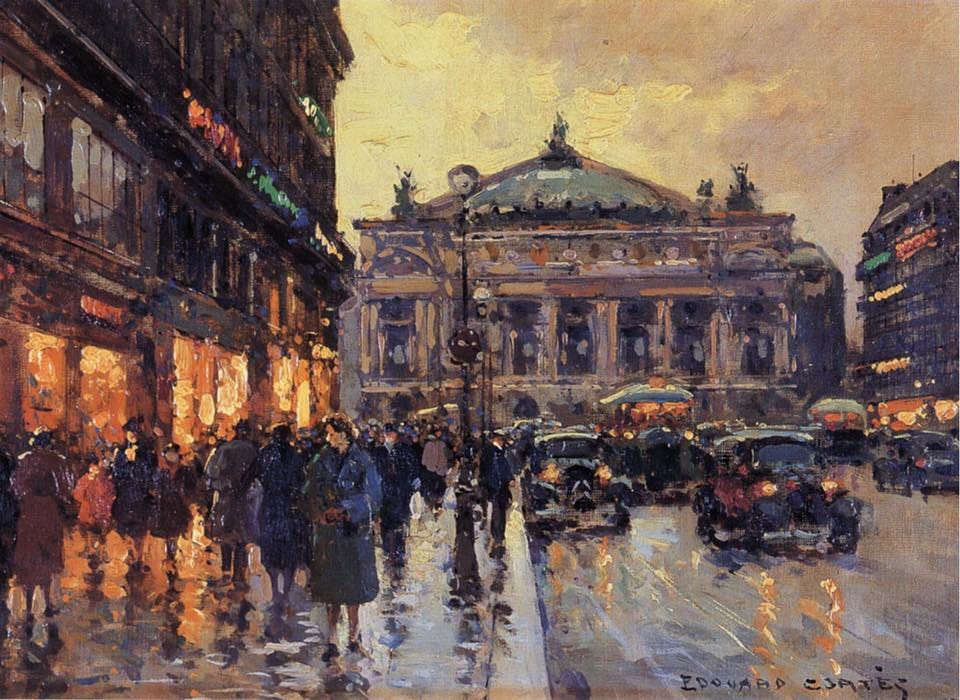
“Modernity is the transient, the fleeting, the contingent; it is one half of art, the other being the eternal and the immovable.” - Charles Baudelaire
‘Modern’ usually refers to the era that emerges out of the collapse of medieval structures and crystallizes between the 16th and 18th centuries, gaining full force with the Enlightenment and industrialization.
But “modern” is more than a timeline—it is more of an archetype.
The modern individual is defined by a belief that the world is understandable, improvable, and ultimately controllable through human reason. This is the birth of the autonomous self: the idea that identity is self-constructed rather than inherited. It produces ambition, innovation, and scientific breakthroughs—but also anxiety, alienation, and the constant pressure to redefine oneself.
So the idea of modernity really fractured in the mid-20th century, when the same systems that promised advancement also produced instability, alienation, and contradiction.
Take Antonioni’s so-called trilogy—L’Avventura, La Notte, and L’Eclisse.
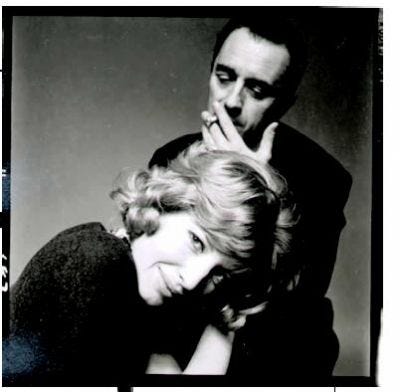
These films don’t just depict alienation; they expose the failure of the modern promise. His characters are materially comfortable, socially mobile, and “free” in the modern sense, yet they drift—unable to anchor meaning.
The same tension is applied to mid-20th-century philosophy by two prominent figures: Jean-Paul Sartre and Albert Camus. One pushes the modern idea to its extreme—if there’s no predetermined essence, then you are entirely responsible for who you become. The other looks at this “modern” condition and essentially says: the universe doesn’t care about your search for meaning.
Things also happened in architecture, interior design, music, and culture as a whole—forces that began to challenge old-world power structures and ‘break through’ them with rigorous intensity, as seen in the counterculture movement.
So what followed from the 1960s was a loss of certainty, and it is here that the “contemporary” begins: a world still built on modern structures—capitalism, technology, individualism—but no longer confined to a single narrative of progress. Instead of moving forward with clarity, everything now coexists—styles, values, identities—without a dominant center.
And here comes the ‘game-changer’: people began dressing more ‘freely’ than ever—and were socially accepted to do so for the first time.
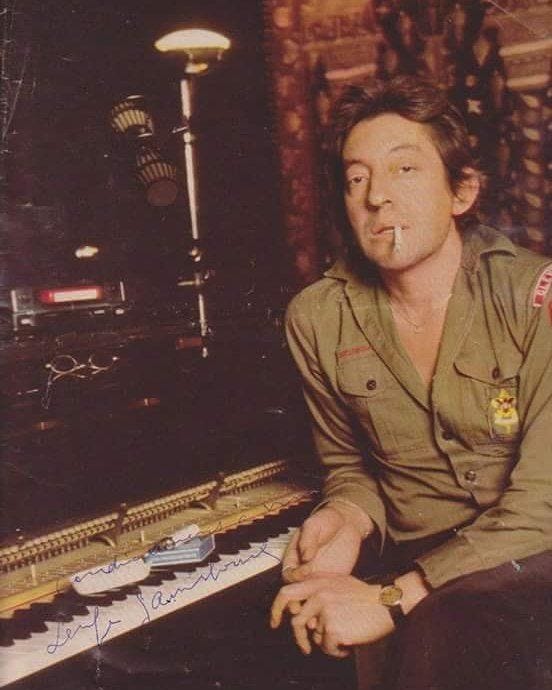
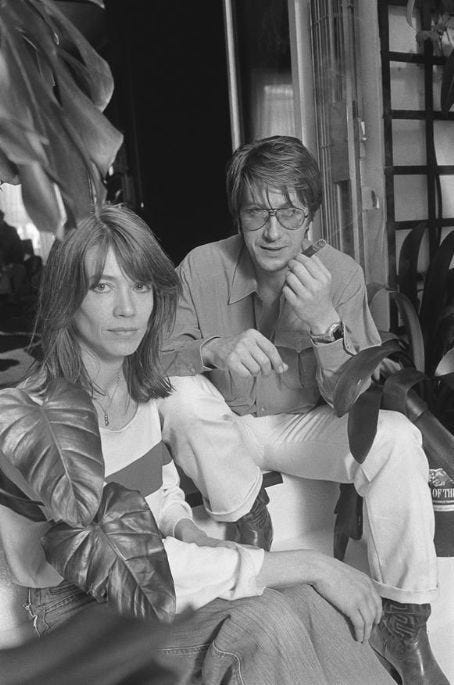
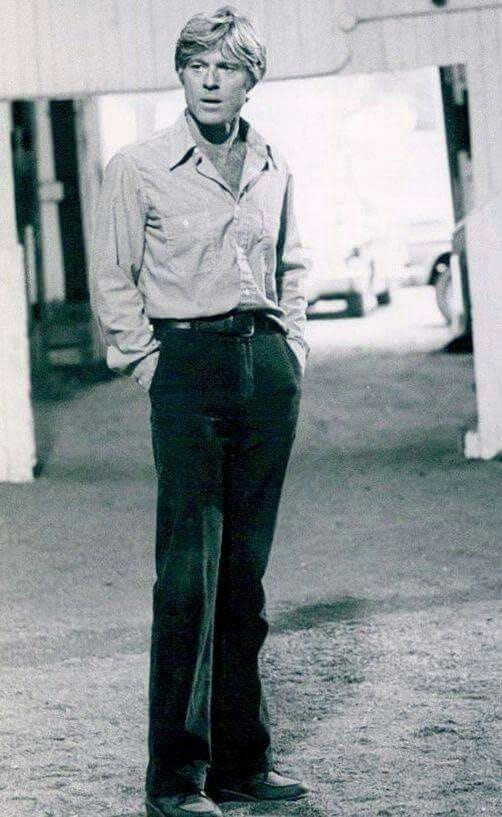
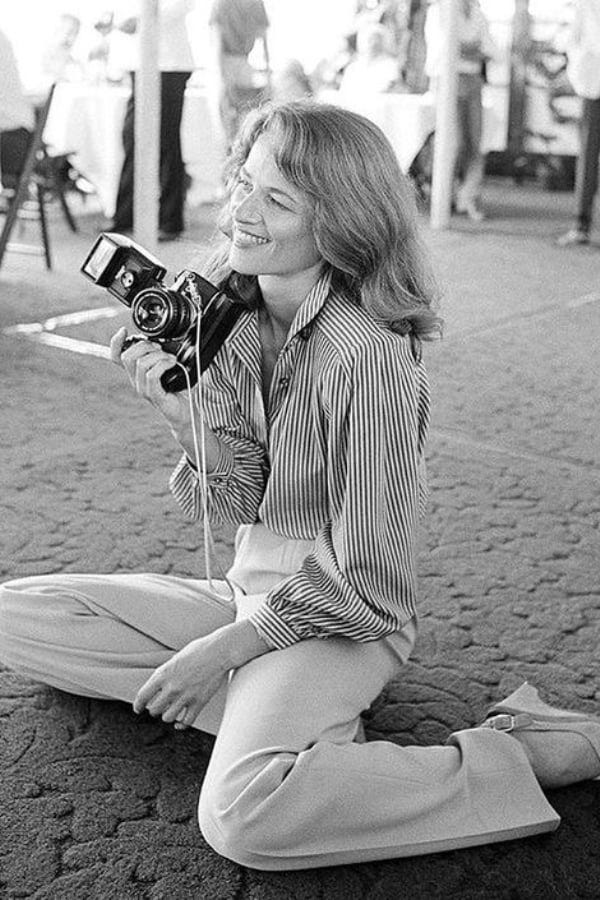
Ladies and gentlemen, what do you see from these iconic archives during the 1970s?
Sure, they represented the quality we cherish—elegance—without any doubt… either in the years these pictures were taken or in the current day and night.
The thing is, if we place all of them in 2026—whether in new-world metropolises like Bangkok, Dubai, Tokyo, or old-world European capitals like Milan, Paris, Vienna—even though modern masses do not dress like them anymore, they still ‘look and feel’ attuned to our era, even 50 years later.
On the contrary, if it were Cary Grant in the 1930s or Audrey Hepburn in the 1950s—their style and attire would certainly feel ‘out of place,’ and it would be difficult to call it ‘elegance’ within the contemporary atmosphere.
The real mechanism behind this phenomenon is this—they are the first generation dressing under the same philosophical conditions we still live in.
No fixed dress code
No obligation to signal class through clothing
Comfort and individuality prioritized
Mixing of formal and informal normalized
After the counterculture, these became the values by which people have approached clothing ever since.
And that is why, if the city you’re living in has no historical rooting associated with old-world glamour—like Bangkok, where I’m living now—no matter how light the fabric of your wool suit is, or how soft the calfskin of your oxfords are, you cannot achieve ‘attunement’ with the city and the modern masses.
Now, here comes our protagonist in this editorial—‘Jeans’.
Because… if there’s a garment that those icons of the 1970s ‘always’ incorporated into their ‘elegant ensemble’ as a part of it—it is this garment that serves as a ‘democratic anchor’ to make elegance alive.
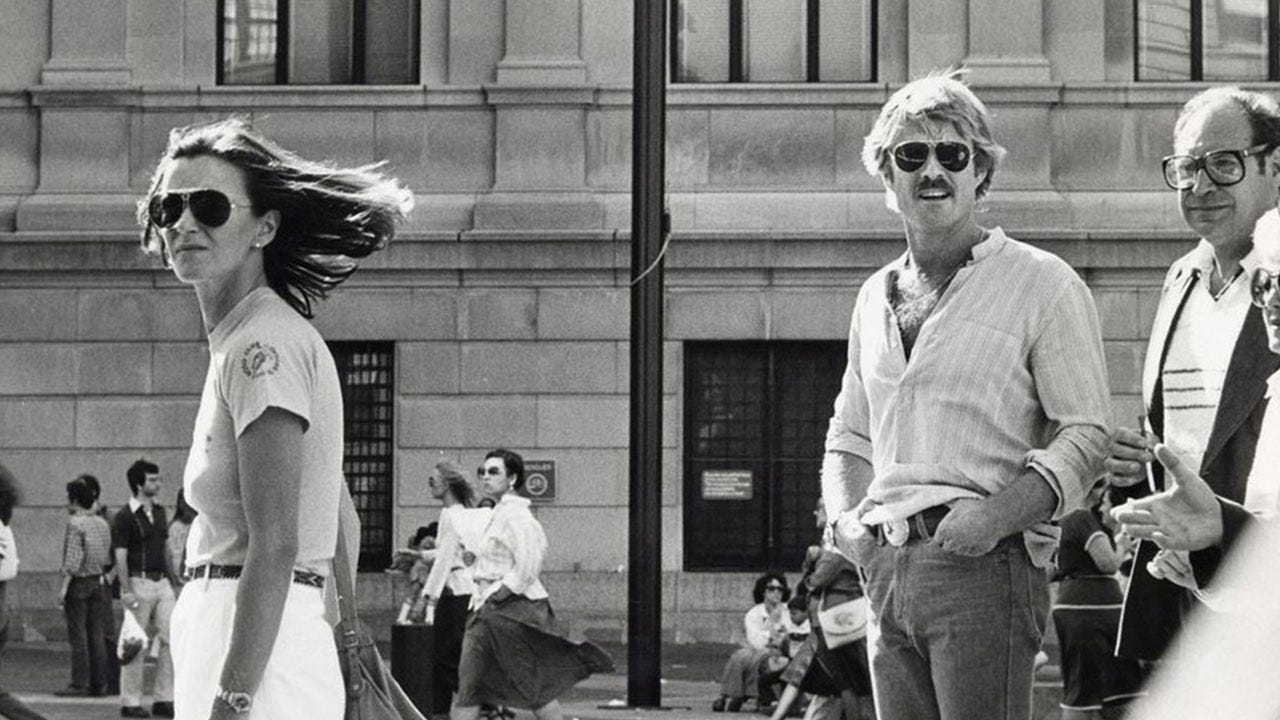
This garment has been with us for more than a century—considering that Levi Strauss debuted it in 1873—specially made for miners and laborers. So by original intent, denim begins as pure function, completely outside the logic of fashion. Which means jeans carry no original connection to status, taste, or elegance—only utility.
However, there’s a significant connection between the idea of putting this blue-collar garment into civilian wear and the shift in the norm of dressing, as we’ve discussed above.
For decades during the early 20th century, workwear is workwear.
Civilian dress (especially in cities) remains coded, hierarchical, and formal. Then the mid-century starts eroding those boundaries: mass media spreads images, youth culture emerges, class mobility increases.
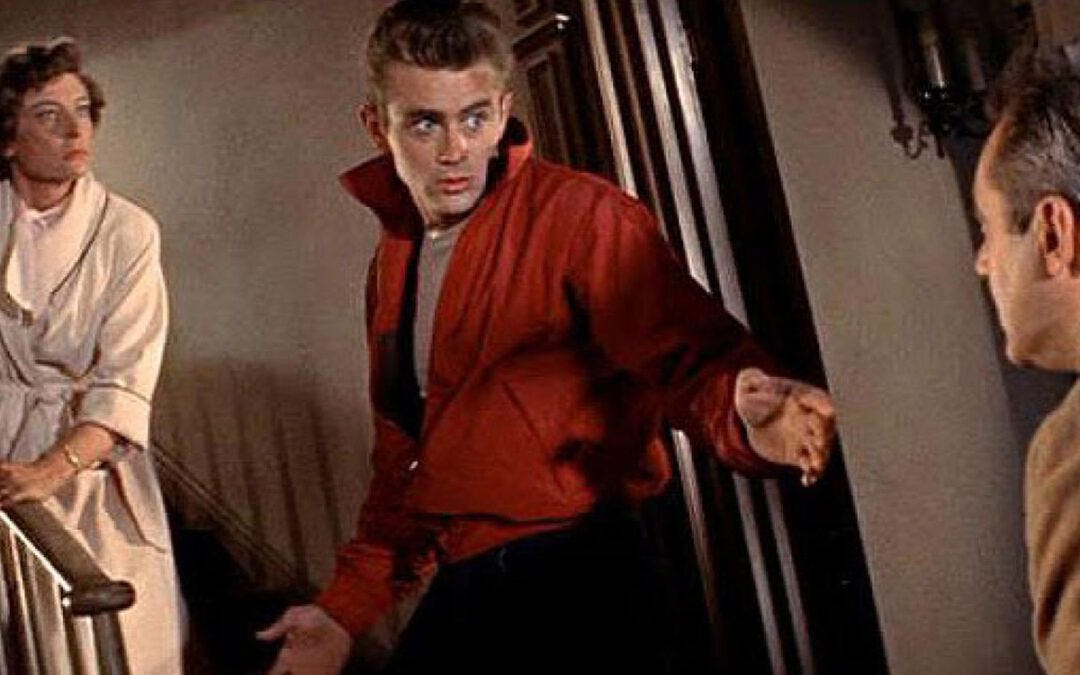
Denim begins to leak into civilian life—first as rebellion—think James Dean in a red Harrington, white tee, and indigo jeans in Rebel Without a Cause; the perfect representation of how the identity of youth and the clothes of jeans reflected each other).
So the real shift happens when denim stops being rebellious and becomes normal in the late 60s–70s (and it still is ever since).
It is the moment that society no longer requires clothing to visibly encode your role.
Once a former miner’s garment can be worn by artists, actors, elites, and everyday people alike, the old system—where clothing clearly communicated class and function—has effectively collapsed.
And from there, everything we discussed follows:
Designers integrate denim → because the hierarchy is already broken
Icons wear denim with tailoring → because mixing no longer violates rules
Global cities adopt it → because it requires no shared cultural code to “read”
Denim works everywhere—from Milan to Tokyo to Bangkok—because it is the lowest common denominator of dress in a fragmented world.
But ladies and gentlemen, don’t mistake this for equality or simplicity.
Because the irony here is that:
While denim helped dissolve visible class distinctions in clothing… it then became one of the most sophisticated tools to reintroduce distinction subtly—through cut, wash, craft, and styling.
It’s obvious that jeans—because of their democratic nature—lead to the fact that the masses adopt them, and most of the time, the ‘silhouette’ and the aesthetic are far from pleasing… sometimes, the pair is low-waisted with too tight hips and a poor, excessive break at the hem. Or sometimes the shape is too avant-garde and leans into ‘fashion-forward’ with no restraint, like the current ‘baggy trend’ or exaggerated flares.
Don’t get me wrong, I do love the ‘flared’ silhouette; it’s very flattering, and very sophisticated to wear one if you know yourself—both physically and psychologically… so if you wonder ‘how to achieve elegance when wearing one’—here is my complete playbook.
#1 Getting to Know Your Body Shape
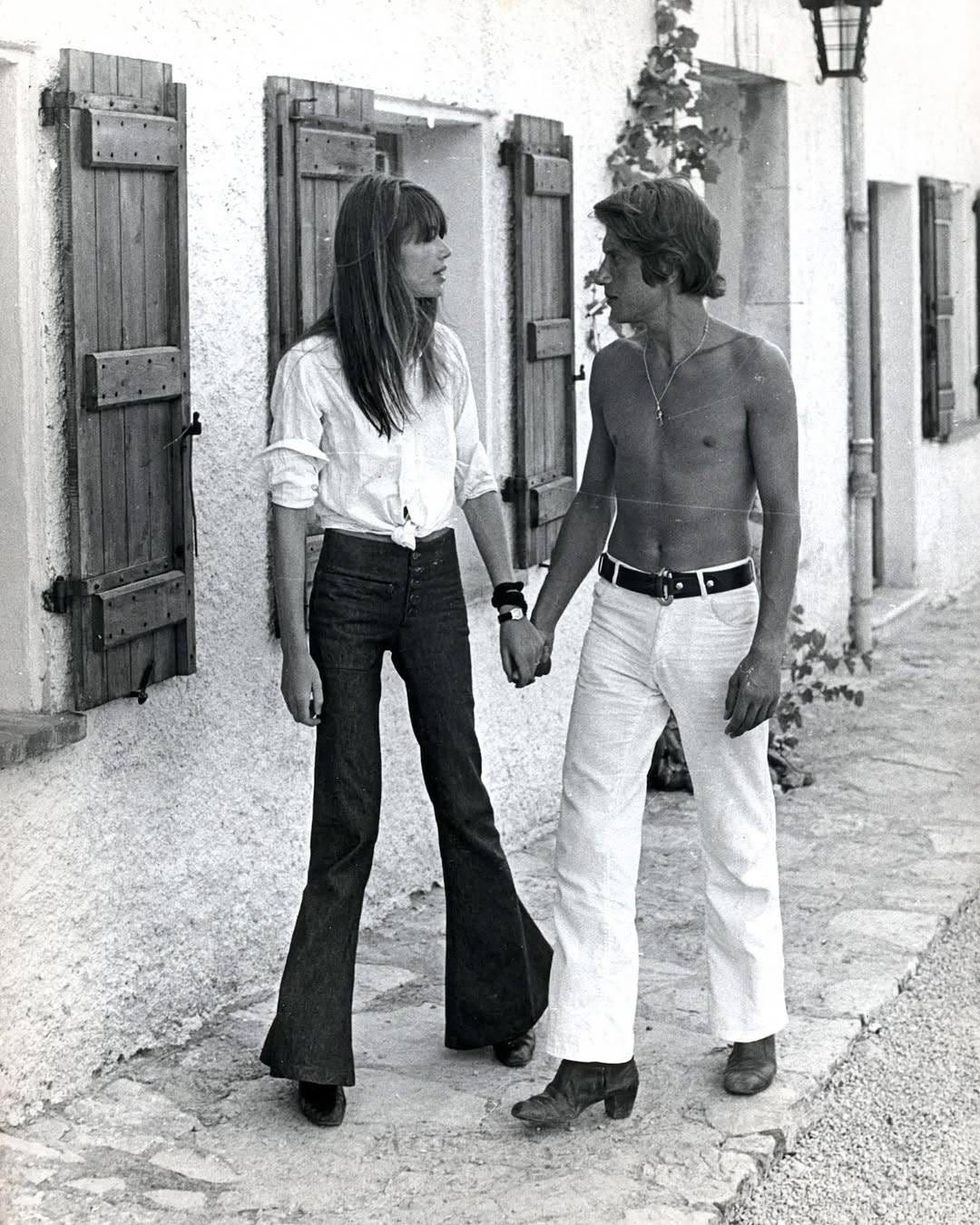
Elegance in denim begins not with the garment, but with the man—or woman—wearing it.
Since the garment itself, by nature—or at least when it was invented—has a certain structure, a rigidity of its own that serves differently than, let’s say, dress trousers. By understanding your body shape, you allow jeans to become an extension of your proportions rather than a contradiction of them.
Because most jeans have a ‘mid to high rise,’ do not expect them to feel like wearing pleated high-rise trousers—which is the great thing and beauty of it. Also, the proportion of jeans is usually cut to ‘hang’ on your lower body anatomy by nature; so even if it’s one that is cut in a straight leg, like the iconic Levi’s 501 with an 8-inch leg opening, it is still more ‘tapered’ to your body than most trousers would be.
That’s why knowing your own shape—how long your torso is compared to your lower part, how big or slim your legs are—really matters in deciding whether ‘denim’ will give you elegance or not.
When denim respects your architecture (or you respect denim as it is), the garment itself begins to look less like casual wear and more like a deliberate choice of a man or a woman wearing it.
#2 Always Be Mindful of ‘Garment Quality’
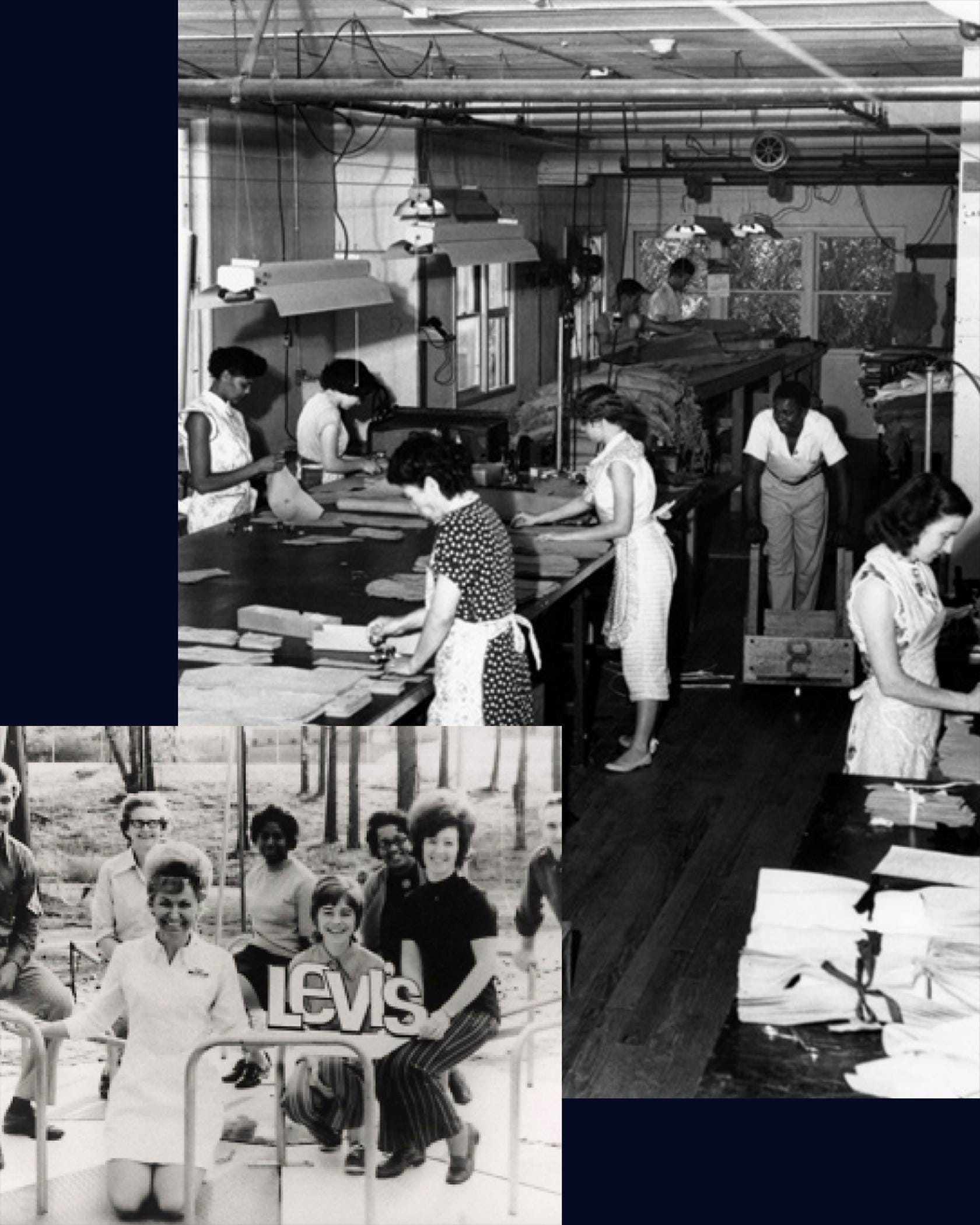
Denim, despite its rugged origins, is a fabric where quality speaks quietly, but unmistakably.
A superior pair of jeans reveals itself through the density and integrity of the cloth, often selvedge-woven (the red-stitched edge on the inside out-seam).
Also, you can notice the quality through the evenness of the twill, the richness of the indigo dye, and the precision of the stitching—chain-stitched hems, bar tacks placed with purpose, rivets that are functional rather than decorative afterthoughts.
Over time, a well-made pair develops a patina unique to its wearer, acquiring creases and fades that no factory can convincingly replicate. That quiet evolution is, in many ways, the essence of elegance.
(If you would like to explore more on ‘How to Spot Quality in Denim’—this article from Permanent Style helped me in the early days, and I do believe it will do the same for you.)
#3 Study the ‘Design’ Philosophy Behind

Every pair of jeans carries with it a lineage—either from workwear roots in the late 19th century, rebellious subcultures in the mid-20th, or modern reinterpretations you can see many designers return to again and again.
By understanding that narrative, you elevate how you wear them.
A classic five-pocket design, for example, originates from 19th-century utility garments, built for durability and function. Contemporary designers may refine this archetype with subtle adjustments: a cleaner pocket shape, a more refined rise, or a minimalist hardware approach.
When you appreciate these decisions, you begin to choose denim not merely for appearance, but for intent. For instance, my green-cast indigo, high-waisted flared denim from Husbands is a ‘Parisian’ interpretation of bringing the 1970s cultural scene into the garment—and can be worn with tailoring elegantly; through Japanese fine denim, minimal detailing, and an elongated silhouette—much like the French icons of that era.
Each brand has its own philosophy—Levi’s with its workwear rugged roots, Wrangler with cowboy cool; on the Japanese side, Fullcount with its Zimbabwe cotton that turns denim into something that feels almost like trousers, or Resolute, which pays homage to 1960s Levi’s, reflecting youth and rebellious cool through the precision of a Japanese lens.
The thing is, elegance lies in coherence—and aligning the story of the garment with the context in which you wear it is one of the easiest ways to achieve that.
#4 Incorporate with Other ‘Classics’
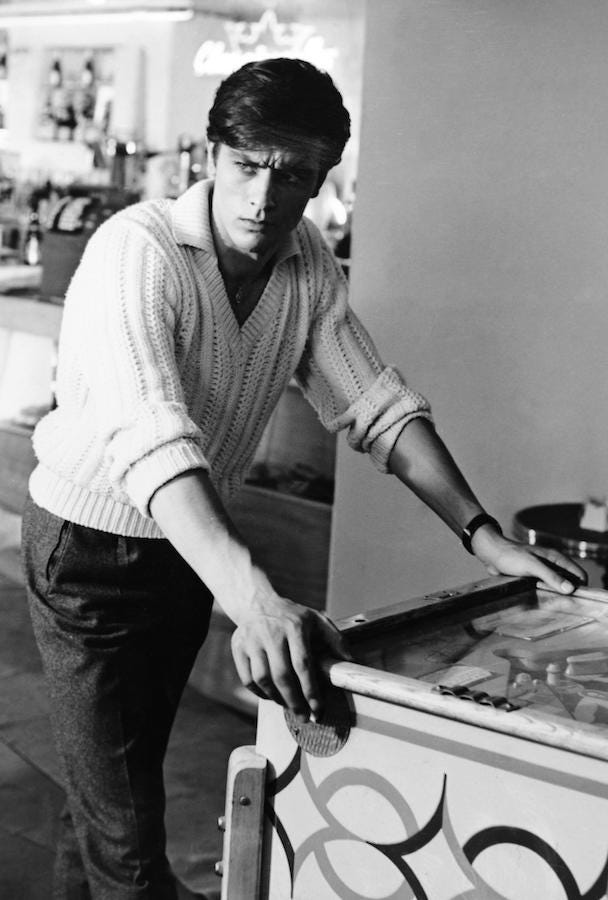
Denim achieves its highest expression when it converses with other timeless pieces.
With its informal nature, when incorporated with classics—cashmere crewnecks, long-sleeve silk shirts, tailored jackets, leather shoes, structured coats—garments that carry historical weight—you create a balance between the contemporary and the elegance of a bygone era, made into alignment.
The key is balance—allowing denim to soften the rigidity of tailored garments, while those classics, in turn, elevate the denim beyond its utilitarian origins.
Done well, the ensemble does not appear dressed up or down, but simply resolved—each element supporting the other in quiet agreement.
From the fact that, while I’m writing this piece, I am wearing a vintage Wrangler bootcut in deep indigo (that has already faded in its own unique way)—the feeling of doing so is much different from wearing jeans in the 2010s, before I was enlightened through my sartorial pilgrimage.
Since my ensemble here is a combination of white linen, black calfskin Cuban-heel Chelsea boots, and finished with a black-strap tank watch—the mood and tone are far from the typical ‘denim’ modern look, but lean toward a louche yet architectural silhouette that provokes the essence of Continental elegance in the 20th century—all without feeling or looking out of place in a modern, casual, tropical metropolis like Bangkok.
A perfect bridge between a world that required structure and a world that rejects it.
In newer, accelerated metropolises like Bangkok or Tokyo, codes of elegance in the old-world sense—through tailoring and couture—were never deeply rooted to begin with. These cities don’t have a long cultural memory telling people what a suit or a well-cut black dress “means,” so pure elegant garments can feel imposed, even artificial.
Denim somewhat solves that tension.
It carries no historical obligation in those contexts—it is globally neutral, socially flexible, and immediately legible. When you combine denim with tailoring, you soften the rigidity of the latter without discarding it entirely. The jacket stops looking like a uniform and starts functioning as a choice.
More importantly, denim allows tailoring to survive in a world that no longer respects formality as a default.
Once clothing stopped being a requirement and became a form of expression, pure tailoring lost its natural habitat. It needed something to destabilize it—to make it feel voluntary rather than enforced. Denim introduces informality, movement, and a sense of lived-in reality that tailoring alone often lacks today.
That’s why, in contemporary cities—especially those defined by speed, climate, and global influence—denim becomes the anchor. It grounds the outfit in the present, while tailoring adds intention and refinement. Without denim (or something like it), tailoring risks looking like a costume from a system people no longer believe in.
Basically, in our current grand culture, denim translates tailoring into a language that contemporary life can understand. It removes the demand for obedience while preserving the possibility of elegance.
And I would argue this clearly:
“In places without centuries of sartorial tradition, that translation is not optional—it is the only way tailoring can feel natural rather than performative.”
Which, in your own wardrobe, the garment so-called ‘denim’—a well-considered, well-crafted, well-cut one—truly deserves a place. It surprisingly allows elegance to remain believable under modern conditions.