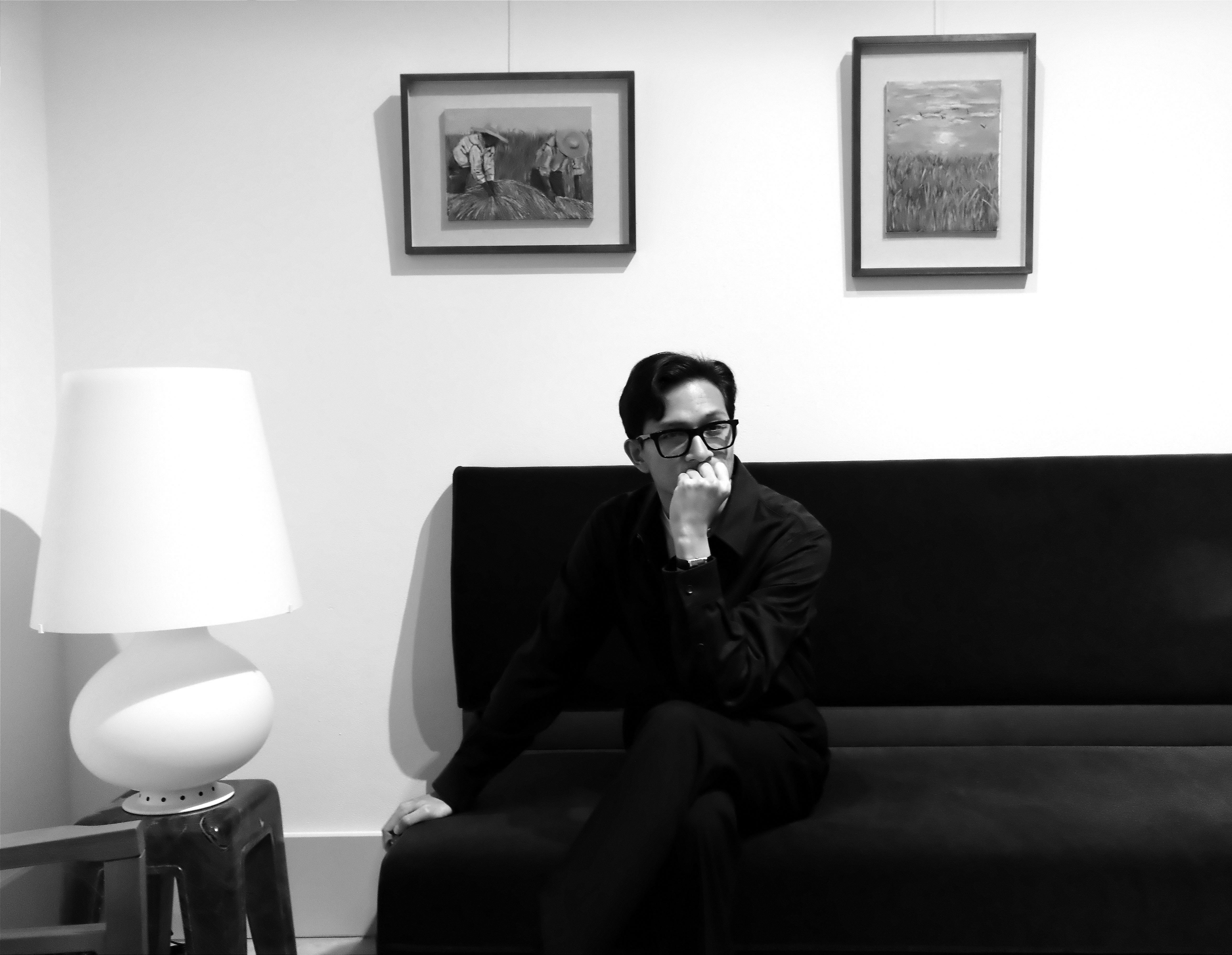
When is the last time you were able to sit still — alone — in your room, without touching or doing anything?
For me, apart from meditative sessions, it’s really hard to reach that state. It seems the modern world demands that we keep moving all the time, demands us to connect, update, and “stay in touch with other people’s lives” — whether we want to or not.
The dilemma is: how do you know whether those actions are truly what you desire, if you’re not even able to stop and ask in the first place?
It seems that since the evolution of the internet and social media — and especially in this moment, where attention spans have declined to what feels like a historic low — distraction has become inevitable… and it affects life in multiple dimensions.
In the realm of work, particularly within the ‘knowledge worker’ sphere, scattered attention doesn’t allow one to sit still and focus — truly focus — on a single task with quality. Even more so when what people call ‘work’ these days often looks like entering data into a spreadsheet, while opening emails in another tab, and answering pings on Slack…
Well…I’ve lived that.
And I have no intention of saying that this modern way of working is necessarily bad. The system is simply designed that way.
But what remains unsolved is the kind of work that requires deep focus — a singular, attentive state of mind that allows an individual to push through without distraction.
“Deep Work: Professional activities performed in a state of distraction-free concentration that push your cognitive capabilities to their limit. These efforts create new value, improve your skill, and are hard to replicate.” — Cal Newport, Deep Work
It’s been a while since I last mentioned Cal Newport — from one of the first self-help books I read half a decade ago — but the idea is timeless, and its validity is undeniable.
With constant distraction, the kind of work that truly matters — the kind that contributes to meaningful creation in civilization — rarely happens. And the same applies to our daily experience of life.
When your mind is wired for notifications all the time, it becomes addicted. Dopamine itself cannot distinguish what are actually meaningful; it simply responds to whatever perception it receives — reward, stimulation, novelty…
All of this leads to a quiet crisis: we can no longer allow ourselves to stay still. To observe. To live simply without feeling guilt — whether it comes in the form of “You’re not being productive” or “You’re missing out.”
I’ve felt this recently, I admit.
It’s been harder and harder to just close my eyes and focus on my breath. Harder to sit still and watch people. Harder to truly spend time appreciating the substance of things without being pulled toward the next shiny object.
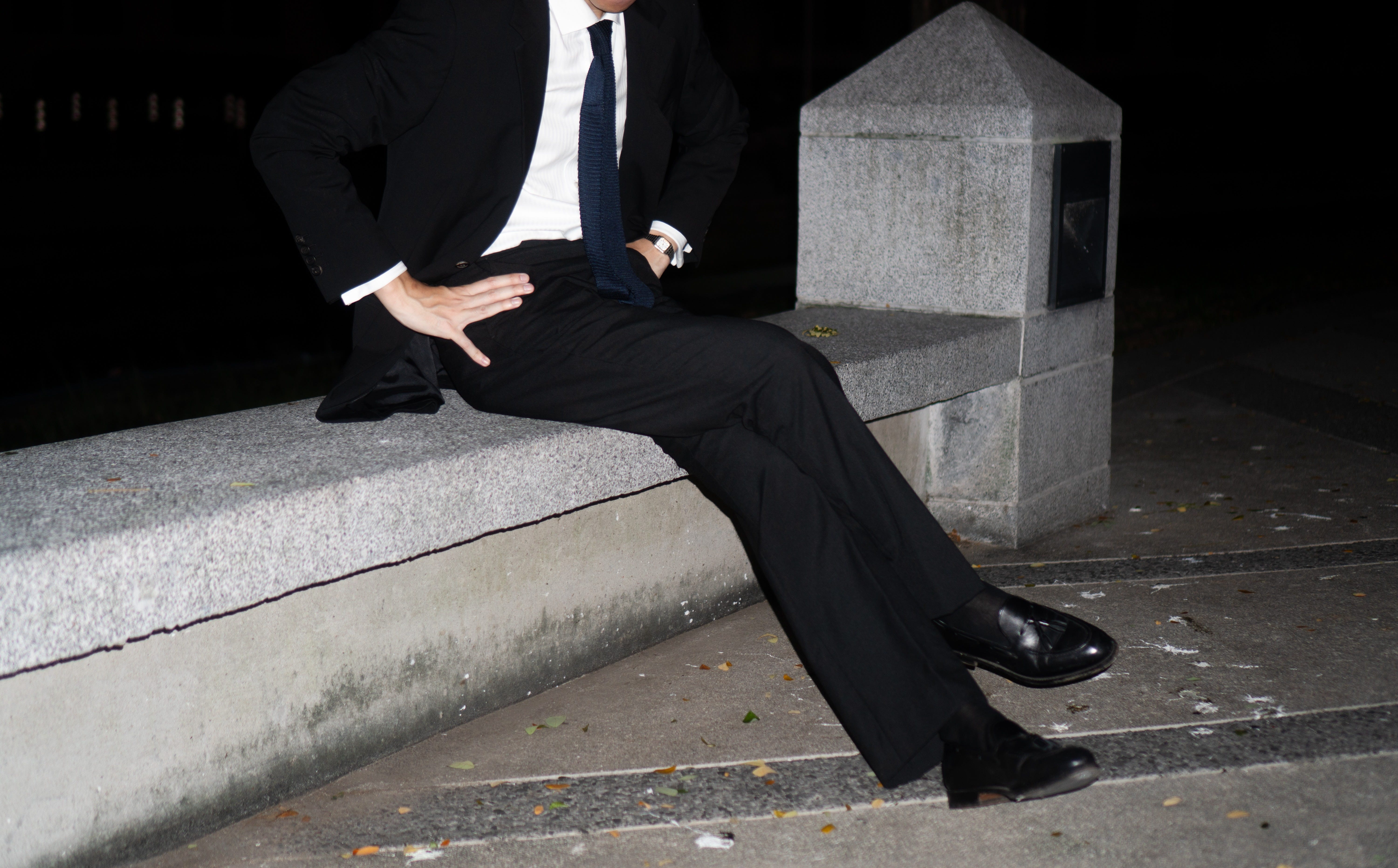
Garments — sartorial pieces especially — are things I’ve accumulated them over years, whether freshly tailored or archive vintage. And while there are pieces I’ve spent real time with — like the failed suit, or the charming Prada black jacket that brings out the intellectual side of the wearer — there are many others left unexamined, unexplored.
And that’s a shame.
In the end, while clothing’s primary function is to regulate body temperature, it has always meant something beyond that. It is an object of non-verbal communication — a way to tell the world who you are without saying a word.
And the message — the essence behind that aura, those unspoken words — comes from the maker who crafted and designed it. Especially when thought, personality, and worldview are embedded into the piece… it becomes, in a sense, art.
And art has always been something that stays with humanity from the very beginning.
It’s this idea — of seeing art and clothing as part of the same cohesive language — that allows me to slow down, even within this chaotic, hyper-dynamic world.
To pause.
To become aware of what I already have in my closet, and how to integrate it aesthetically into my life — into the identity I choose to project that day.
Which leads us to the larger question we’re about to explore:
Why does art matter in the first place? And how does it remain a path — for both creator and observer — to nourish the soul, and perhaps bring us a little closer to the tranquility we seek?
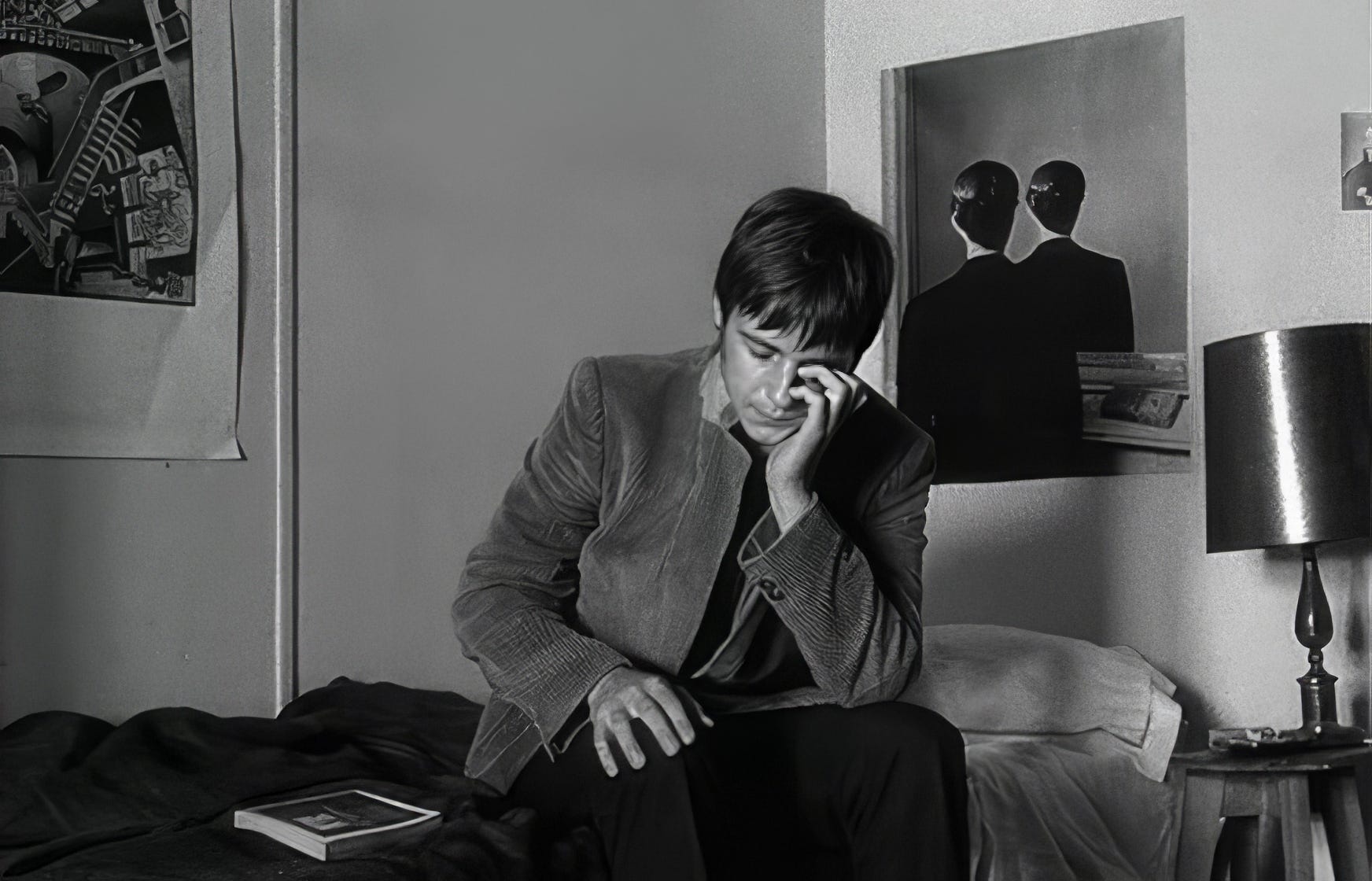
I want you to sit with me for a while and try to imagine all the things your mind actually perceives on a daily basis. From the very first moment you wake up to the last moment you try to shut it off by going to bed — how many thoughts actually occur?
Hundreds?
Thousands?
Perhaps even a hundred times more than that.
And within those tens of thousands, each thought creates its own effect. Some numb the mind. Some make you happy. Some shift your mood downward. And some chain into others — forming a web that holds onto your mind for a very long time.
What I’m trying to convey is this: even at a biological level, long before distraction became embedded into every second of modern life, the human mind has always been challenged — always disturbed.
The mind, much like the body that requires regulation to function, needs a way to recalibrate. To stabilize after the constant surge of emotions throughout the day. Especially those tied to uncertainty, fear, and pain — it will do whatever it can to release that cognitive tension, or what we might call the weight on the spirit.
And from that need, art emerged.
If we go back to the earliest stages of humanity, we already see this. Humans faced chaos: death, storms, predators, birth, hunger. They had no scientific models, no written language, no structured psychological frameworks.
What they did have was pattern recognition — and imagination.
Painting a hunt before performing it could increase survival.
A painted bison could outlive the storyteller — becoming a kind of proto-archive.
Even decorating the body marked belonging, identity, hierarchy.
Art was — and is — the human refusal to remain silent in the face of mortality. It is the mark of a species aware of its own end. It began as survival technology, tribal glue, spiritual negotiation, and cognitive expansion — evidence that humans are not purely biological beings, but symbolic ones.
Then came civilization — a period where art began to serve not just psychological survival, but something deeper. A way to nourish the spirit. A way to create something greater than life itself by channeling desire into form.
In Mesopotamia, ziggurats were not merely buildings, but symbols — an axis between earth and heaven.
In Ancient Greece, sculpture became a study of the ideal: proportion, human excellence, philosophical beauty.
Once humans gained enough stability, they began to ask a different question:
“What is the highest version of reality we can create?”
Many of the iconic buildings, sculptures, and paintings we recognize — especially during the Renaissance — are direct responses to that question, each expressed through its own paradigm, style, and execution.
But now we arrive at a different question:
In an age where a simple sentence to AI can generate a complete visual — adjustable, instant, and endlessly reproducible — what remains of art? And does the term still matter?
Before anything else, I want to propose this:
Art was never defined by effort.
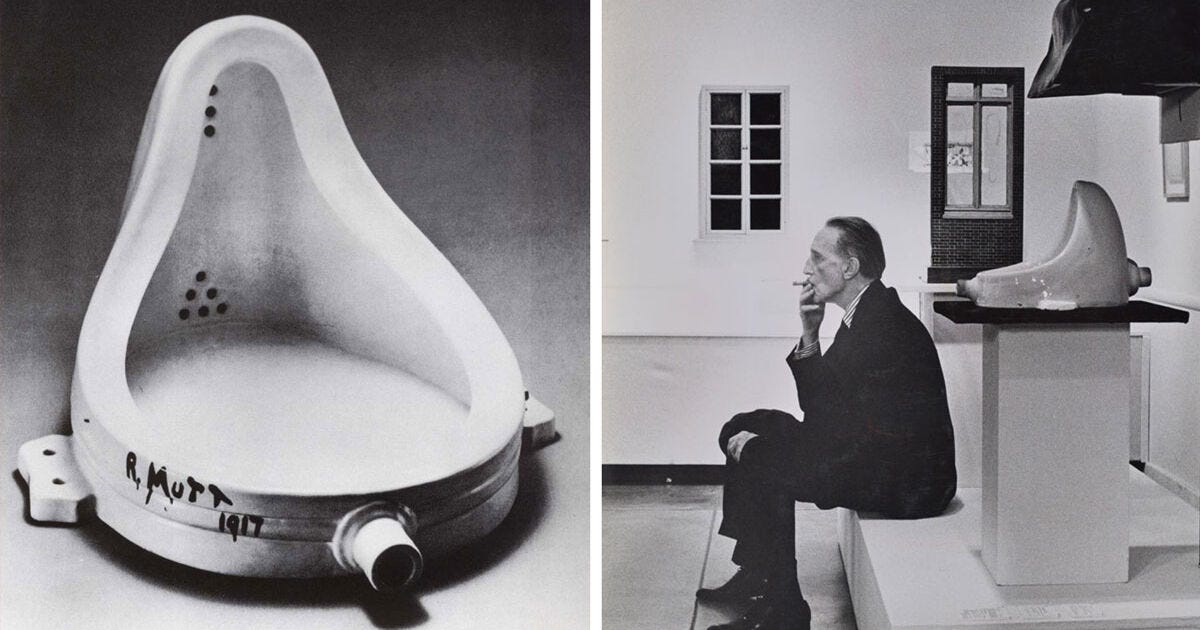
If it were, then a construction worker would be a greater artist than Marcel Duchamp for placing a urinal in a gallery. But Duchamp’s Fountain redefined art not because it was difficult to make — but because it reframed perception.
What modern technology has done is dismantle three historical pillars: technical scarcity, manual skill as gatekeeper, and time as constraint.
Cameras now assist the user to the point where the act becomes ‘press the shutter at the right frame, at the right moment.’ Generative AI allows a teenager with Wi-Fi to produce visually stunning work in seconds.
And yet — something still remains beyond automation.
Humanity.
Specifically: intention, curation, and context.
Intention matters because it gives substance to the piece.
Curation matters because it shapes how something is seen — through a specific lens.
Context matters because it positions the work within a cultural and collective framework.
We are entering an era where craft is automated, aesthetics are abundant, and originality becomes statistical. The masses chase beauty, status, and — often unconsciously — distraction.
And yet, the art that still resonates, still matters, continues to serve its original function: an attempt at transcendence.
This can be seen in something as immediate and personal as clothing.
Clothing has never been just fabric. From tribal markings in the Stone Age, to royal garments, to military uniforms — it has always carried meaning. It has always expressed something about the individual and the system they belong to.
It is art, fused with structure.
For a long time, the act of making clothes carried narrative. It expressed worldview — from the creator, the wearer, or often both in collaboration.
But in recent decades, particularly with the rise of ready-to-wear since the 1970s, that dynamic has shifted. The idea of commissioning a piece and waiting months for it has gradually disappeared from mainstream behavior.
Clothing became increasingly industrialized — optimized for scale, speed, and trend cycles. These cycles, in turn, fuel the fear of missing out, especially in womenswear, and contribute to the rise of fast fashion.
As a result, on the surface — and within the hyper-exposed, monetized attention economy — clothing has, in many ways, lost its status as art.
And yet, history shows us something different:
Clothing can still act as cultural liberation — and, at times, as a form of salvation for the individual.
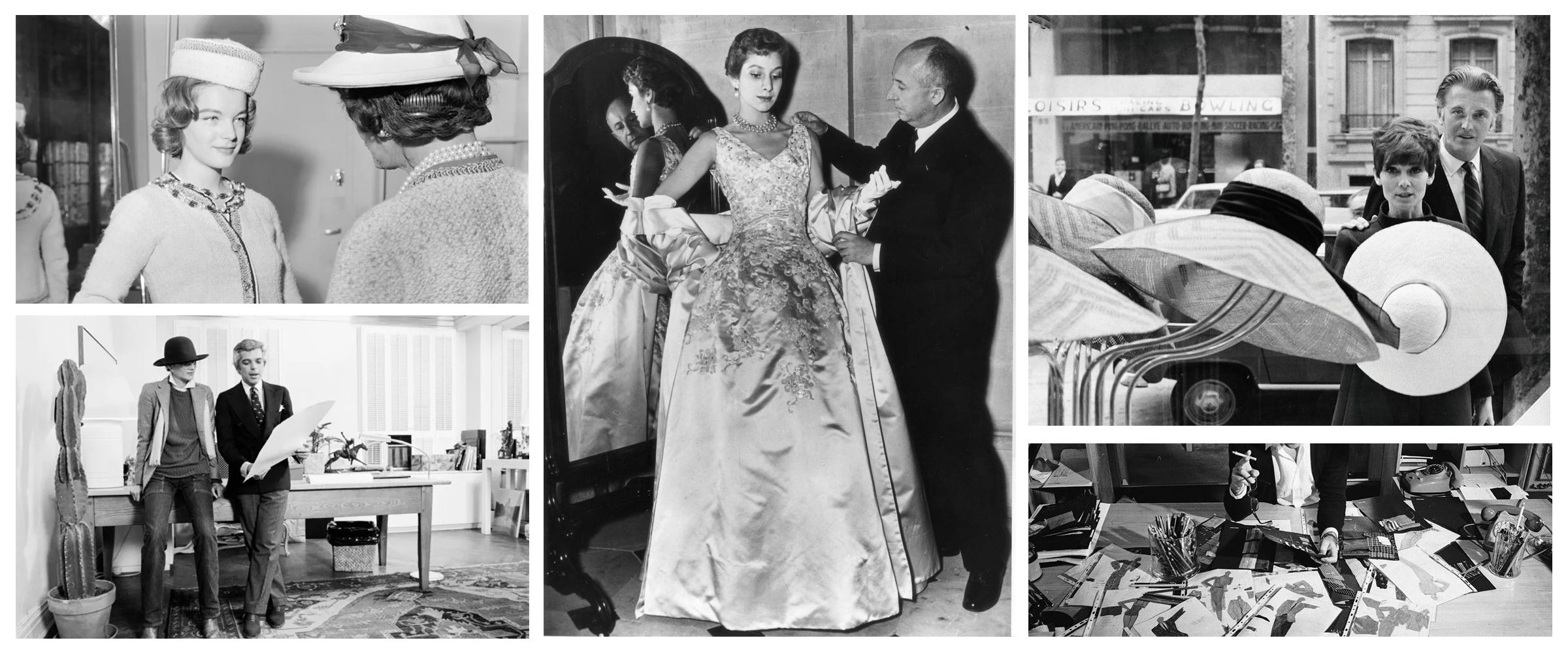
“All I want to do… is to create the most beautiful dress in the world.” — Christian Dior
What makes a man or a woman a “designer”?
Is it simply sketching something in the form of clothing, telling a manufacturer to produce it, and placing a fancy French word on the label?
Surely, that’s not the case.
A designer is someone who designs — but ‘design’ itself must carry purpose. It is the act of gathering thought, ideas, and inspiration, then translating them into form. Bringing something into existence that did not exist before.
Many of the names we are familiar with in fashion were designers in their own right. What they all shared was purpose.
Take Coco Chanel — shaped by loneliness, a lack of connection, and the rigid expectations of femininity in her time. She responded by redefining femininity on her own terms. Starting with hats, then perfume, then couture.
A similar weight can be seen in Christian Dior — a sensitive, delicate man whose name now lives on along Avenue Montaigne. His sense of loss — whether from the absence of his beloved sister or the grey, heavy atmosphere of Paris during World War II — became the force that drove him.
It led him toward something like salvation. He took the leap, opened his own house, and in 1947, The New Look was born. It shaped the entire 1950s — a return to optimism, glamour, divine femininity, and the revival of Parisian elegance.
And there are many more.
Ralph Lauren, who transformed his dream of a refined life into an empire — building a world people could step into.
Hubert de Givenchy, who translated aristocratic sensibility into pure elegance through form and proportion.
Clothing, in this sense, is art that nourishes the soul of its creator. It becomes a vessel for obsession, burden, longing — something internal, made tangible.
And what makes it even more special is that these emotions can be felt by the one who wears it.
But in the modern world, it has become harder to find clothing that carries this depth — without relying on the power of a label.
2026 is not 1956.
Most brands, even with creative directors shaping aesthetics and emotional narratives, lean heavily on something else:
The logo.
More than vision. More than craft. More than dedication to the garment itself.
And so the landscape of fashion becomes increasingly shallow — clothing as loud status symbols, often lacking soul, lacking passion. Not entirely different from much of what we now call “modern art”: easy to replicate, easy to mass produce, even under the name of legendary maisons.
And yet — there are still spaces, however small, that resist this.
Places that prioritize true elegance.
Places that lead with substance.
Places that refuse to compromise on artistry — where design still reflects purpose, soul, and human intention.
These ateliers are often hidden.
On quiet streets.
In Bangkok, perhaps in the Ari district.
In Paris, along Rue du Faubourg Saint-Honoré.
And in Milan — a street like Via della Spiga.
I had heard about this street many times before arriving in Lombardy. It was the first place I chose to walk the day after I landed.
The experience was quieter than I expected. But there was something unmistakably substantial in each storefront.
On my fourth or fifth walk along that street, within just a few weeks, I noticed something.
A passage — leading deeper into a building.
Soft daylight from a cloudy afternoon spilled across a wide window. Inside stood a female mannequin in a pink dress. Beside it, a male figure dressed in a luxurious overcoat and cravat.
I moved closer.
There was a stillness. A sense of privacy. A kind of quiet confidence in the space.
And then — my eyes caught the name:
Retori.
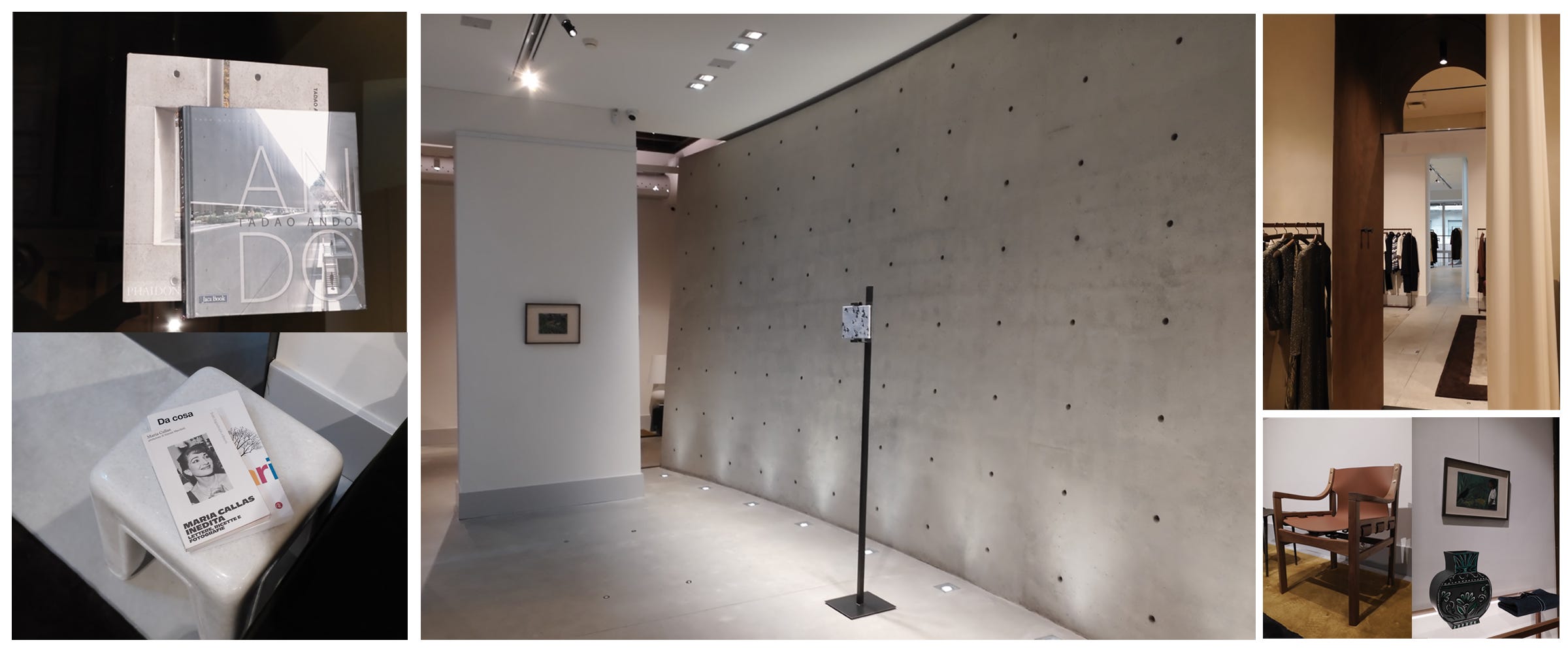
It seems to be a trend these days — brands, especially from the continent, often lean toward ‘art’ and ‘culture’ as an extension of their world. But very few truly resonate with the core essence of it.
Retori is one of those rare exceptions.
From the very first moment I walked in, serenity was the word that best described what I felt. If Via della Spiga already gives you that sense of an ‘insider’ street — a quiet realm of connoisseurship — then stepping through the shadow and light of the passage into the Salotto takes it even further.
Stefano, the store director, was the first person I interacted with. Without much preamble, he introduced me to “the world of Retori” — a space infused with cultural depth in every corner.
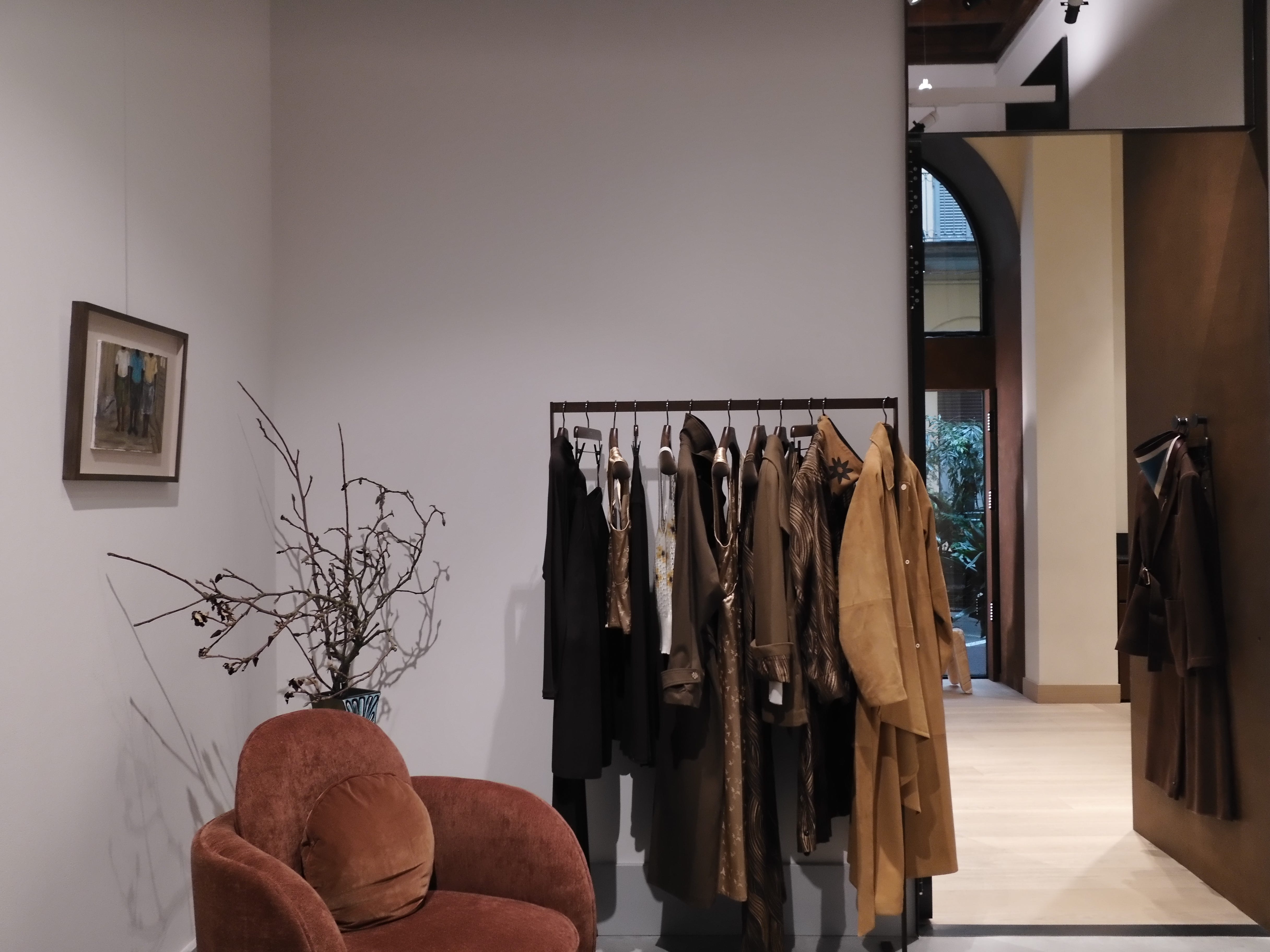
It began with the hallway, lined with paintings that set the tone. Then came the exhibition space — featuring ‘Chupim’ — art works from Manuela Navas, each carrying its own meaning. And perhaps the most striking element: a wall conceived through the architectural vision of Tadao Ando — one of the most significant architects of the modern era — whose presence could be felt in the quiet precision of the structure itself.
The reason this place is called a Salotto is because it is not treated as a mere store — not a space designed simply to extract transactions from customers. Instead, it feels like a living room. A place where life gathers, where people and ideas come into sync.
It functions as a headquarters, a lounge, and an event space for art and cultural exhibitions — all at once.
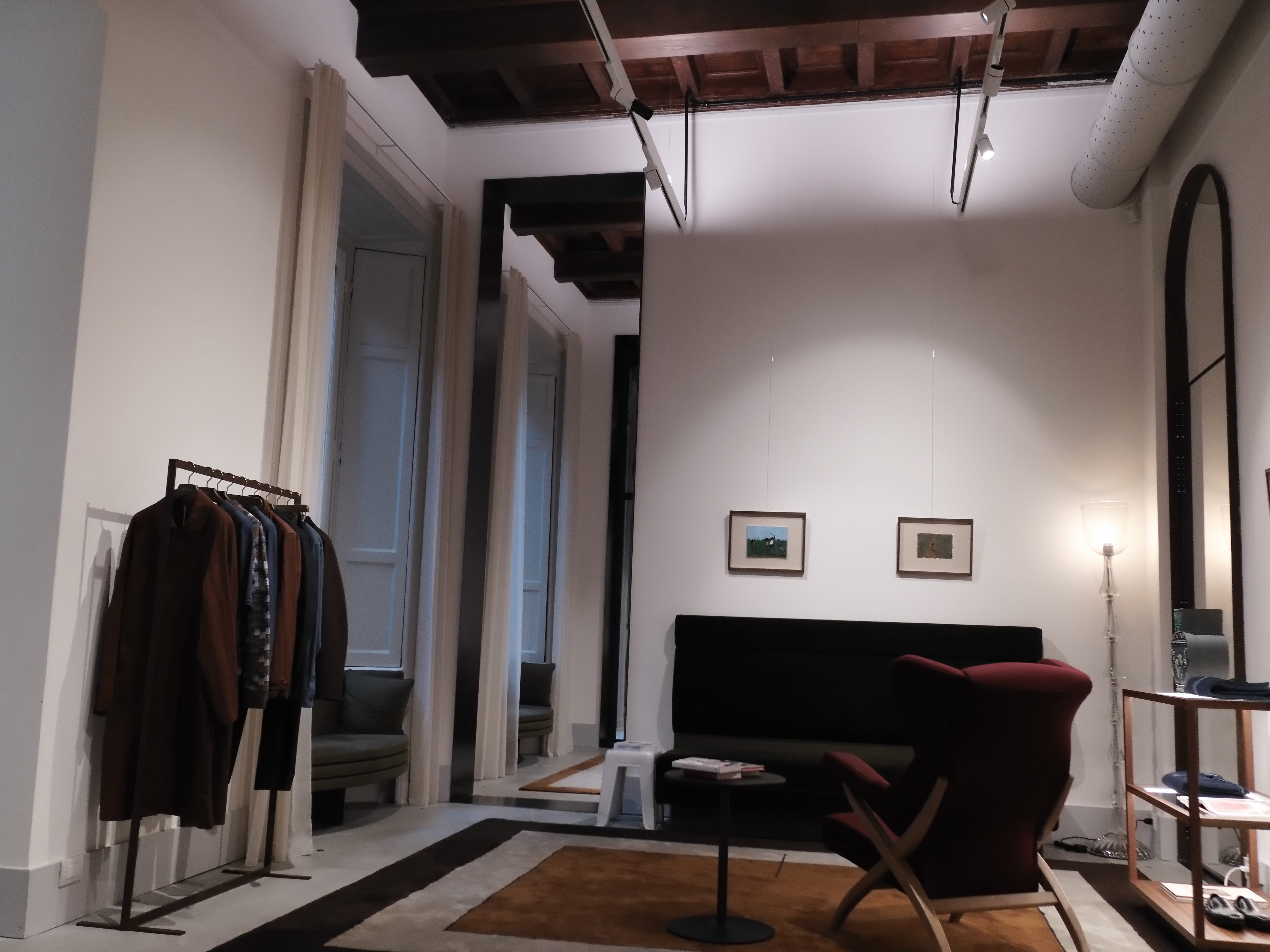
Even on my first, unplanned visit, the feeling was far from ordinary. The atmosphere, the warmth of the welcome — it already exceeded expectations.
And then came the garments.
If you’re familiar with my taste — my identity as someone deeply drawn to sartorial substance — you’ll know that material, stitching, detail, and craft as a whole play a decisive role in how I judge a piece. Whether it stands on its own merit, or leans too heavily on branding and emotional appeal.
With Retori, it walks that line — almost perfectly.
One thing I must admit: the pricing clearly places the brand within the realm of mid-tier luxury. A €1000+ cardigan or overshirt, a €1750 double-breasted jacket — these are not pieces for casual consumption. They demand thought. Intention.
But as I walked through the space, observing each garment, touching the inner canvas of jackets and overcoats, feeling the fabrics — I found myself asking:
What is the real appeal here?
Yes, the materials are exquisite. The standard of “Made in Italy” is evident at the highest level. But beyond that, I began to notice a pattern — something shared across the pieces:
A quiet, intellectual form of artistry.
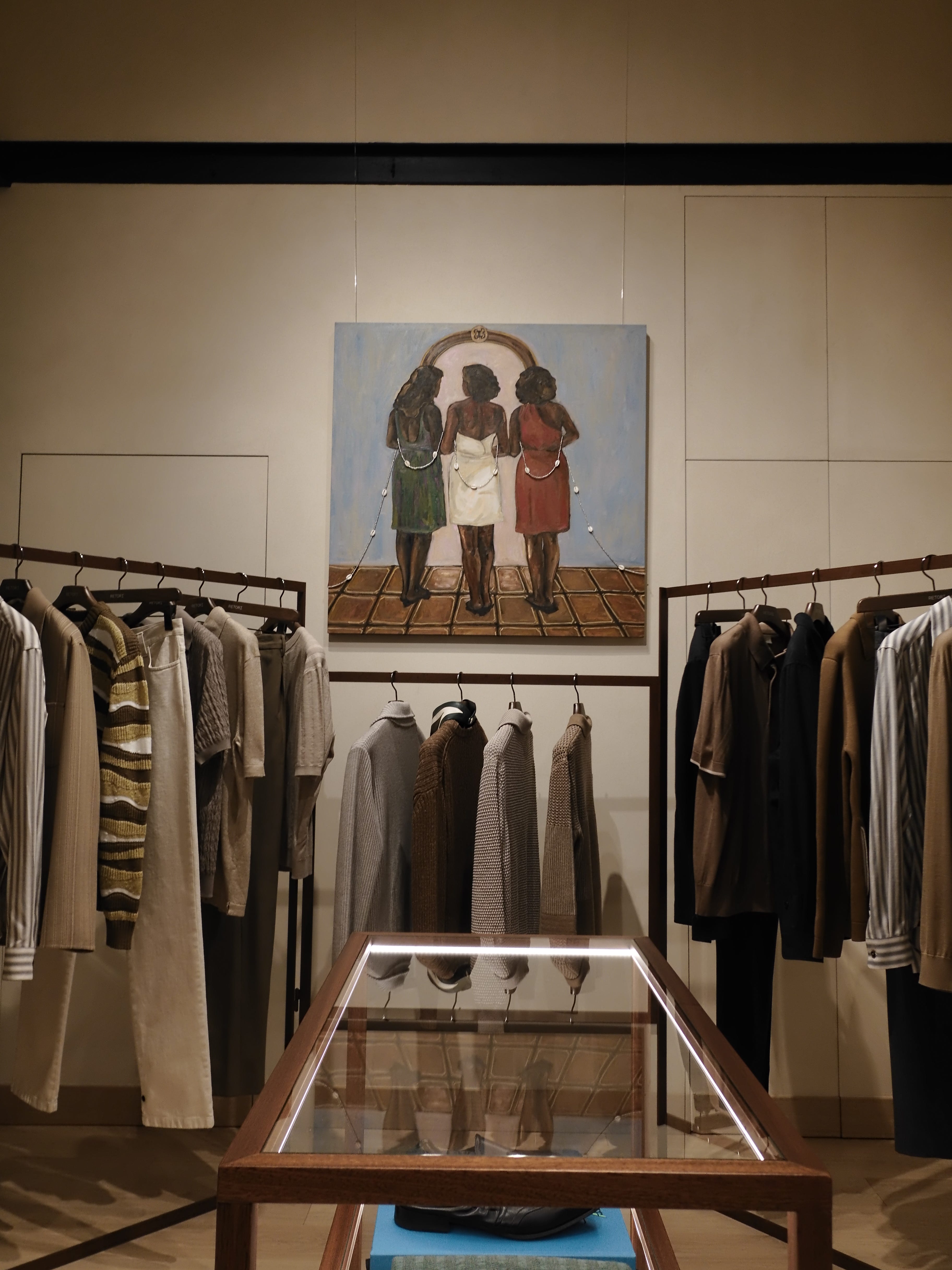
Beneath what appears to be classic silhouettes, there is a subtle layer of design — almost hidden. Details that only reveal themselves to those who pay attention.
A shadowed pattern embedded within a polo shirt.
An illusion-like stitched pocket.
And most resonant to me — the fabric.
In the sartorial world, fabric is everything. It is the skin of the garment, the language through which it speaks.
Most high-quality fabrics today follow familiar paths: pure wool in high-twist weaves, pure cashmere, or refined blends — wool/silk/linen, wool/cotton, silk/linen.
But Retori’s choices feel… different.
A pure wool overcoat with a texture resembling cashmere — offering softness without the same level of fragility.
A denim-like fabric composed of wool and cotton.
A melange ribbed turtleneck created from a blend of cashmere, wool, silk, and linen — producing depth that shifts with light.
An overshirt made from an almost equal balance of silk and cashmere (a piece we’ll return to shortly.)
There is intention here. A kind of quiet experimentation.
Later, after my first visit, I was invited back by a lovely lady named Federica. She mentioned a small event happening that Saturday, and I knew I had to return.
That was when I met the CEO of the brand — Zaccheo Manzoni.
We spoke briefly, and I eventually asked him directly about the philosophy behind their collections.
His answer reframed everything.
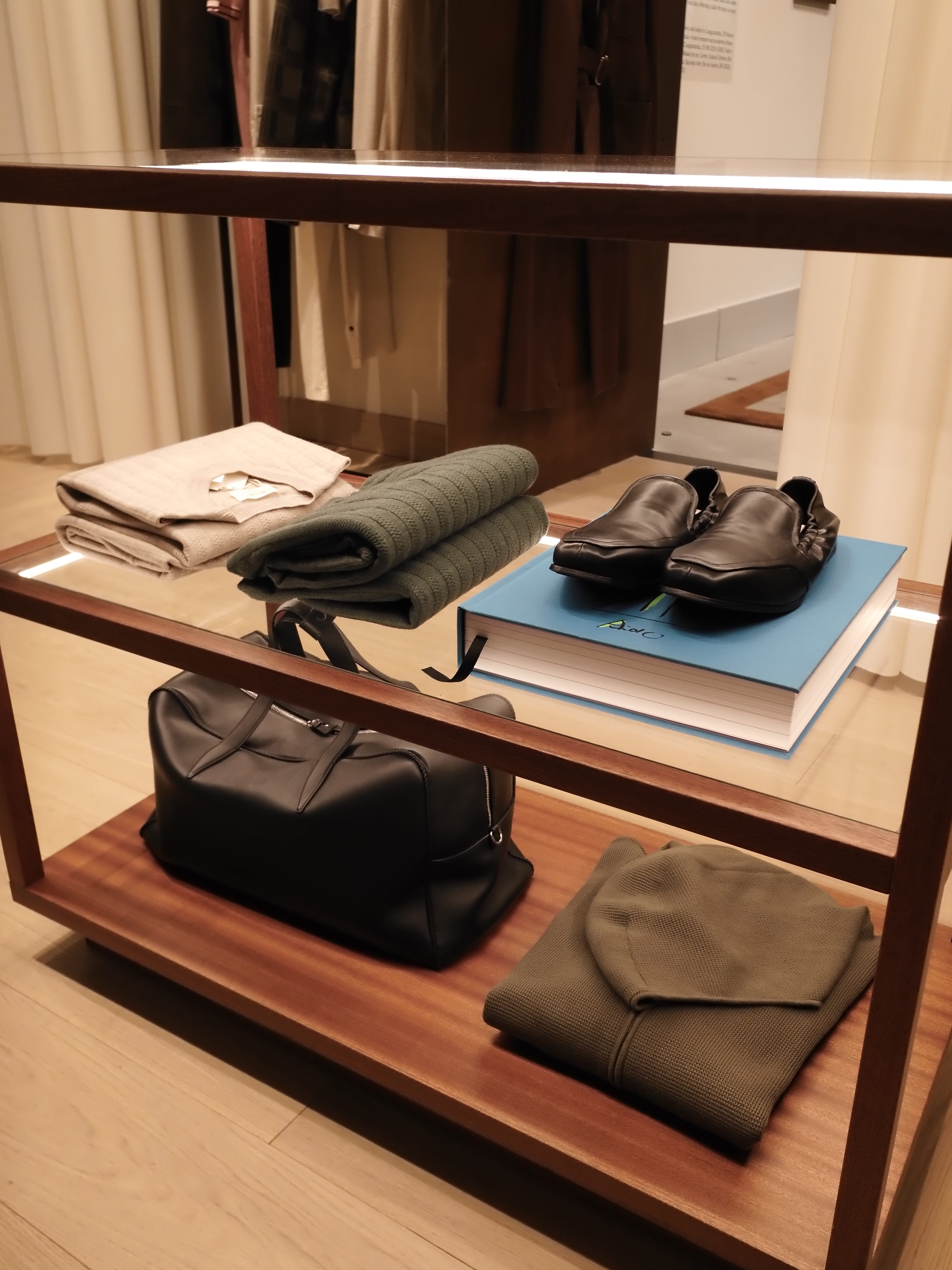
Retori does not treat collections as mere seasonal releases. Instead, each one is conceived as a chapter.
Each chapter draws from a specific artist — their work, their philosophy — extracting meaning and translating it into every aspect of the brand: design, material, art direction.
All of it comes together as a cohesive narrative. Not just clothing, but a story. Something that carries both timelessness and emotional weight.
That was the moment I understood the essence of Retori.
And what one truly acquires when wearing their garments.
They are not just clothes. They are artifacts.
Pieces meant for a discerning few — those who approach them with intention, with appreciation, with an understanding of substance. People who wear them not just with style, but with awareness.
And so, within that Salotto, I found my own artifact.
Not the most traditionally sartorial piece I would usually gravitate toward. Not the most formal, not the most “refined” in the conventional sense.
But something more democratic.
An overshirt.
“Elegance is not about being noticed, it’s about being remembered.” — Giorgio Armani
It’s a quote that captures the essence of elegance beautifully.
And yet, I’ve never quite been able to achieve that — at least not at scale, not in the way I dress.
To not be noticed through stark contrast or loud uniqueness, yet still be remembered… it seems that to truly reach that balance, one must allow their external form to blend in, while letting the inner self radiate instead.
Noble? Ideal? Perhaps.
But is there a way to do that while still dressing in a way that feels true to oneself?
In my case, that means embracing craft. Classic, timeless garments. Cuts and proportions that echo those worn by iconic figures of the mid-century.
Here in Milan — where I’m writing this — it feels natural. The city itself carries a deeply ingrained language of style, something I’ve explored before. But what about Bangkok? What about other cities that don’t share the same sartorial fluency as Milan, London, or Paris?
How does one maintain elegance without feeling alienated?
Without being asked, “Why are you so dressed up?”
The answer, I believe, lies in choosing garments that are democratic — accessible in form — yet uncompromising in the virtues that define sartorial elegance.
If it’s jeans, then let them sit properly at the waist, made from quality denim.
If it’s a t-shirt, then let it be crafted from high-grade cotton, with intention in its construction.
And if it’s a layering piece — something that can exist seamlessly within today’s overwhelmingly casual world, across cities and climates — then perhaps that piece is an overshirt.
When I was walking through the Retori Salotto, most pieces I admired.
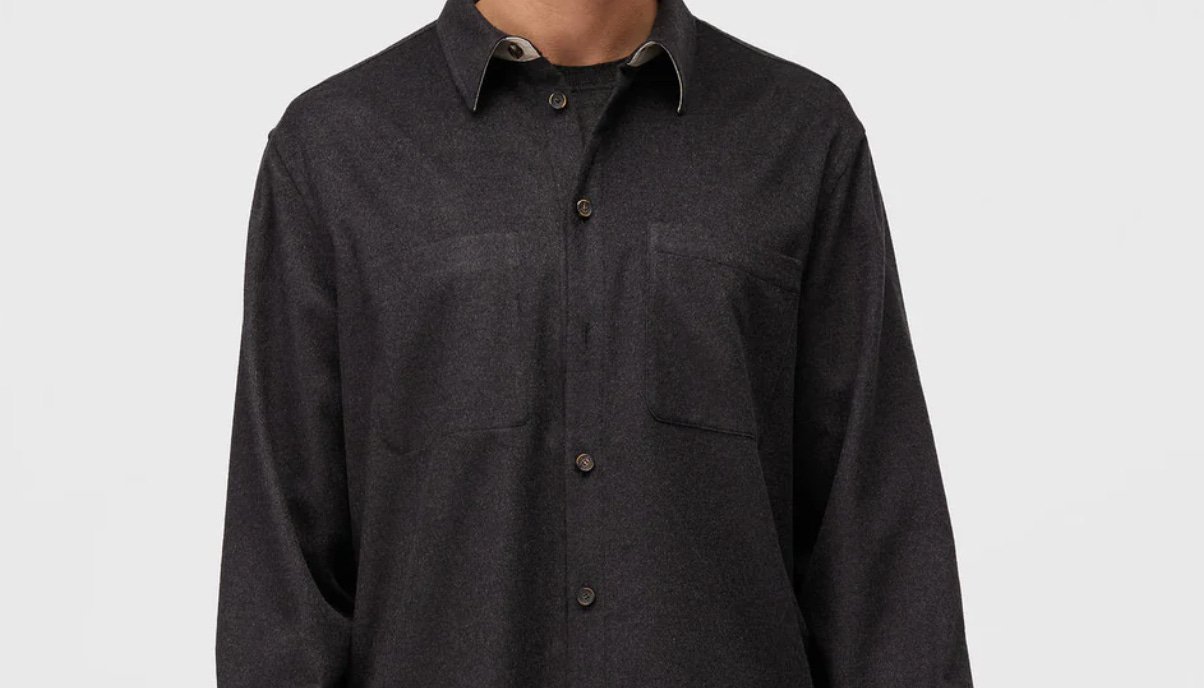
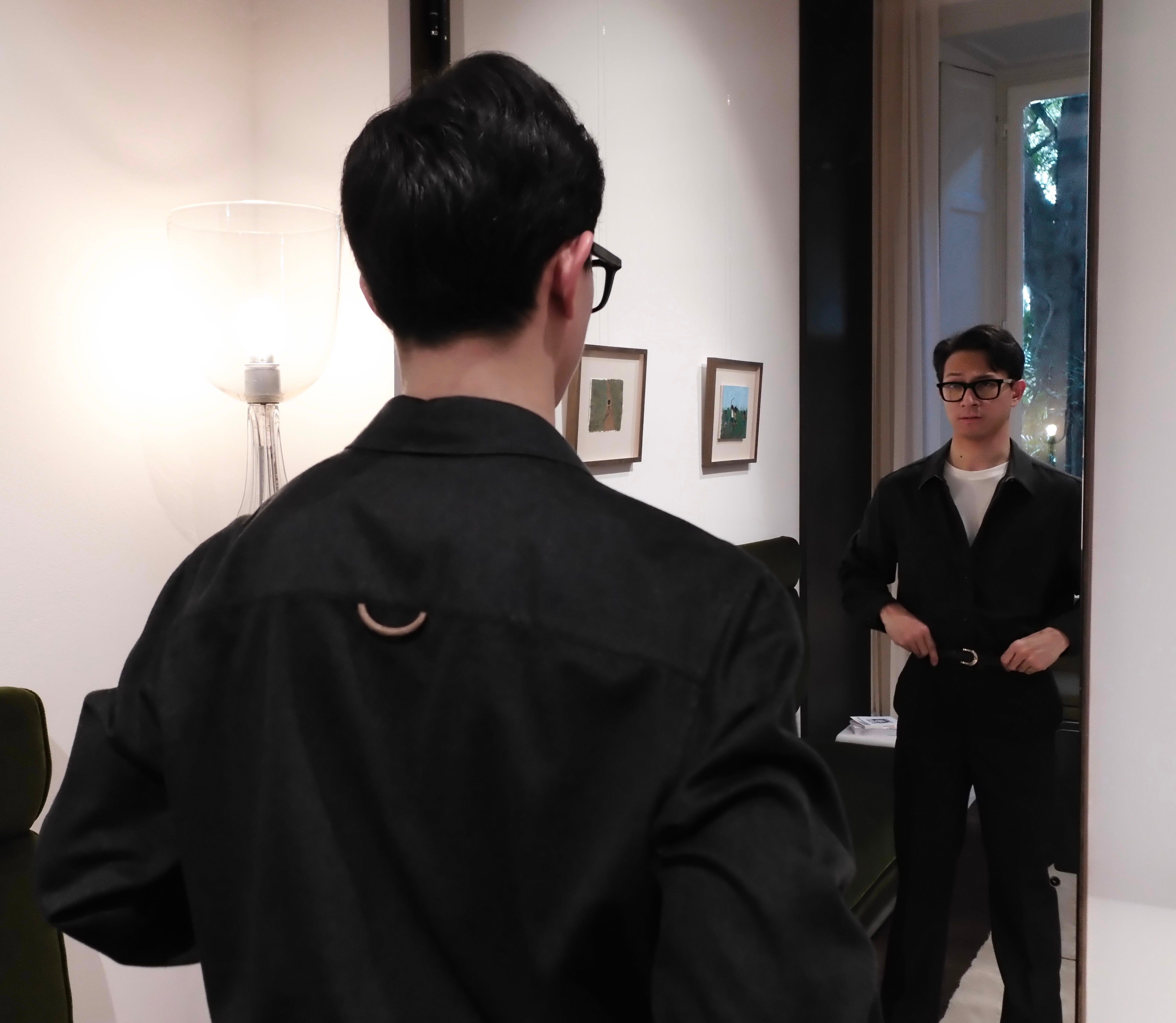
But this one — an anthracite overshirt made from 51% silk and 49% cashmere — stopped me.
I asked Stefano if I could try it on.
And what I saw in the mirror…
It reminded me of the first time I wore a tailored jacket, many years ago. That sudden realization — of silhouette, of presence, of identity being quietly amplified.
What stood out most was the material.
Traditionally, overshirts are made from cotton twill. Some brands elevate them with linen basketweaves, cotton corduroy, or seasonal wool and cashmere.
But this — a near-equal blend of silk and cashmere — was something else entirely.
Soft, breathable, yet structured.
Fluid, yet composed.
A fabric that drapes with intention.
It becomes a piece that can live across roles in a wardrobe without friction. Worn on its own, layered over a t-shirt or polo, or placed under a jacket — it adapts.
And more importantly, from the outside, it blends in.
Back in Bangkok, for instance, overshirts are already familiar. Across generations and professions, they are seen as understated layering pieces — nothing that triggers a sense of strangeness.
And this is where Retori’s quiet brilliance reveals itself.
From a distance, it appears simple: a deep charcoal overshirt, almost black, with double pockets.
But up close — when you look, when you touch — the details emerge.
The fabric holds a texture that is neither overly heavy nor unnecessarily light.
An illusion in the chest pocket — one visible, one hidden within the inner layer.
Subtle, but intentional.
And when you understand that this piece belongs to Retori’s second chapter — inspired by the Dutch-Indonesian artist Miko Veldkamp, whose work explores the idea of multiplicity, shaped by a life lived across cultures — everything aligns.
That idea of duality, of movement between worlds, is embedded into the garment itself.
Structure and fluidity.
Visibility and concealment.
Presence and adaptability.
And perhaps that’s why I was drawn to it.
Because, in a way, it reflects something personal — the ability to move across cities, cultures, and contexts, while remaining coherent.
Ladies and gentlemen, I believe this is where the meaning of art comes full circle.
A synchronization between life, values, the human spirit, painting — and clothing.
Art is everywhere.
It has always been part of human life. First as a tool for survival. Then as a medium for spirit, for expression, for transcendence.
And now, in a world saturated with stimulation — where attention is constantly pulled, where media rewards noise, where brands compete to extract maximum consumption from every individual — there are still places that choose to stand still.
Places that resist entropy.
Places that remain true to vision.
Retori, in my sincere opinion, is one of the few that still does so — quietly, and with grace.
So perhaps, in a world where the mind is constantly pulled in every direction, what we choose to engage with — what we choose to wear — becomes something more than aesthetic.
It becomes a way to reclaim attention. To return to a single point of focus.
And maybe, in that quiet return — is where elegance begins.
To sit still, even for a moment, within the noise.