


“When you bought a designer suit — you were buying ‘luxury as status’, not pure craftsmanship.”
That’s a quote I once read from one of the most famous menswear blogs a very long time ago, when I had fully adopted tailoring as part of my everyday wardrobe. In that early period, the idea stuck with me like a cardinal rule that must never be broken. Always look for full canvas. Always look for a high armhole. Always seek the signs of “hand-finished” work or “stitch density” detailed on the garment…
Now, those things matter less — probably less than the feeling the garment itself gives me.
The one thing I still deeply believe in is craftsmanship — that a garment must not be fabricated purely from the mindset of consumption and compromise. I still favor bespoke pieces from ateliers like Cifonelli, Rubinacci, or Anderson & Sheppard. Even RTW sartorial brands that stand as the pinnacle of tailoring, like Cesare Attolini…
However, the other thing I now consider — and add to the equation — is artistic design injected into the garment. Something that influences the silhouette and the emotion of the wearer in the way that the designer as an individual has envisioned.
This can be seen in this editorial piece — in my love for a black jacket from Prada from the early 2000s.
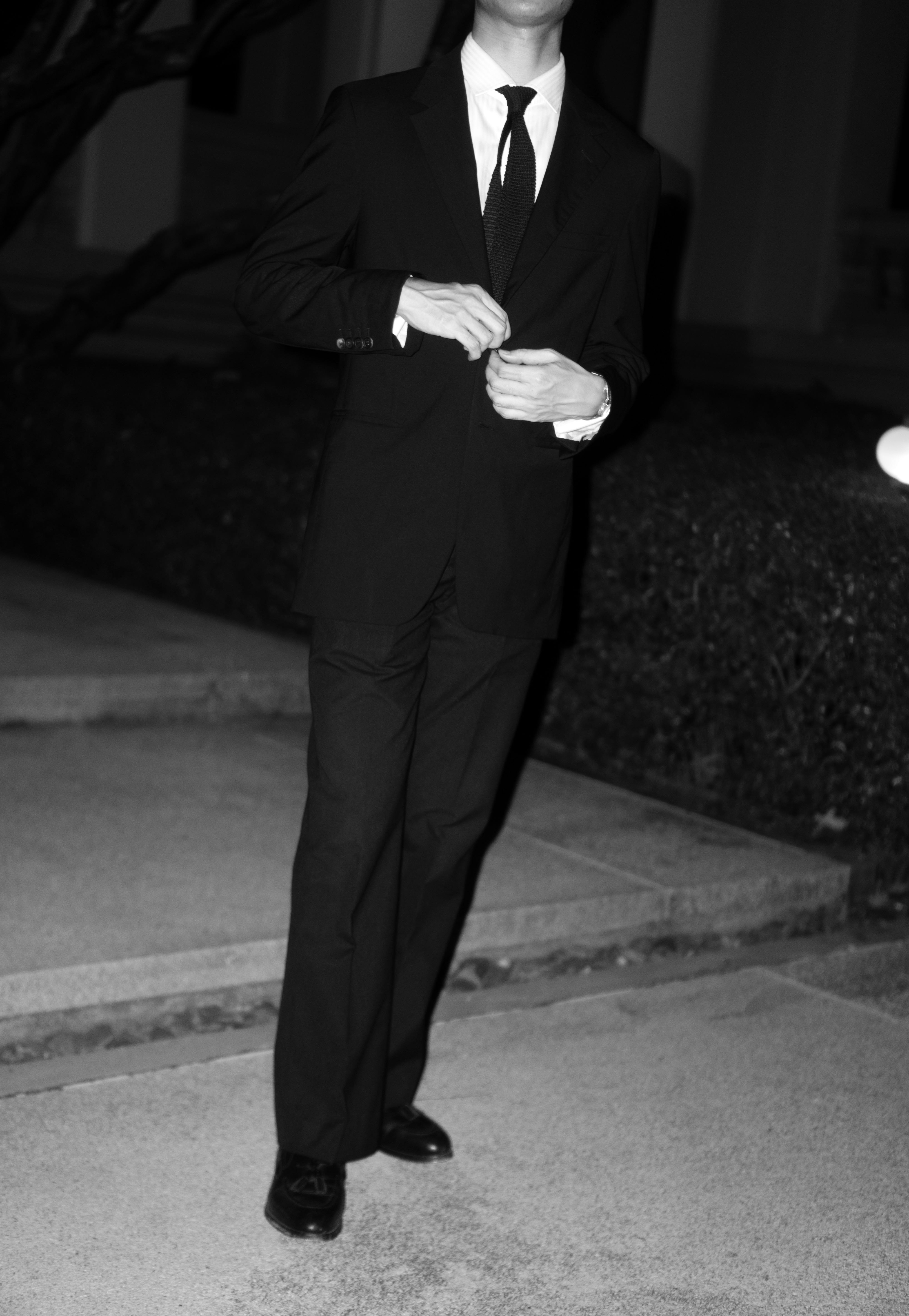
On paper, it rejects almost everything that should make a jacket great: black, half-canvassed, low armholes, fine worsted fabric worn as an odd jacket rather than part of a full suit.
But all of that was intentional.
They are the byproduct of how Miuccia Prada envisioned a man — how he should look and feel. A man who knows how to navigate elite social spaces with emotional detachment, wearing tailoring that reflects discipline, austerity, and quiet authority. Someone associated with 1960s European modernism.
And that narrative is tied to an identity — or fantasy — I would love to step into. Even though, on the traditional sartorial “checklist,” it is far from the best garment I own. (If you wonder why that’s the case, this editorial will clarify everything.)
At first, I believed the appreciation mainly came from the fact that I acquired these vintage pieces from 90s–2000s designer labels like Prada, Giorgio Armani, and Gucci (pre-Tom Ford era) for less than $30.
And I thought I would never buy a piece where artistry and silhouette led the design more than craftsmanship — at least not at full retail price.
Again, I was wrong.
Because the main acquisition on my wardrobe list this year will be a suit from Husbands — now widely recognized in both the classic menswear world and the fashion-forward scene.

What impressed me is that many sartorial connoisseurs — people who obsess over terminology and hail craftsmanship as the ultimate virtue — have completely surrendered to the alluring sexual tension and cinematic aesthetic of Husbands. They became customers of the atelier, even though what they receive is a machine-finished suit for $2,500.
Now, here comes the interesting part…
When you learn to look at garments through this lens — one that doesn’t entirely reject the quality and substance of making, while also allowing artistic design into the equation — you begin to see clothes as a form of dream, life, and art.
Except this form of art can actually be equipped into the physical realm — worn on your body, every single day.
And that… is what makes life so much more interesting to live.
Because it makes you understand the strange creature called human a little more.
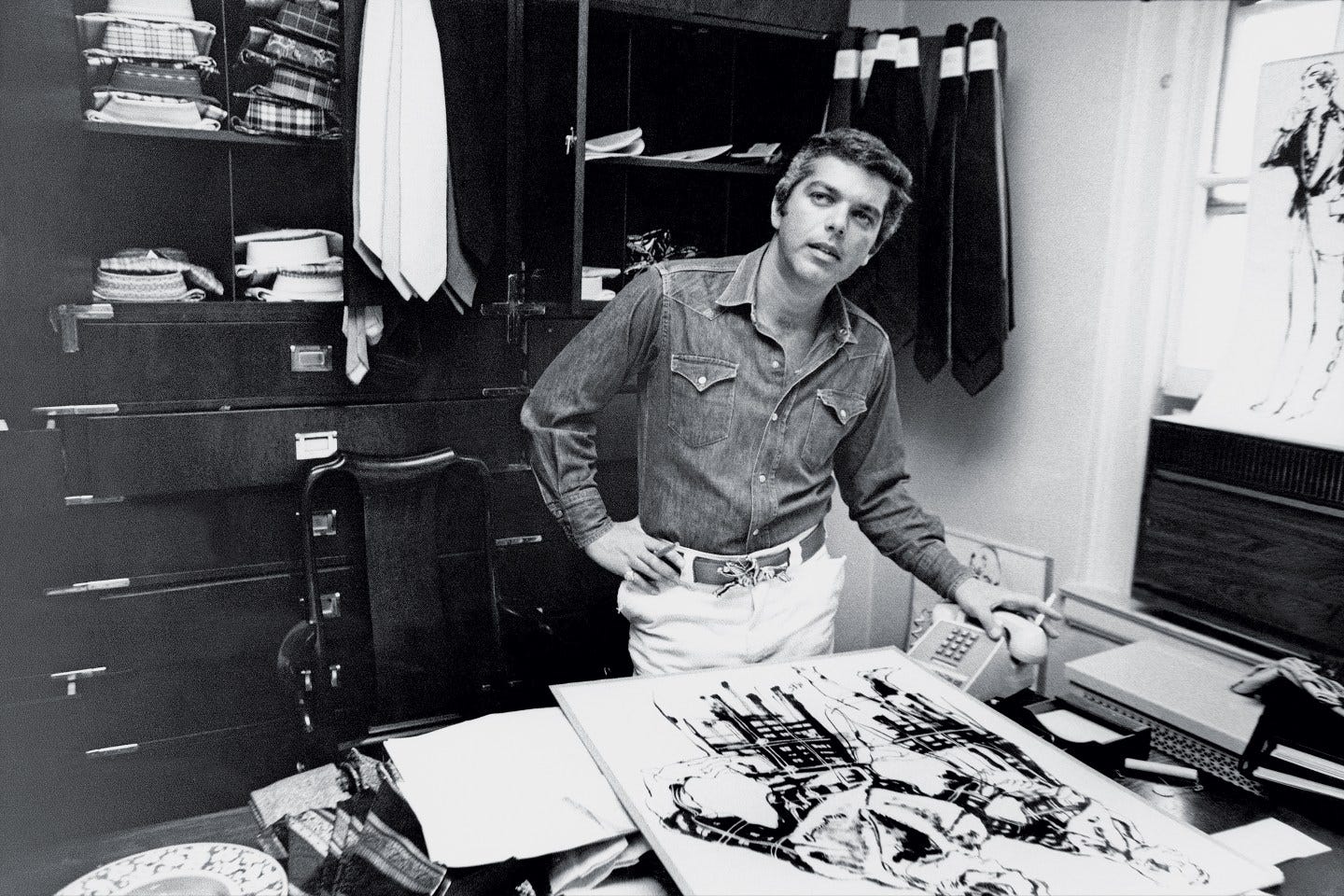
Ladies and gentlemen, allow me to bring in the story of a man — Ralph Lipshitz, or the one you’re more familiar with as Ralph Lauren.
Even people who aren’t particularly into clothes, fashion, or personal style have likely heard his name — and perhaps even own a polo shirt with his iconic pony logo on it.
What makes him interesting is that, from a very young age, clothes were always a bridge to fantasy — to a life he never had the chance to live. When you are born in the Bronx, while surrounding yourself with media like Golden Age Hollywood films and occasional glimpses of the finer things in life — things that are just within eyesight, yet impossibly far to grasp — the easiest way to experience those fantasies is simply to dress like the people who live them.
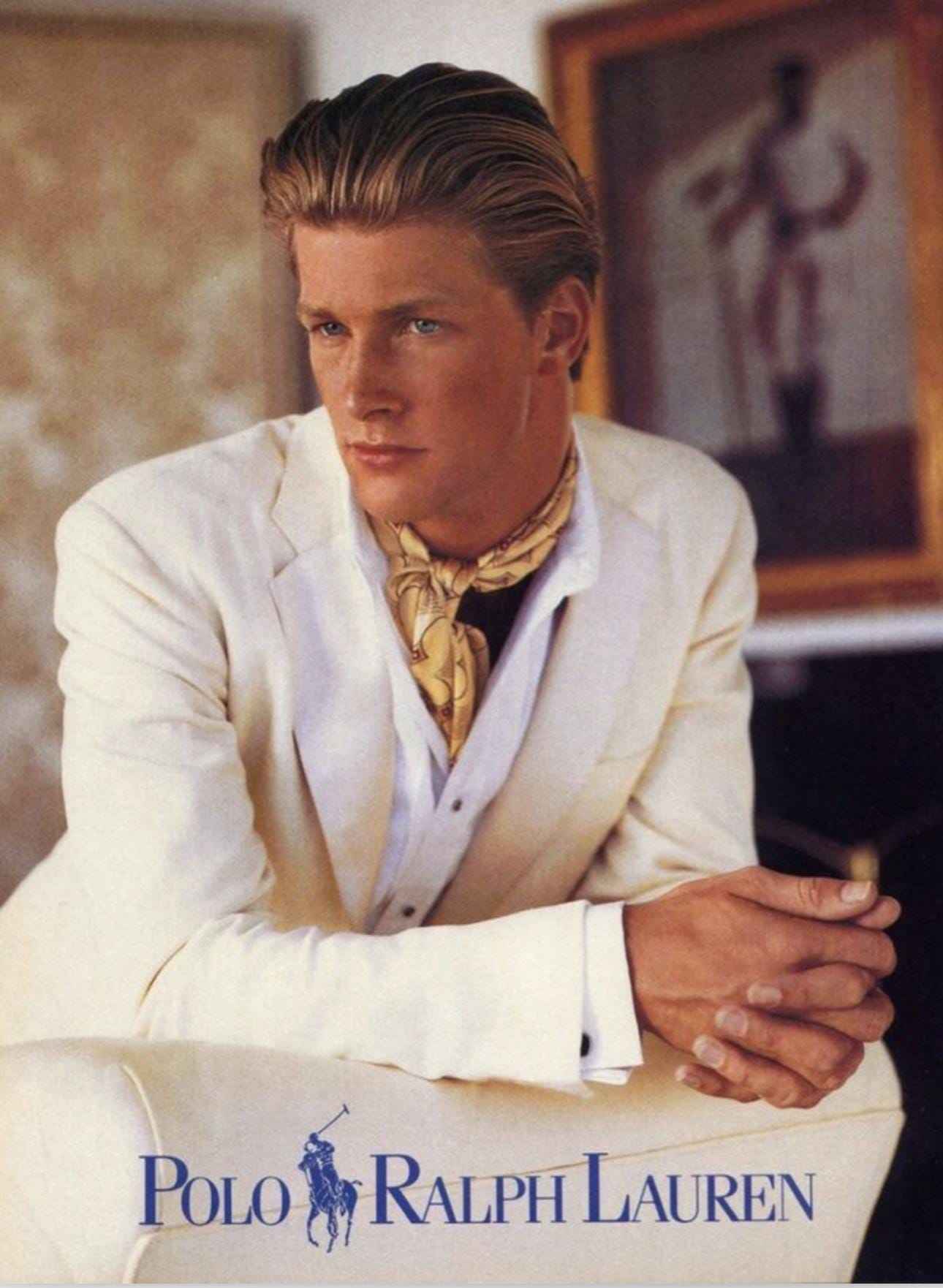
And since then, the Preppy / Ivy League look, the WASP culture of the Hamptons, and the mythology of the American frontier have all become characters within his universe. These worlds were gradually expanded into the collective imagination of people globally — all of them condensed into the small pony logo placed on a piqué polo shirt, an Oxford button-down, or the crest on a club blazer.
Now, one critique that classic menswear purists often raise is this:
A garment that carries a high price purely because of a logo is not worth the money.
And I still agree with that — mostly.
However, I would add one important condition: a high price due to a logo that contains no designed substance.
Because even though Ralph Lauren — including its Polo Ralph Lauren line — is now produced at a lower standard and at a far larger scale than during its prime years in the 1980s, the design language itself has remained remarkably consistent.
It is still classic menswear — interpreted through Ralph Lauren’s lens.
From the polo shirt to the double forward-pleated chinos, to the double-breasted blazer — of course, the silhouette shifts slightly with time and trend. But the core essence remains unchanged: garments designed to feel timeless.
As for the pony logo itself — it is perhaps the simplest symbol of his entire world.
His childhood fantasy.
His dream of a life far beyond everyday mundanity.
It became the mechanism through which he scaled that imagination to the masses.
You might be drawn to that world — or you might not.
But one thing is undeniable: it proves that clothes, symbols, and design can transcend their physical function and become a gateway to something larger.
That said, the logo is not the only format I want to talk about — in fact, it is merely the most obvious and empirical one.
The true meaning, the real sophistication, lies in the designer themselves.
And unfortunately for Ralph Lauren — no matter how much I adore the world he created and the campaigns that present it — when it comes to artistry and design within the garments themselves, they rarely push beyond the established norm while still maintaining elegance.
Because at the end of the day, most of his pieces are still classic garments, simply elevated with the emotional appeal of how high society might wear them.
My true realization that the sartorial world could exist outside its traditional scope came through American media — though the man designing the clothes was from the European continent.
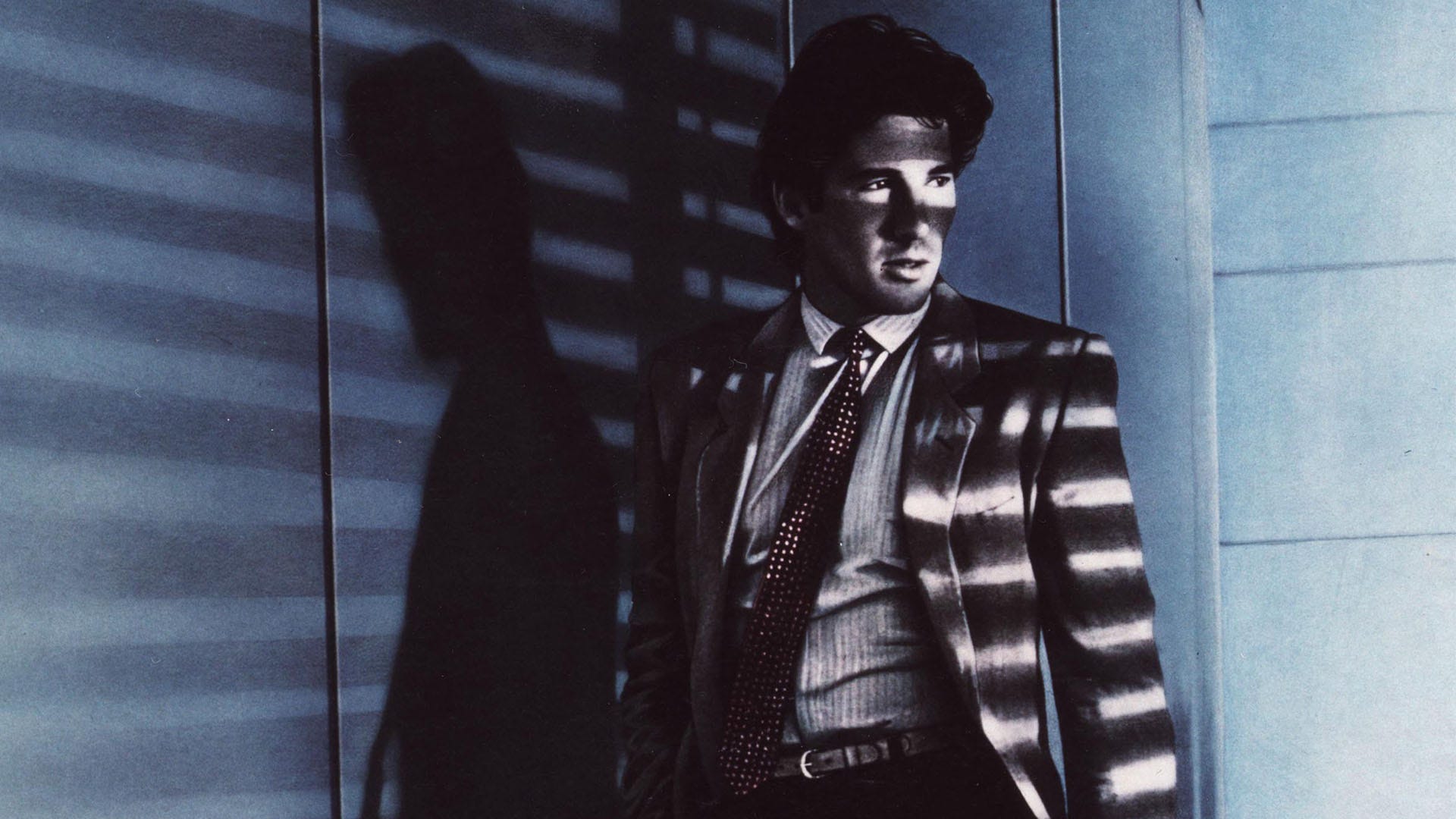
Richard Gere in American Gigolo, wearing a variety of ensembles by Giorgio Armani, completely blew my mind and shifted my worldview of what tailoring could be.
Soft.
Relaxed.
Effortless.
For both for the man wearing it and for the people around him.
When the film introduces his character, with Call Me by Blondie playing in the background, we see him driving a Mercedes‑Benz SL R107 through Los Angeles. He moves through the city in jackets and trousers that feel miles away from the rigidity of traditional tailoring.
The fabrics flow with every movement.
The structure is soft — but never careless.
A louche silhouette that perfectly suits the character.
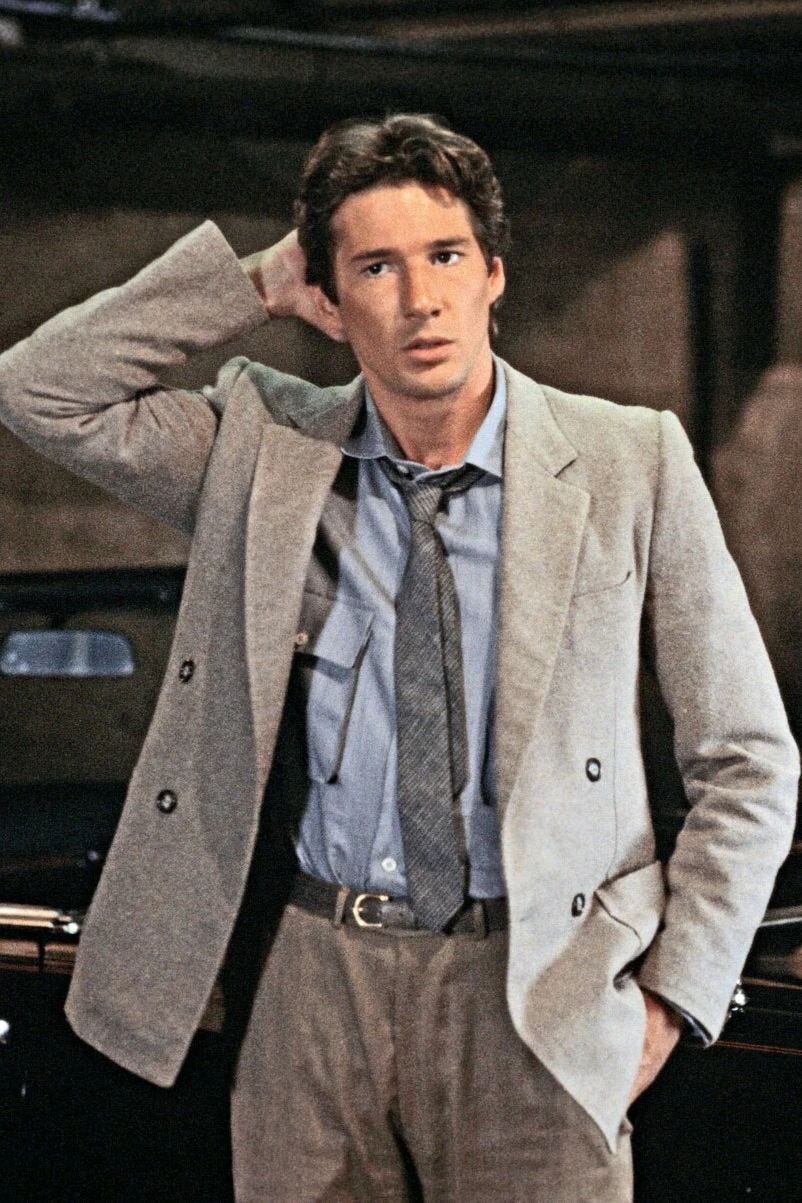
Across nearly two hours of the film, we are given something close to a masterclass in styling: tone-on-tone dressing, seamless movement between casual and formal attire, and a wardrobe entirely shaped by Armani’s vision.
And surprisingly, years later, I had the chance to see that vision in the flesh.
It was pure luck that I decided to visit the Pinacoteca di Brera during the exhibition Giorgio Armani: Milano, per amore.
(The exhibition runs until May 3rd, 2026 — in case you want to experience it with your own eyes.)
The concept of the exhibition is simple but powerful: iconic designs from Armani’s career — from the 1980s through his later collections — placed alongside the museum’s historic masterpieces.
And I must confess something slightly heretical.
It captivated me more than the Caravaggios and other Renaissance masters surrounding them.
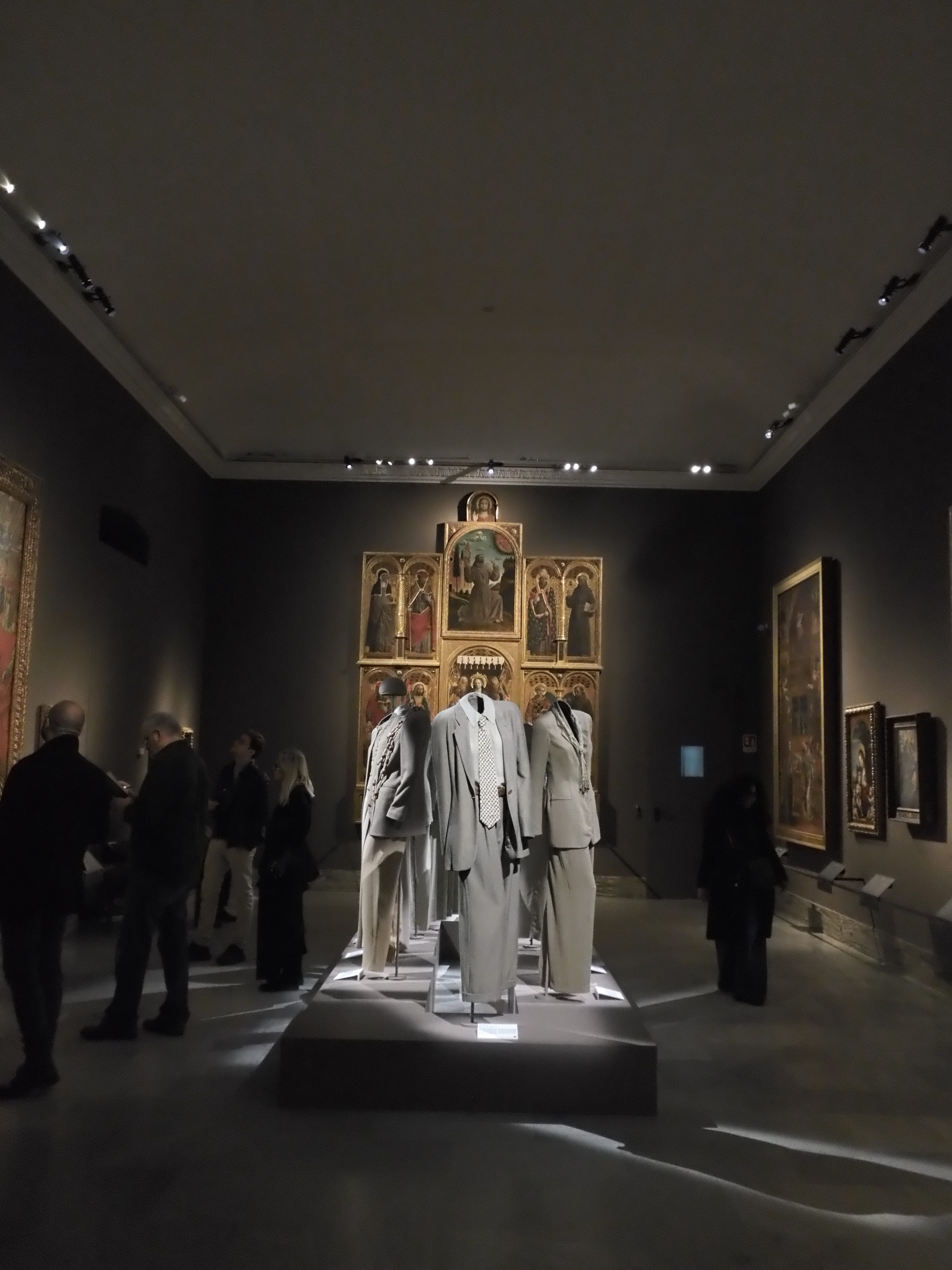
I walked through the exhibition again and again, studying each ensemble — both menswear and womenswear — from every possible angle. Observing the fabric choices, the silhouettes, the intentions behind the designs from different eras.
The piece I spent the most time with — the one I photographed repeatedly and felt almost tempted to touch — was a suede, single-breasted unconstructed jacket.
The very one worn by Richard Gere during the quiet disclosure scene after a rough day of work with his business associate in American Gigolo.
After hours of absorbing Armani’s artistry, a question slowly emerged in my mind:
What is craftsmanship, actually?
Is it purely the use of natural materials and traditional garment construction?
Or can craftsmanship also be achieved through the discipline of vision — through the act of creating garments that remain absolutely faithful to that vision?
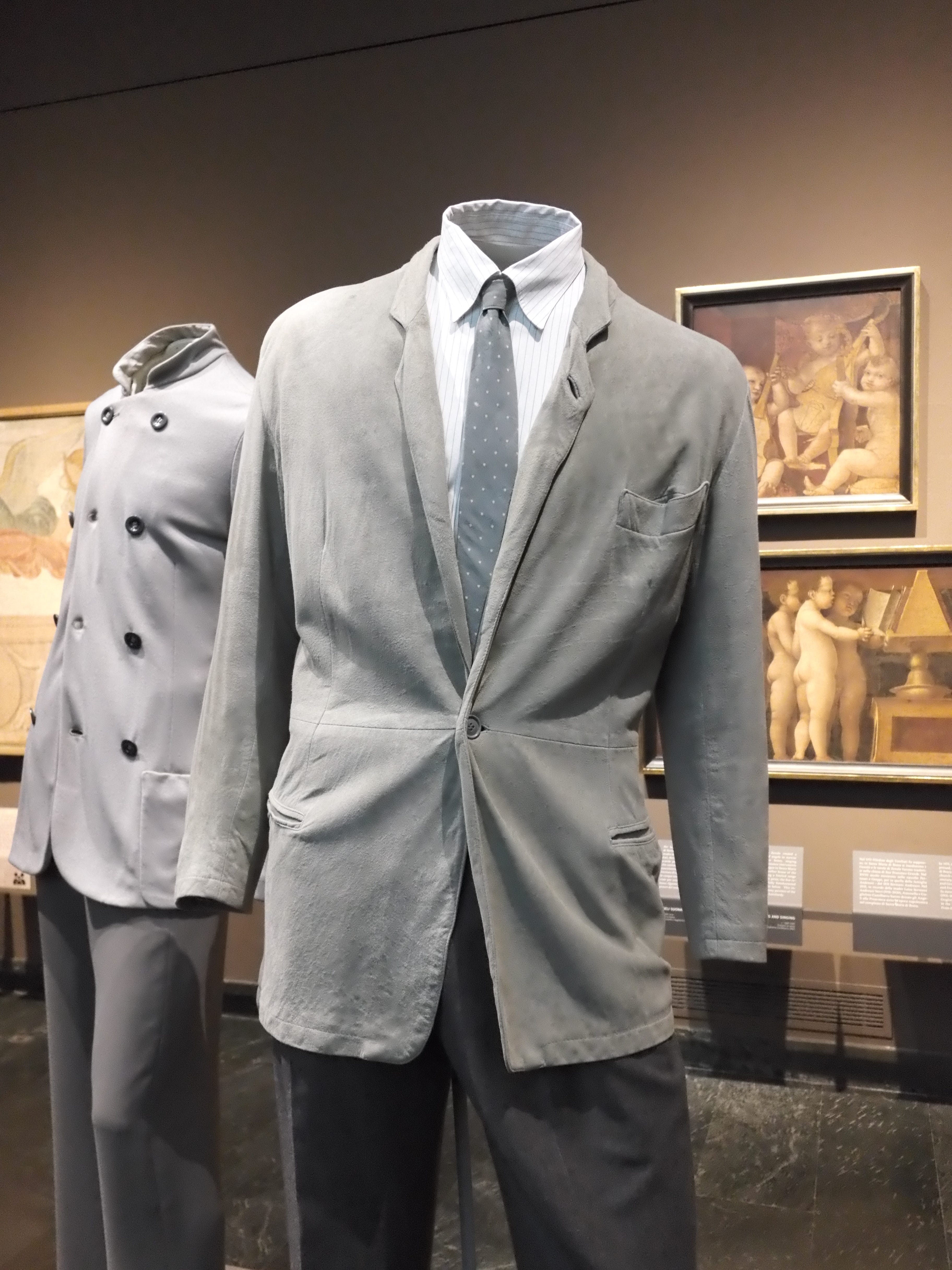
Because many of Armani’s pieces, even from the mid-1980s through the early 1990s, were not made exclusively from pure wool or other traditionally “noble” materials. Many contained blends — viscose, rayon, or other fibers combined with wool, linen, or silk.
But the purpose was never simply to reduce production cost or increase margins.
The goal was to achieve a specific drape — that soft, sophisticated fluidity that defined Armani’s golden era during the 1980s and 1990s.
The result became something modern and iconic:
Portraits of men moving through the world with elegance, restraint, and quiet sensuality.
All of it created from the singular vision of Armani’s mind.
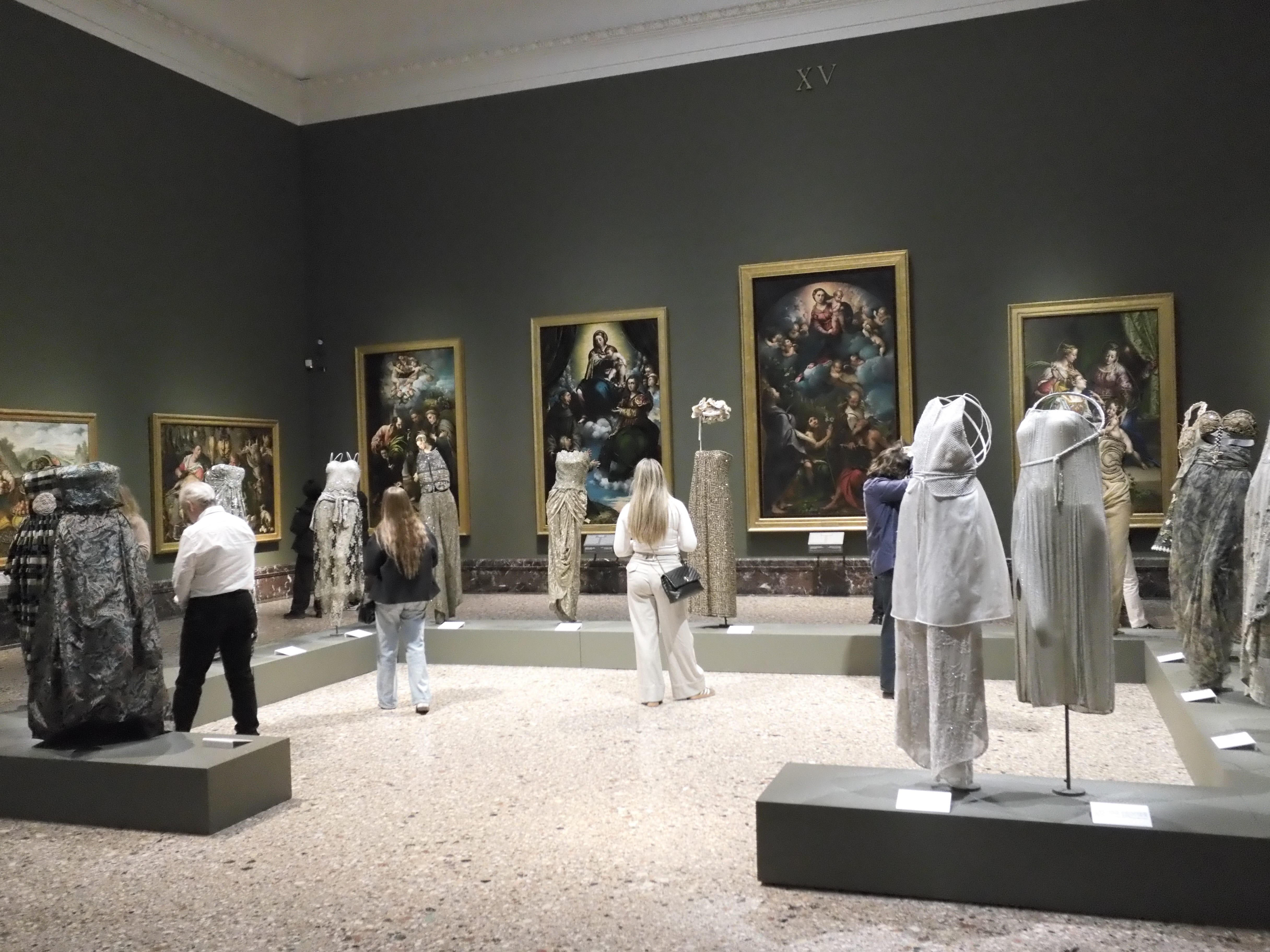
Ladies and gentlemen, the idea of treating clothes as a form of expression — whether of personal aspiration or individual artistry — becomes clearer the deeper you look.
Not only among fashion-forward designer labels, but even within the world-famous ateliers of the sartorial tradition itself.
Behind the impeccable craftsmanship that many people believe they are buying, there is often something else at work. Craft is certainly present — essential, even — but perhaps it is not the only reason, and arguably not the main reason, people are drawn to these houses.
Liverano & Liverano sells a sculptural silhouette that gives the wearer access to the lineage of Florentine tradition.
Rubinacci sells the spirit of La Dolce Vita — the nonchalant elegance of Italian life expressed through their original Neapolitan style. A tailoring that is light not only in structure, but in the lifestyle it represents.
Cifonelli sells the pinnacle of Parisian high life, reflected through the grandeur of the Marbeuf pagoda shoulder, the suppressed waist, and the bold lapel line.
They are all, in their own way, narrative-driven.
And that realization confirms something important:
The things that cover our bodies are far more than simple regulators of temperature.
While craft makes the garment well-made, artistry makes the garment meaningful.
The narrative behind clothes reflects the ideas, desires, dreams, and visions of their creators. And when you wear them — whether consciously or not — those narratives begin to integrate with your own identity.
In that sense, dressing well is not simply about technical perfection. It is about alignment.
An awareness of who you want to be, and the ability to recognize garments that reflect that identity — both through their craftsmanship and through their design language — while also understanding the context in which you move through the world.
Because elegance is never isolated from circumstance.
It adapts to the city you live in, the people around you, the rooms you enter, and the stories you wish to inhabit.
When those elements come together — craft, design, narrative, and self-awareness — clothing becomes something far greater than fabric and construction.
It becomes a medium through which a person expresses their place in the world.
And perhaps that is the true purpose of tailoring:
Not simply to make a man look well-dressed…
but to help him become the person he imagines himself to be.