


If there’s one thing I wish I could go back in time and fix, it’s my relationship with the idea of travel. For most of my life, even though I wasn’t opposed to throwing clothes into a leather weekender and driving to another city — or catching a next-day flight to another country — I rarely thought of it as traveling in a specific, intentional sense.
For most people, when they think of travel, words like holiday, leisure, and escape immediately come to mind. These ideas dictate the tone and experience — all of which, I’m sure you can imagine, fall neatly under the banner of the tourist.
I never liked that idea.
Traveling, to me, is something different — something far more than spending enormous capital on so-called “luxury experiences,” or hopping from one tourist attraction to another for a week, calling it a trip, then returning to life as if nothing had happened.
“If you are lucky enough to have lived in Paris as a young man, then wherever you go for the rest of your life it stays with you, for Paris is a moveable feast.” — A Moveable Feast
I’ve been reading a lot of Hemingway recently, and somehow his work allowed me to crystallize my own definition of traveling as a journey to be in a place far from home. If there was a specific moment that triggered this idea, it was last winter, when I had the chance to visit Paris and London for the first time.
By then, my inner cultural paradigm had already taken shape — informed, educated, and well-read. But I discovered that actually experiencing culture, breathing in the same air as the things I admired — tailoring, cinema, craftsmanship, British humor, the French language — was far more fulfilling and deeply ingrained than consuming them through media. These experiences are what allow us to grow as individuals, to become fuller in character, and more fluent in the idea of being human.
The more I read Hemingway — whether his debut The Sun Also Rises or the memoir A Moveable Feast — and the more I saw his early life as a wandering journalist moving between France and Spain, discovering life through people, places, and moments, the more convinced I became that I had to take that leap too.
I’ve spent a long time anchored in a metropolis like Bangkok, and it feels like the right moment to step away from it. And the place I’ve chosen for this pilgrimage — this season of travel, for a month or two — is the heart of Lombardy: Milano.
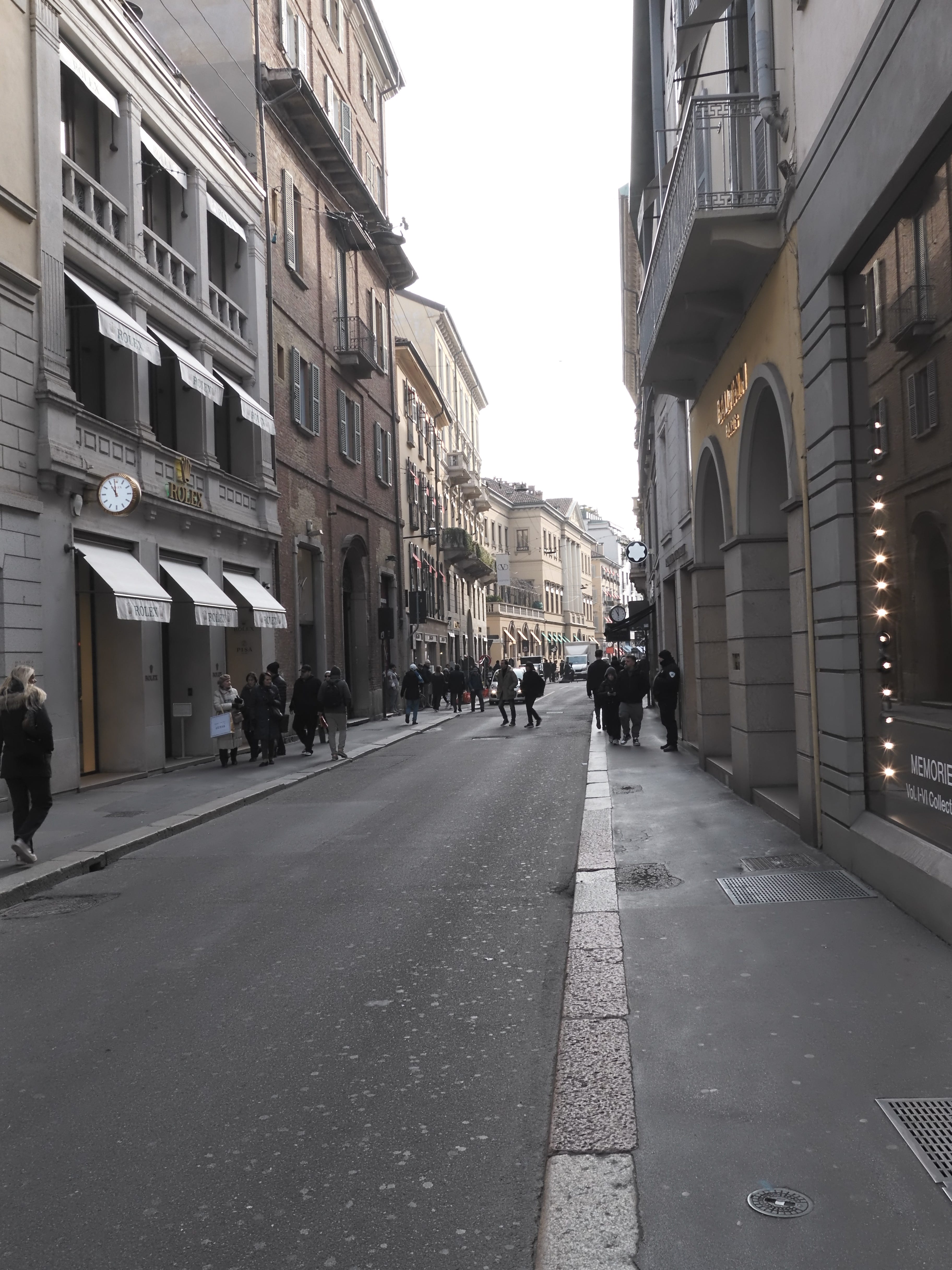
“The greatest hindrance to living is expectancy, which depends upon the morrow and wastes today.” — Seneca
If you’ve read my recent writing, you’ll know how Bangkok is not a city that opts for elegance. It’s a city that advocates casualness and convenience as its holy grails. That contrast made me imagine a place that might finally match my frequency — somewhere that treats elegance not as ostentation, but as a quiet expectation.
Only one name surfaced: Milan.
And after nearly a week of living here, I’m convinced that my assumption was right — though reality, as always, is harsher than imagination.
The first moment I sat in a Mercedes, watching the city pass by in winter — people wrapped in overcoats, cashmere scarves, black everywhere — I thought, This is it. Finally, a place where I could be myself without feeling alienated.
But after I dropped my luggage at my residence on Via Pasquale Sottocorno and decided to walk the city alone, I realized something else entirely: the distance between proximity and connection is profound. And it was then that I began to see Milan for what it truly is.
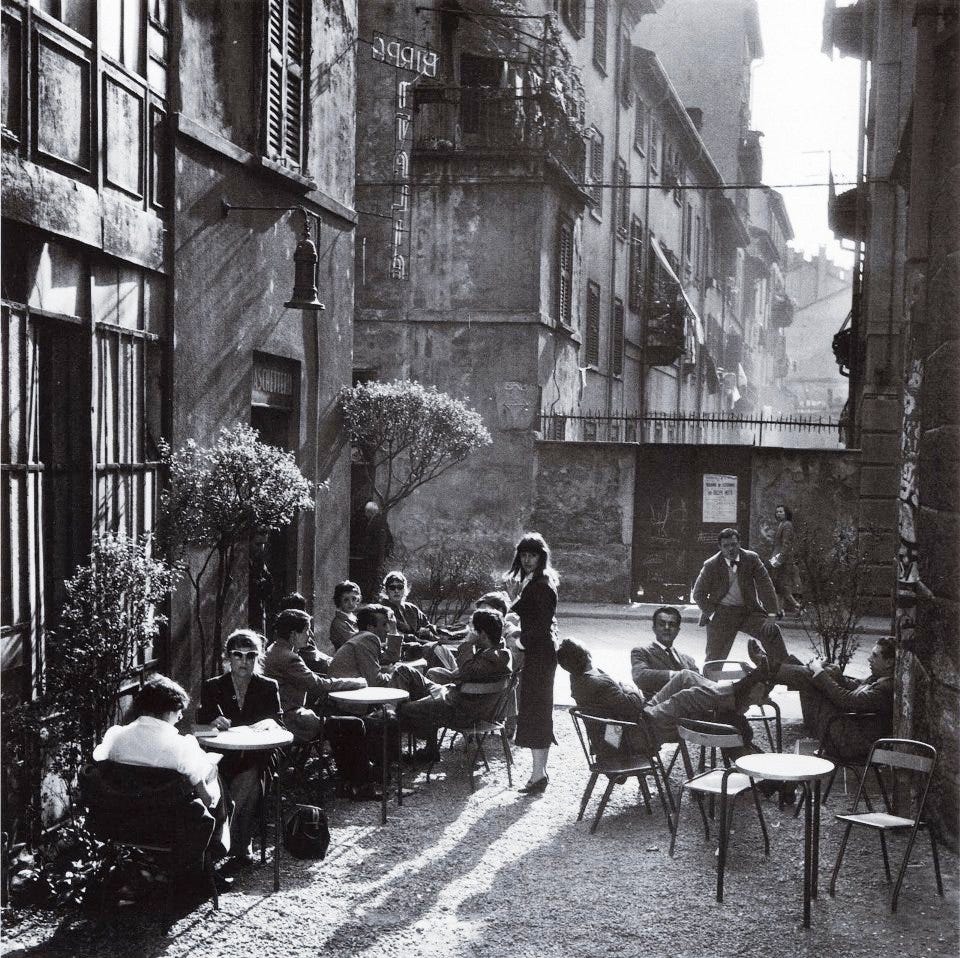
From the outside, through carefully curated Instagram feeds, Milan appears to be a city where every street is a runway and every corner hides a form of glamour. I agree — but to access it, to truly belong to it, you must earn that right.
Behind every wall, every façade, every gate, there is something concealed — a discreet society, a private community. These are things you’ll never experience if you remain an outsider, or if you’re perceived as a tourist who comes and goes.
And it’s this reality — that every city has its own code and cultural norms — that makes travel meaningful. If you treat traveling as a way to navigate those codes, not perfectly, but gradually, through exposure and lived experience, then it becomes one of the highest-return investments you can make in yourself.
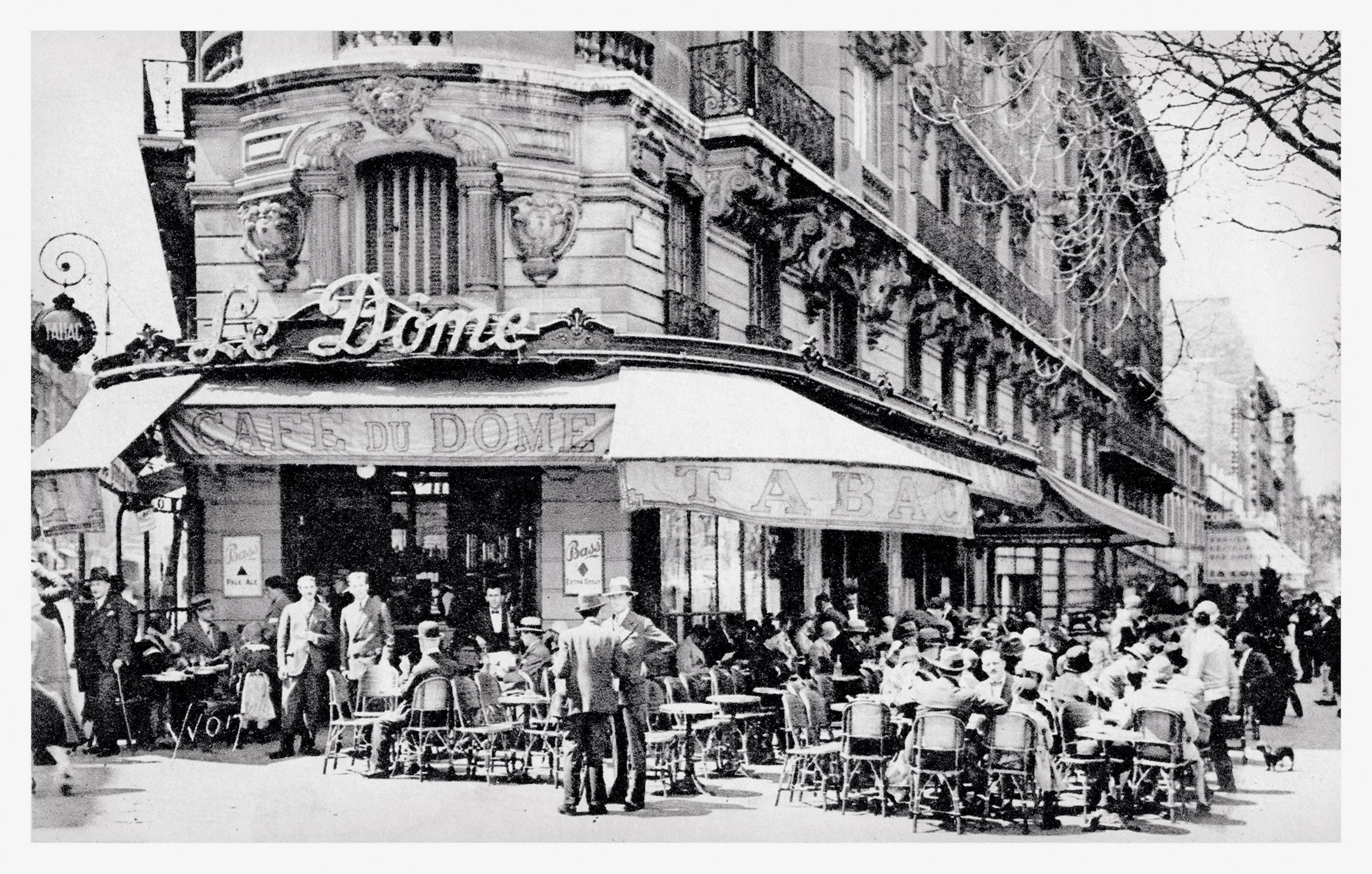
Possibilities in life depend on perception — on whether you’re able to see enough, and believe in what you see with real conviction. The way we expand perception is by exposing ourselves to new information and new narratives through all five senses.
The moment you step outside your comfort zone — into a new place, among new people, within a new culture — you are inevitably shaped. You gain new perspectives, cultivate new habits, and begin adopting new codes of living. When this multidimensional character development is paired with a purpose-driven life — one that exists to serve and fulfill something beyond the self — the experience is magically intensified. It opens pathways that simply cannot be reached by staying in the same place, or by trying to buy transformation instantly.
That said, this doesn’t mean you must abandon leisure or joy when packing a bag and boarding a plane. It all depends on the objective behind the move. If travel exists purely as an escape from the mundane, or as a pause from the hustle modernity demands, then spending generously at a Hyatt or sitting by the sea in a coastal city is perfectly understandable.
But wherever you go — regardless of where you choose to stay — look beyond mere hedonism. Observe humanity at a deeper layer: how locals walk, talk, eat, and live; how the tempo of the city operates as a whole; and how one might blend into it with restraint and elegance.
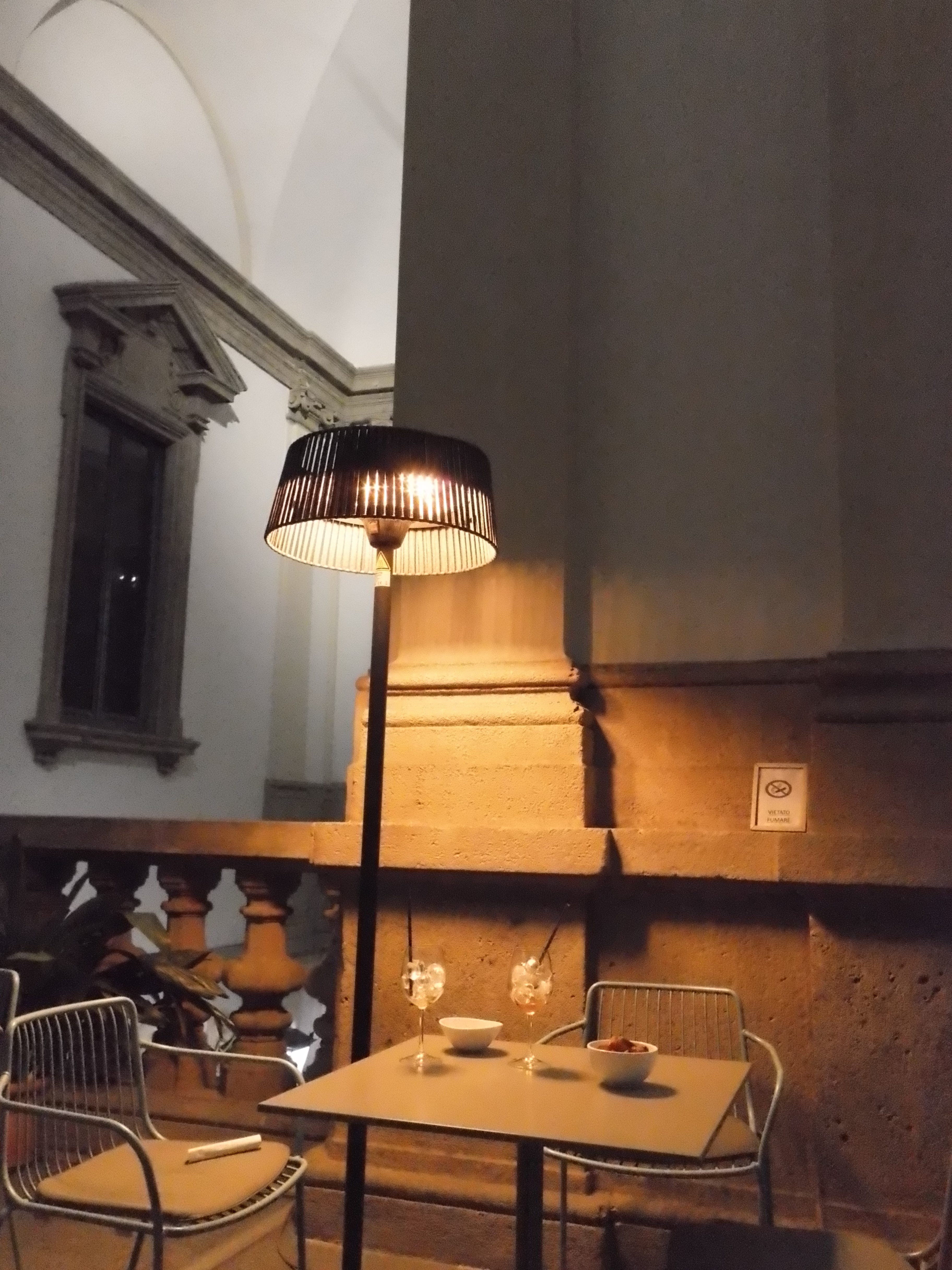
I believe you’re familiar with certain groups of people — those who empirically signal that they are not from here, often in the worst way. They disrupt the tempo and atmosphere of the place they occupy.
To be clear, I have no intention of talking down on tourists. I am one myself. Sitting in a Milanese café, surrounded by Italian conversations I barely understand, I am undeniably a visitor. Yet the principle I hold onto is simple: observe your surroundings and do whatever it takes to attune yourself to them — quietly.
Without loudness. Without imposing energy.
It’s the opposite of what I often witness back in Bangkok. From the way one dresses — blending into Milanese monochrome and winter-dark palettes — to gestures and posture, everything here points toward restraint. The way one carries oneself matters.
This city stands as a testament to elegance in action — not something merely admired, but something expected to be embodied. Fail to do so, and the loudness reveals itself immediately.
Elegance is a quality many places seem to have forgotten. Few still preserve it intact, and Milan in winter is a clear example. It isn’t about the glamour of buckle loafers or crocodile skin bags you’ll find along Via Montenapoleone. Elegance lives elsewhere — in how you compose yourself, how you present with grace, and how you practice containment.
It is a virtuous quality that never goes out of time — and one that feels increasingly necessary in the present moment.
Especially when you choose to journey far from home.
On an Individuals attempt to become fully Human by Travel🧳 or "Pilgrimage" to learn from others by objectively observing other Cultures! Novel and Noble endeavor!