


There is a 1941 standard by Don Raye and Gene de Paul called You Don’t Know What Love Is. Many have sung it — Simone, Fitzgerald — but the most penetrating version, for me as for many others, is Chet Baker’s. The magical imperfection of his voice, and then the trumpet solo.
Put it on in a vintage car with soft rain outside, and even a happy relationship somehow resonates with the melancholy of it. Let alone one that has directly suffered from the thing called love.
Lately I have put myself — through direct experience, and through a good deal of introspection and research — into the question of what has actually happened to modern love. Not just dating. The meaning of the word overall.
Because if economic dependence has largely been erased from the list of reasons one must find a partner to provide for them; if there is a subversion of masculine and feminine energy disrupting the traditional roles; and if we now have extreme exposure to romantic possibility through nothing more than scrolling and swiping — then what does the word love actually mean anymore?
Which led me to a friend whose character I respected, and was intrigued by, from our first few encounters.

Pim — Jindaporn Jayangkura — is a content creator working with a discerning lifestyle brand alongside her husband, Arm Korakot Unphanit, who is the reason I met her in the first place. The story of these two caught my attention. They met at a media publishing company, and though they were working for different publications, fate — if I may say it — brought the two writers together.
Before that, Pim wrote for Cleo: a women’s lifestyle publication with a large part of it devoted to relationships between people.
So with all the questions I have accumulated — all the burning curiosity about everything that seems absurd in the realm of love, modernity, and the relationships between people — I believed a conversation with her would reveal something I had overlooked. Or give me a perspective I had not yet considered.
Patrick:
At this point in your life, what do you think love is?
Pim:
It’s a feeling — a positive feeling we have toward another person. I don’t see love as something that exists only between a man and a woman, or only in romance. Love is almost like matter that can change form and seep into everything. Sometimes you can feel love toward someone you don’t even know, without wanting anything in return.
Romantic love becomes more complicated because passion and other feelings get mixed into it. I’ve never felt a strong need to define it precisely. People understand the feeling in their own way. But we often mix love with other things — with possession — and that’s normal too. It rarely exists in a perfectly isolated form.
Patrick:
Do you believe in the idea of the one — a single person who is your only true life partner?
Pim:
I once read Only Love Is Real by Brian Weiss. The idea, as I remember it, is that a therapist works with two people through past-life regression and discovers that their paths seem to connect across lives. They may not always be lovers; they could have been parent and child, or had some other relationship. It raises the idea that perhaps there is someone we keep meeting.
But personally, I don’t take the idea of one lifelong one very seriously. Maybe some people meet a person and stay with them for their entire life — their first and last love. For me, if there is such a thing, that person might be the one for a particular period of your life. The person who is right for you at twenty might not be the same person who is right for you at thirty.
What matters to me is commitment within that period. I don’t mean having two people at the same time and saying you can’t choose. I mean that for that chapter, you are the one for each other. I don’t need the concept to be bigger than that.
Why make life harder by insisting there must be one perfectly correct person for all time?
Patrick:
Timing feels like one of the most painful factors, because it matters so much and we cannot control it. Many of the women I have seriously liked have already been in a relationship. How do you see the relationship between love and timing?
Pim:
Timing matters in everything, not only relationships. If my husband and I had met five years earlier, we might not have had this kind of relationship. It might not have lasted this long. We might not even have liked each other. Things have their own fit and their own timing. We don’t always need to understand why. Sometimes the answer is simply: right now, it isn’t right.
When you’re young it’s easy to think — it has to be this person, and if not, who will I ever meet? But life is long. You don’t know who you’ll meet later. Maybe one day you’ll meet someone you like even more, and that person will fit the kind of relationship you’ve been waiting for.
I also think most people get stuck in some kind of relationship pattern for a while. In your case, maybe the women you’re drawn to share certain characteristics. Did you know they had partners before you liked them, or did you find out afterward?
There may be some common trait or factor that attracts you. If you can identify and interrupt that pattern, maybe you get out of the loop. I can’t tell you what the pattern is — that might take someone trained to explore it, or you might simply learn your way out of it over time. I had my own loop and eventually came out of it without realising. Again, it came back to seeing how I myself had changed.
Patrick:
I actually tried breaking down my own cases, and even used AI to look for common traits. The pattern it gave me was something like: urban, intellectual yet also socially connected, exposed to many people, broadly attractive, high self-awareness.
And then I thought — if that’s the type I’m drawn to, what are the odds they’ll be single, or overlooked? At my age, many people with those qualities are already in stable relationships. That’s why timing feels so frustrating. It’s outside my control.
Pim: But the timing isn’t right doesn’t mean you surrender. Not everyone you like will always have a partner. Someone might become single later — though by then you might not like them anymore. And you haven’t met everyone in the world.
You also don’t know what another couple’s relationship is really like. Some people look deeply in love from the outside when the relationship has already broken down. These things can’t always be judged by visible rules. A lot of it is emotional, and takes time to understand.
Patrick:
Why do people feel lonely in huge cities like Bangkok, New York, or Tokyo, where they are surrounded by people all the time?
Pim:
I’ll answer this as my own opinion, not as an expert. I don’t think loneliness is automatically dangerous. It happens. It looks especially strange in a busy city because there are people everywhere, so you think you shouldn’t be lonely. If you were alone in rural Scandinavia with a cow, people would think loneliness made sense. In a city, the contrast is more visible.
I think loneliness can even have a healthy side. Society trains us to connect constantly — to connect with the world, share things, go live, meet people, do activities. When we are trained to have connection all the time, we can forget how to be alone. Then the moment we are alone, we think: I’m lonely. Maybe we have forgotten how to spend time with ourselves.
I talk a lot about checking in with yourself, because today’s version of you and tomorrow’s version are already slightly different. In my thirties I became much more aware that I need to keep updating my understanding of myself. What do I think now? How do I feel about this now? I’m not the same person I was at twenty, or even five months ago. We change constantly, and sometimes I surprise myself by discovering I now feel differently about something.
I personally don’t get lonely very often. I need a lot of private time. I can love being with my husband and still be happy when we’re apart, because I get time for myself. Loneliness isn’t necessarily bad if you know how to be lonely — if you can sit with it rather than immediately treating it as an emergency.
Patrick:
For me, working for myself, the downside is that I can go an entire day without seeing anyone. I work, I finish in the evening, the sky gets dark, the room gets quiet — and I suddenly realise I haven’t really talked to or shared anything with anyone all day. A friend of mine works in an office and still experiences the same thing when he comes home. We may have plenty of followers and contacts, but we don’t necessarily call or message them.
Pim:
I experienced something similar when I became a freelancer. I came from the Cleo office, which was incredibly noisy and social. We shouted across the room, gossiped, joked, talked all day. When I started working from home, I missed having female coworkers to talk to. I felt lonely in that sense too.
But I was also an only child, and had always liked being alone in my room, in my own corner. So I gradually adjusted. Maybe having Arm, someone I can talk to about anything, helps. But I still think this kind of loneliness is normal. You feel lonely because you haven’t connected with anyone.
If the loneliness truly felt unbearable, maybe you would build a community, or join something. But sometimes we feel lonely and still remain with it, because we don’t actually want just any substitute. We may already have a specific picture in our heads — perhaps we think the only cure is a partner, not simply joining an activity.
I’ve tried joining clubs and it never really worked for me. I’m probably introverted, although I’m not someone who refuses to talk to people. I just don’t usually start. Being in organised social groups can feel psychologically exhausting. Even a book club sounds terrible to me: I like reading, but I don’t want to finish a book and then sit in a circle analysing it. I read it, I finish it, I move on. That taught me something about myself.
So maybe you sometimes enjoy part of your loneliness without realising it. You can be lonely without it destroying you. And everyone relieves it differently. For one person, chatting is enough. Another needs to meet face to face. Someone else may actually like the lonely feeling. There isn’t one method for everyone.
Patrick:
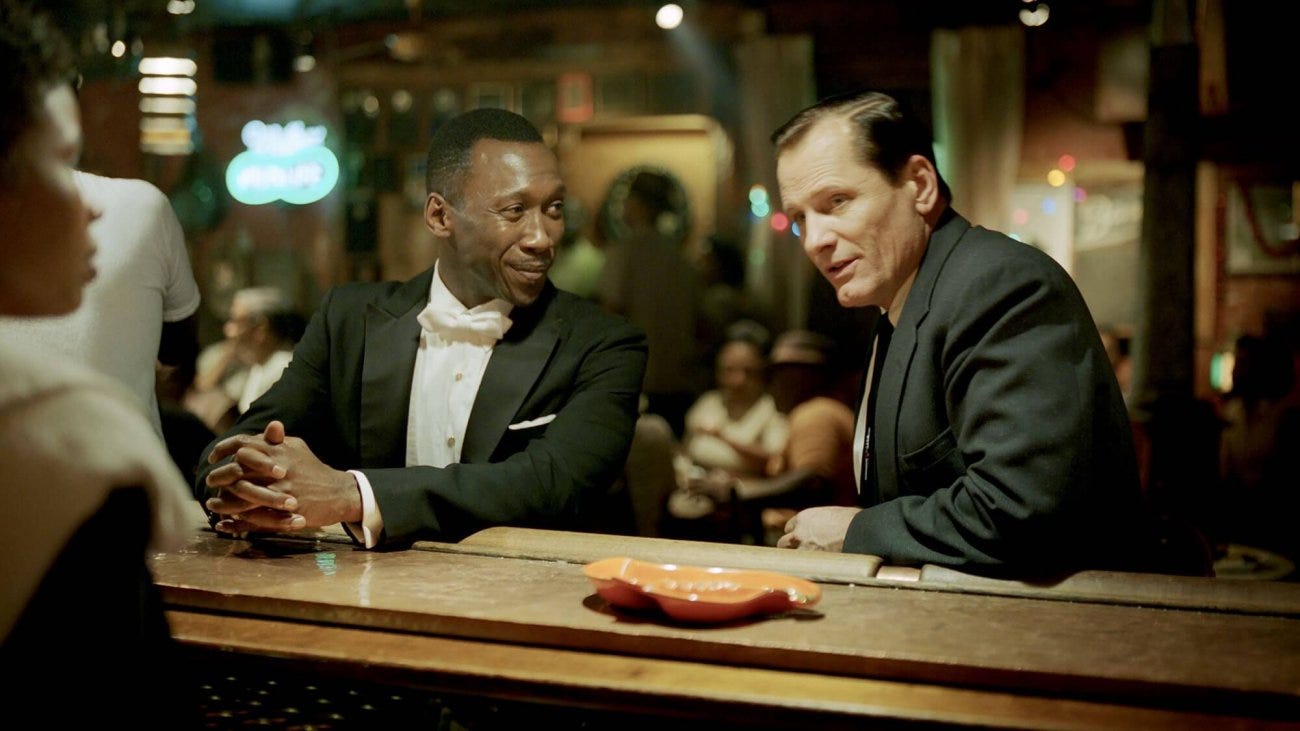
There’s a line in Green Book: “The world’s full of lonely people afraid to make the first move.” What do you think people are afraid of? Two lonely people might be sitting near each other, both wanting connection, and neither approaches.
Pim:
Maybe rejection. You might think — what if the other person doesn’t want to talk to me? Then you decide you shouldn’t bother them. But I also think it can simply become a habit. If you’ve been alone for a long time, you get used to not approaching people.
An extrovert can walk into a place, talk to people, make friends easily. An introvert often thinks through everything: What should I say? Is this topic okay? Can I share something personal yet?
Sometimes loneliness isn’t strong enough to beat anxiety, or the comfort of the safe zone. Loneliness itself can become a safe zone. You’re lonely, yes — but staying quiet feels safer than talking to someone and not knowing what will happen.
Patrick:
What should a single person do then, if timing is important and largely uncontrollable? Do you believe in actively searching for love, or in living your life well and letting it arrive when it arrives?
Pim:
I strongly believe in living your life. I say that because I spent so much of my own life chasing love. Then one day I stopped needing to chase it — not because I decided I never wanted love again, but because I realised I had other things to do. And that was around the time things changed.
But stopping the chase doesn’t mean love appears immediately. It has its own timing.
I believe that when you live your life instead of constantly hunting, you eventually meet what is genuinely yours. If you are always searching desperately, you may grab something that isn’t actually right for you. But I understand why not everyone can relax about it. A single friend can still ask every day: why am I still single? And I can’t answer that. Nobody can give a simple answer.
Patrick:
When you say chasing can feel like struggling too hard — does that include dating apps? Is being on one a form of desperation?
Pim:
No. I think whichever route you take, you’ll meet someone when you are meant to meet them.
Imagine two routes reaching the same destination at the same time. On one, you run the whole way and arrive exhausted. On the other, you sit in a car and do something else along the way. The destination might be the same, but your internal experience is completely different.
That’s the difference I care about. One person can be single and think: I’m okay, I can be alone, I even like being single. Another can think: I hate being single, am I the only single person left, is something wrong with me, am I strange? The behaviour can look similar. The feeling inside is different.
Dating apps are just tools. Instagram can function like a dating app too. Using one doesn’t automatically look desperate to me. Trying too hard is about your emotional state, not the behaviour itself.

Patrick:
I use the word elegant a lot. Is there such a thing as navigating love elegantly? What would it mean to approach it with grace?
Pim:
For me, searching for love elegantly isn’t about refusing to chase, or following some perfect rule. Whether you search actively, don’t search, or struggle a little — the most elegant thing is to be yourself.
Be yourself is difficult to define, but I think authenticity in love is the most graceful approach, because it means you value yourself.
Don’t try to become the person you think someone else will like. That is ultimately less important than whether you like yourself. Whether or not you have a partner, you are the person you have to live with for your whole life. If I had to live as someone I disliked, just because another person liked that version of me, I couldn’t accept it.
You are also the person who looks back at your own life. Other people aren’t sitting around thinking about what Patrick was like last year — but you may think about who you were yesterday, or ten years ago.
So showing your real self is one of the best things you can give yourself.
Every time I have a conversation with Pim, it provides a novel perspective while holding a similar tone. A little contrast. A worldview that contradicts my own, but stays open enough to provoke thought rather than close it down.
For this conversation — the longest we have had — it took a few days of reflection before a name arrived.
Archibald Alec Leach. Or, as you know him, Cary Grant.

The man from Bristol, whose whole life can be read as an act of becoming someone else. He changed his name. He tweaked his accent and his speech patterns. He engineered his body language. He described pretending to be the man he wanted to be until, as he put it, “he became me.” And he became one of the icons of elegance of the twentieth century.
At first, Pim’s conclusion on navigating love elegantly — to ‘be yourself’ — seems to contradict the entire existence of that man.
But consider that in his fifties, Grant spent years in psychiatric therapy — including roughly a hundred supervised LSD sessions — trying to find himself. And that in the realm of love, it took four divorces before he settled, finally, with Barbara Harris: the woman who stayed with him until the last moment.
The construction worked completely in every room but one.
So if you ask me what I now think about modern love — among all the contemporary conditions that have shifted so much in the last decade — the practical answer, while not romantic to hear, is this.
Accept what you can control, and what you cannot.
And embrace the feeling anyway. Whether it is love, passion, attraction, or whatever else gravitates you toward another human being.

For more of Pim’s work, and a worldview that extends well beyond relationships — she writes La Garçonne Diary, named for a French term once used of women who stepped outside the conventional. It is where she records what she notices in ordinary life.
Mr. Gunn,
I agree with the thought of being yourself in everything; it is downright nearly impossible to be anyone else for an extended period of time, even with the Cary Grant exception.
My problem is the first part of the interview with Ms. Jindaporn Jayangkura. Her statement that "...personally, I don’t take the idea of one lifelong (love) one very seriously." That would hardly be comforting to her husband, or any man married to her, or someone who believes that. Love goes through stages as we age, which I am sure a man of your intellect knows implicitly. The original sexual and passionate feelings of youth are gradually further developed with a deeper feeling that this love also provides the closest friend one can have; a sounding board for ideas, partner in child raising, a helpmate in age, and finally, a deeper love through shared growing together. None of this is possible if one looks at a partner as being the right one for now, rather than for ever. Marriage vows emphasize that marriage should be entered into consensually, and the typical vows spoken at most ceremonies in the U.S. include that it exists in all conditions (better or worse, richer or poorer, sickness and in health). Such is the way of life, and has been so for as long as civilization has existed. Yes, there are occasions for divorce (abuse, infidelity, incest), but it is, in my opinion, the thought of"what meets my needs now" that is the source of most divorces. My advice is don't get married if you can't commit to it for life. But, if you do take that step, understand that intro- or extroversion is unimportant, as you will have your partner be there to hear you out and to listen to their thoughts' with the pleasurable understanding that they will always go home with you at night. I hope this helps on the consideration of love from someone considerably older than you.
This is an interview that feels like watching a really good feel-good movie. It reflects the personalities of both the interviewer and the interviewee remarkably well. I also hope this interview will open up a wider range of perspectives for its readers and encourage them to see things from different viewpoints.