


Recently, I asked myself so many times — what’s the point in all of this?
What’s the point of living life at its finest, fullest, and deepest every single day; waking up, taking care of the body, dressing up elegantly, doing the work daily that associates with the vision I aim for — only to find out that when dusk arrives, I just sit there — in my room, alone, with no one to share or celebrate with…
At first, I thought it was weakness — a need for others to acknowledge my self-worth. But the more I put thought into this, and the more frequently I experienced it, I realized it’s more than that. Perhaps it’s loneliness that I’m suffering from.
“If you’re lonely when you’re alone, you’re in bad company.” — Jean-Paul Sartre.
He said so, and that line stuck with this situation of mine.
The debate happens every time this feeling occurs — Is the cause from the fact that I cannot connect with others, or is it the fact that I cannot connect with myself and be serene about it?
The answer I got from plenty of introspection is both…
Lately, I’m in a transitional phase of myself — especially in career — and it somewhat dropped me lost along the way, to the point that I couldn’t see clearly where I needed to go. That caused a kind of void in the daily execution of the refined and polished life I had crafted, and left behind the hidden question: What were these things I’ve done for?
Luckily, I’ve now regained the vision, and one part of the problem has been solved.
The other part, however, is the true pain that gave birth to this editorial — the idea of disconnection from most people among mine; in other words, the mismatched frequency between me and the mass shaped by the city.
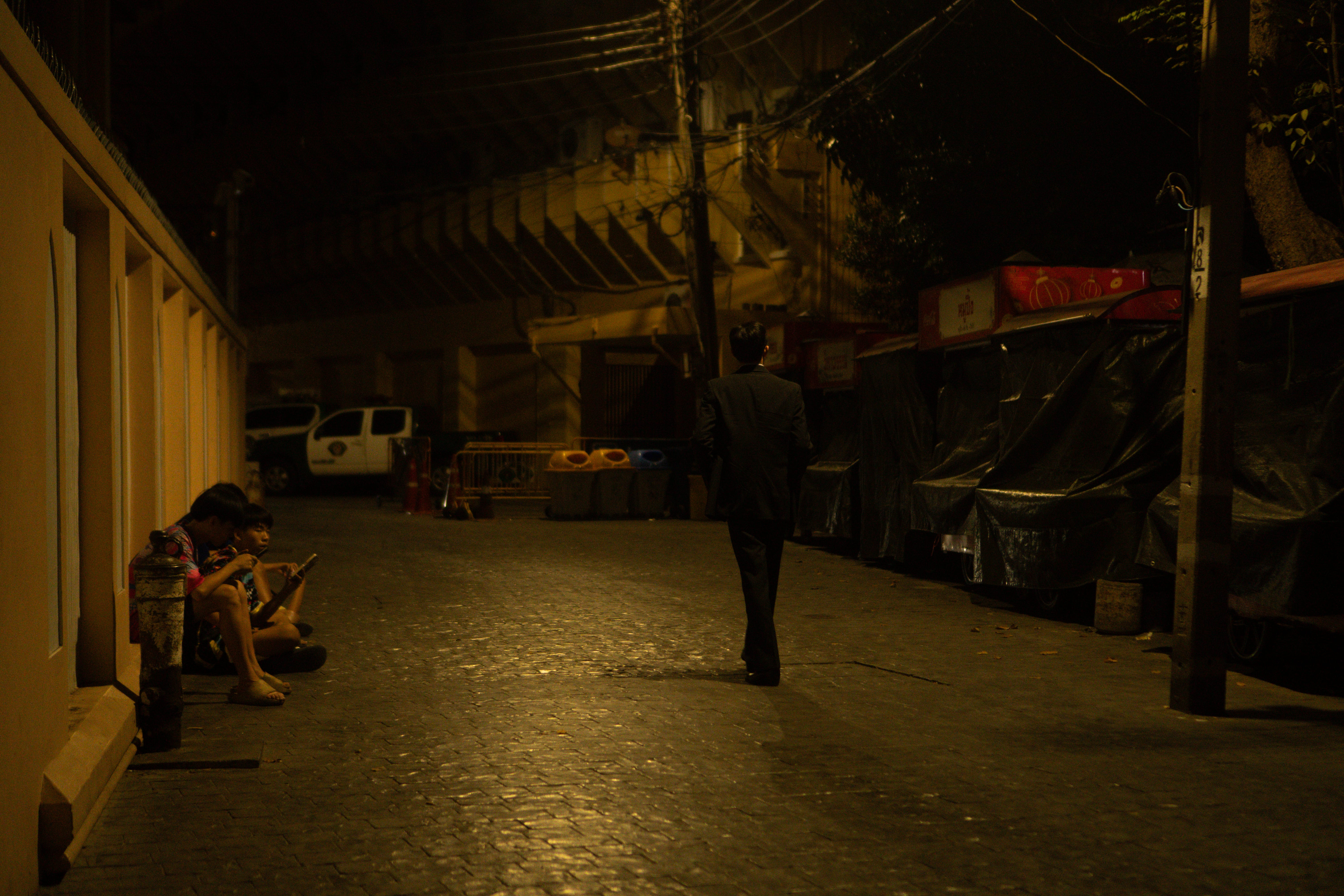
A city’s frequency is its dominant emotional, intellectual, and cultural rhythm — the pulse that shapes how people think, interact, and live within it. It’s not just about geography or architecture, but the collective mindset it cultivates. Some cities hum with surface energy, speed, and social utility, while others resonate with introspection, aesthetic depth, and philosophical presence. When your internal frequency — your values, emotional depth, and mode of perception — doesn’t align with the city’s, you experience dissonance not necessarily because you’re broken, but because you’re out of sync with the prevailing cultural current.
That, I believe, is the cause of the symptoms that have disturbed me recently — growing louder day after day; making me sympathize with many people from the West who expatriate to the Eastern part of the world and somehow feel “this side belongs to me” more than their hometown. The thing is, ladies and gentlemen, what metropolises like Bangkok, Tokyo, London, and New York somewhat have in common is constant stimulation from visual noise, digital distraction, and relentless motion — which fragments attention, numbs emotional depth, and erodes meaningful connection.
In these cities, the pace demands performance over presence, speed over stillness, and visibility over vulnerability, creating an environment where everyone is surrounded yet unseen, connected yet untouched — lonely not in solitude, but in the crowd.
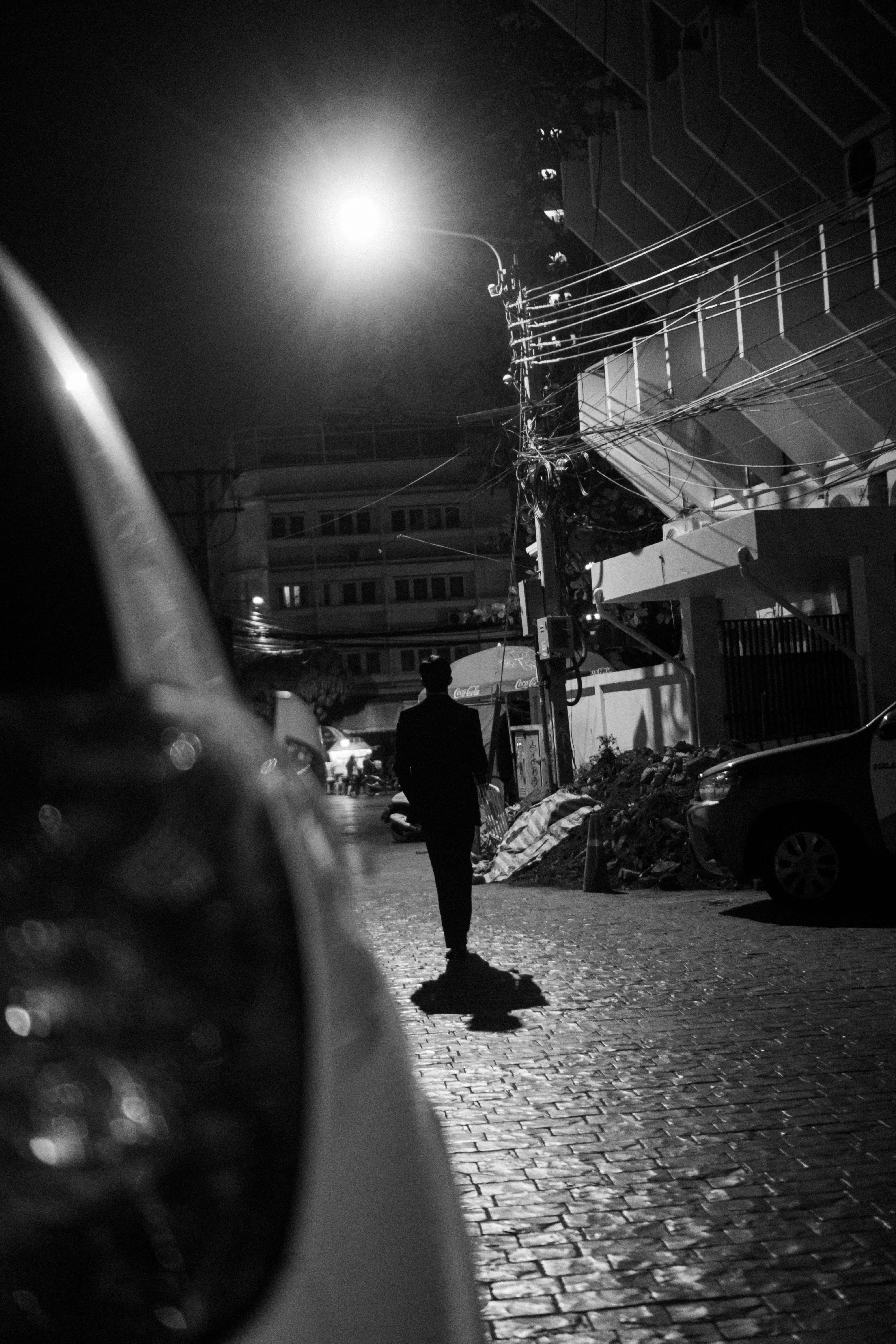
In the past editorial, I explored the nature, evolution, and cost of modernity that built the infrastructure of what we now see as the metropolis — and the price of doing so. One of the inevitable consequences of technology that allows us to connect faster is the fleeting moment — the way each interaction turns into something normal, less valuable, making detachment the new norm.
The internet — for all that it allows you to read this and me to write this piece — is undeniably the factor that has made human connection less intimate, even though it’s available 24/7.
“The secret of happiness, you see, is not found in seeking more, but in developing the capacity to enjoy less.” — Socrates.
And if what the ancient Greek said is absolute truth, then the idea of being connected all the time — of being surrounded by millions of people in the same city — is undoubtedly perceived as too much for the mind to recognize individual existence as worthy, and to develop happiness from it. Combine this hyper-connection with uncertainty and the constant bombardment of information from the square device in our hands, and it’s no wonder why human connection — especially romance — has become so rare to genuinely find these days.
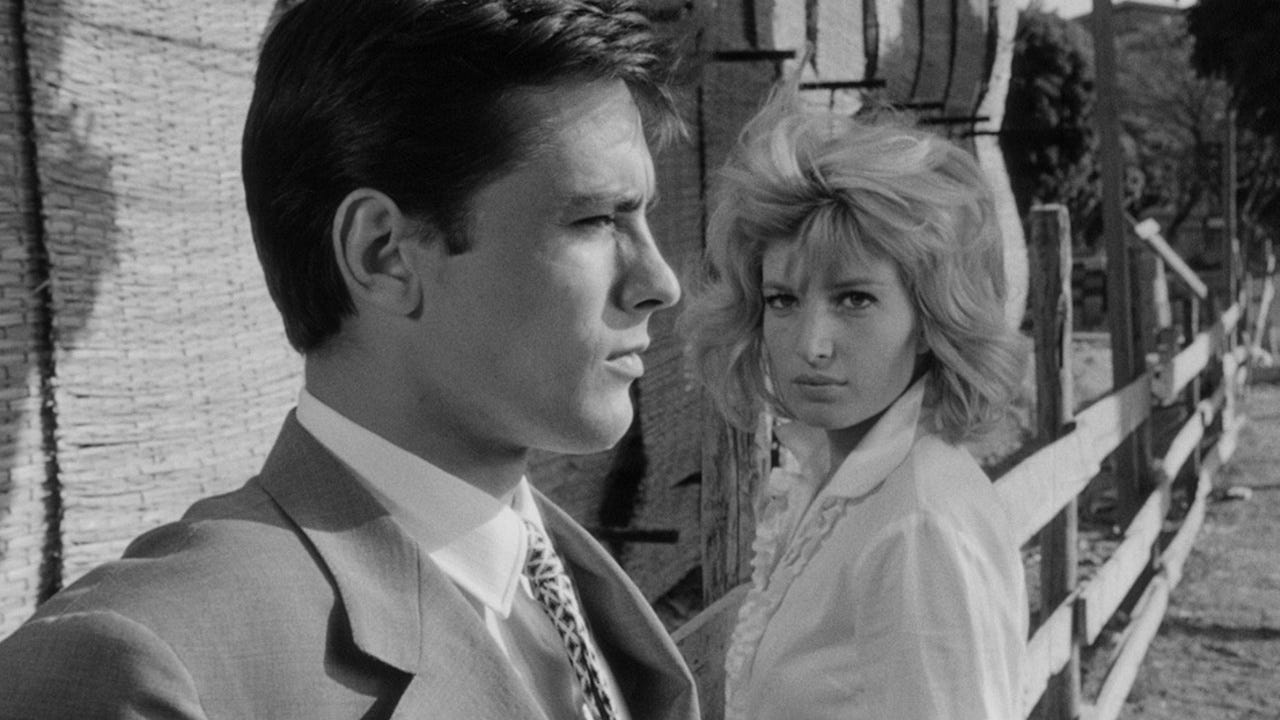
![L'Eclisse [The Eclipse] (Two original photographs from the set of the 1962 film) by Michelangelo Antonioni (director, screenwriter); Tonino Guerra, Elio Bartolini, Ottiero Ottieri (screenwriter); Alain Delon, Monica Vitti, Francisco Rabl, Louis](https://substackcdn.com/image/fetch/$s_!8dpB!,f_auto,q_auto:good,fl_progressive:steep/https%3A%2F%2Fsubstack-post-media.s3.amazonaws.com%2Fpublic%2Fimages%2F403c267f-db6e-4998-94ec-72bd7785cf75_1500x1137.jpeg "L'Eclisse [The Eclipse] (Two original photographs from the set of the 1962 film) by Michelangelo Antonioni (director, screenwriter); Tonino Guerra, Elio Bartolini, Ottiero Ottieri (screenwriter); Alain Delon, Monica Vitti, Francisco Rabl, Louis")
One auteur had already thought of this — and said it through cinema — sixty years ago; before the age of the internet, before the new millennium. Yet everything he portrayed through his iconic work resembles the current condition of alienation, loneliness, and detachment in the 2020s and likely beyond. That auteur was Michelangelo Antonioni, and this was his final installment of the trilogy — L’Eclisse (1962).
I know I’ve talked about this director and his trilogy quite frequently, but there’s a real reason for it — especially when the subject is the relationship between modernity and alienation. Among the trilogy, L’Eclisse — starring the charming Alain Delon and the enigmatic Monica Vitti — is the one that tells the story best.
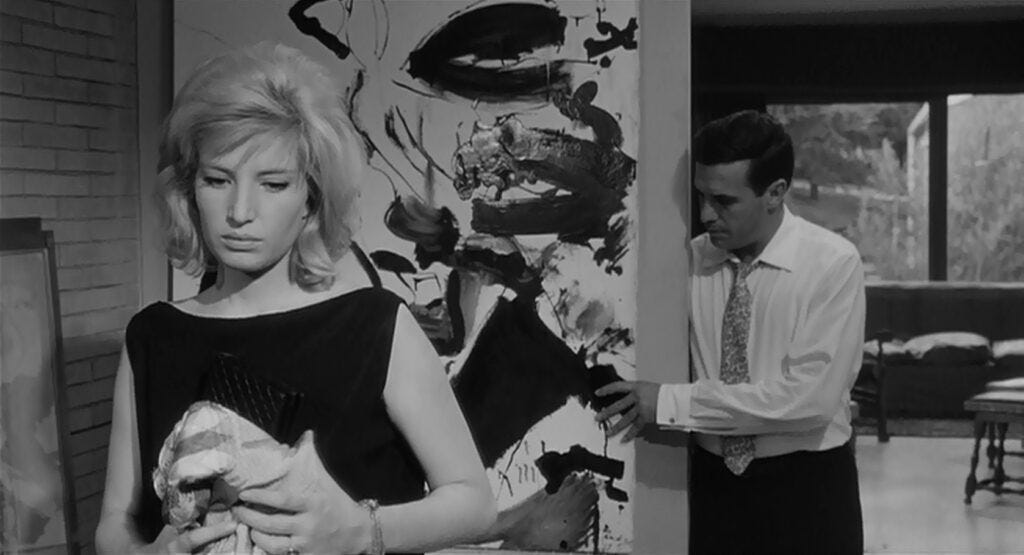
It all takes place in Rome, the so-called Eternal City, and what it becomes after modernity touches it. Beginning with suburban life — surrounded by wide roads, distances between neighbors, even couples who live in the same room yet remain far apart in heart and soul. Across nearly two hours, Antonioni expressed his idea — and perhaps his fear — of what modernity would do to humanity: that it would consume people with a materialistic paradigm, detach them from connection through uncertainty of environment, a lack of self-awareness, an inability to know oneself or one’s desires — and ultimately make life feel soulless to live in.
And if I may say it — he was right. Worse than right.
What he foresaw has only amplified since the 1960s: from the colosseum of the trading floor to the Instagram attention screen; from kissing and never meeting again to swiping and replying to stories. These are not new behaviors — they are intensified versions of what Antonioni predicted and expressed through the film.
What matters now is: what can we do about this?
Again, this is still a problem that’s somewhat bigger — part of a grand, global scheme happening across major metropolises around the world. (So if you’re reading this and have something to share, please let me — and others — know in the comments.)
But my solution — or at least the assumption I’ve arrived at to confront isolation and loneliness — is to fix it at the micro level: to allow myself to align with a place that operates on the same frequency as me.
Bangkok — the place where I was born and lived for over two decades — certainly carries a different rhythm. I’ve come to realize that I don’t belong to its nature. From the way of dressing, to the way of living, to the idea of connecting with other human beings — it’s simply not what I’m attuned to.
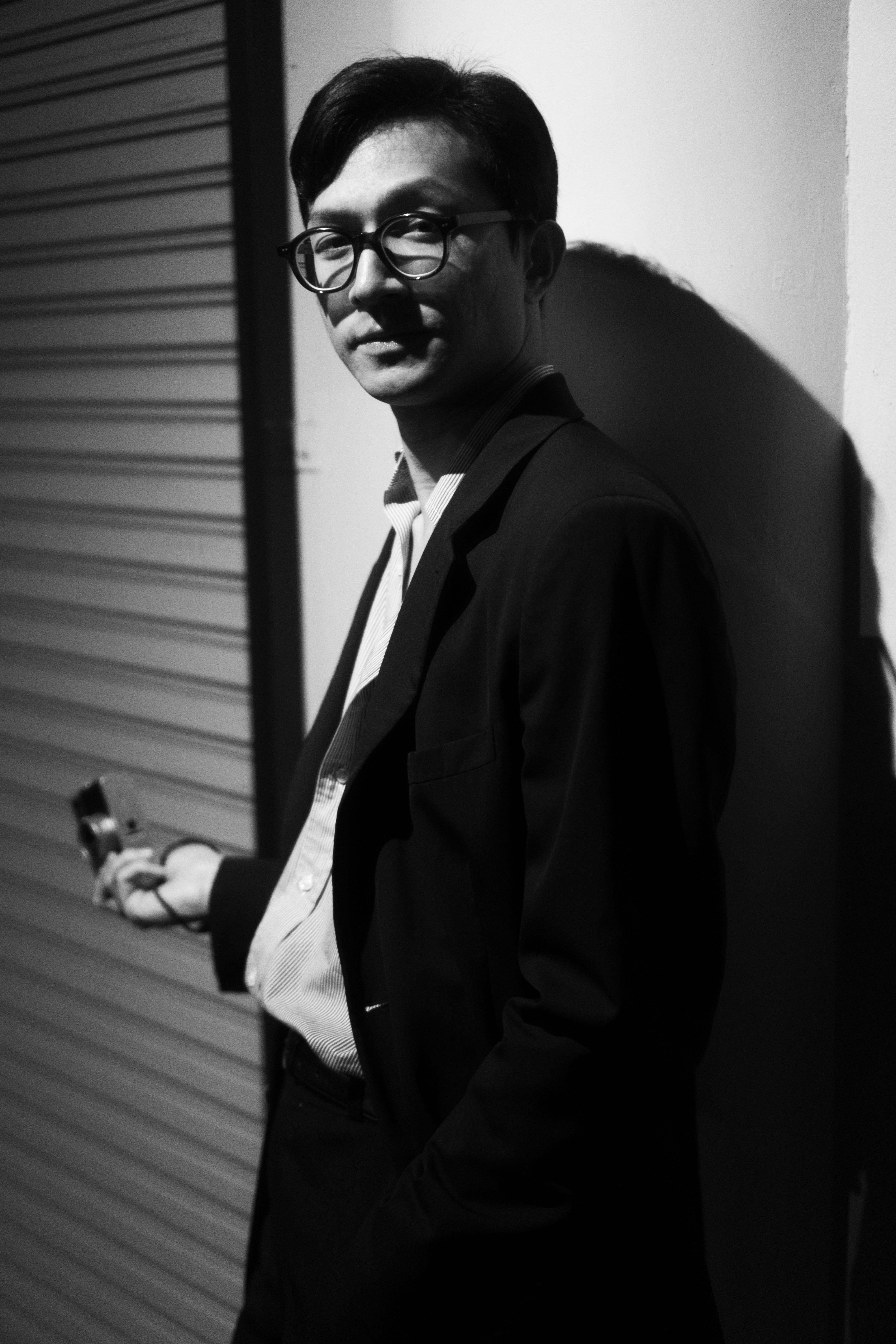
From what I’ve explored so far, the place — the city, the modern metropolis — that carries the wavelength I seek must be neither too heritage-bound nor overly romantic, neither flat nor soulless. It must be grounded, present, and balanced between the two realms of old and new. And there’s one name that I’ve always felt — always returned to — Milano.
Speaking from an external point of view, and soon to experience it firsthand in the coming period, this capital of Italy — the heart of Lombardy — is a place that integrates tailoring, culture, art, philosophy, and way of life seamlessly with modernism, wrapped in capital and dynamism. It’s a place that I believe serves individuals who know who they are, and who are willing to stay true to that — without falling too deeply into romanticism or hard pragmatism.
It’s a big move on my side, for sure. But I wholeheartedly believe it will finally bring a symmetrical balance to the frequency I operate on — and, in some way, help me deal with the symptoms of alienation that modern metropolises have spread into every corner.
I really valued the personal musings you included in this article. I feel the same way about cooking as you do about dressing well- being able to share that experience with someone is part of what gives it value. Of course, you dress the way you do because it matters to you just like I cook because I find joy in it, but both of them have more meaning and satisfaction when they can be shared with someone else. Sharing our talents, values and being witnessed by another person is a human need, I believe. My joy is doubled when someone’s face lights up from my food, and I believe when you dress the way you do it elevates whatever space you are in.